Banks Want Central Registration, IGST On Transactions
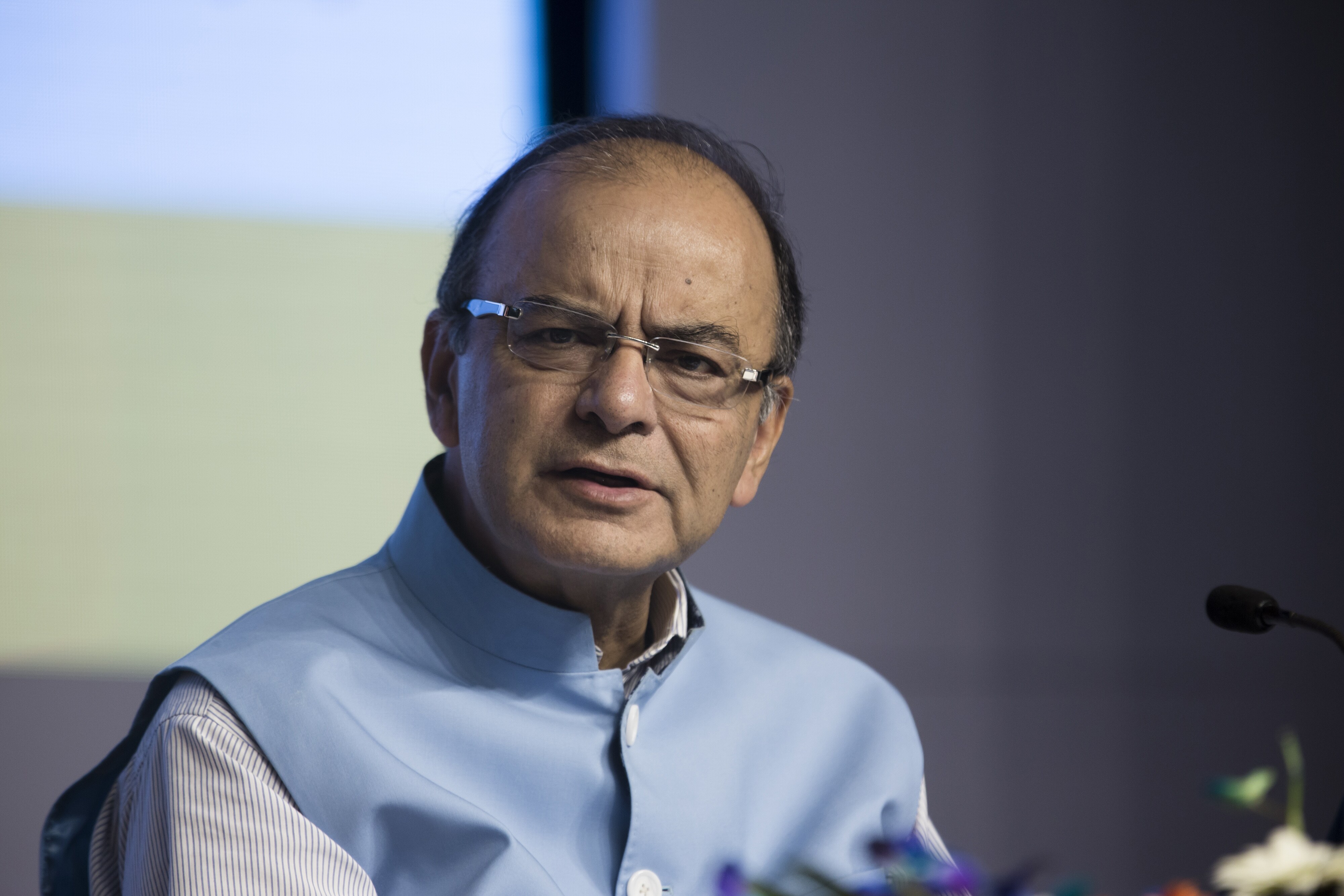
Seeking centralised registration under the Goods and Services Tax regime, banks have asked the Finance Minister to bring them under Integrated GST as they provide complex inter-state services, according to an official document reviewed by BloombergQuint.
States want banks to register separately for each jurisdiction and have warned that a relief to one sector would only lead to more such demands.
IGST will be levied by the Centre on inter-state transfer of goods and services, and shared with the state where the goods and services are consumed. Currently, banks pay service tax to the Centre.
According to the document, the Indian Banks' Association has suggested that a single registration with the Centre will help simplify taxing banking transactions.
Taxing a transaction will become complicated if a bank is headquartered in Mumbai, the customer is based in Delhi but makes a payment in Chennai, an IBA official is quoted as saying in the document.
Real-Time Information On Transactions
Another problem that may arise is to determine in real time whether a customer made a transaction through an ATM in the state where he/she holds the account or another jurisdiction, the document said. Retrieving the place of transaction in real time will be difficult given the large volume of transactions and slow down the information technology system, the banks have said.
As banks' operations are spread across many states, claiming credit for tax paid on input costs across the three categories – IGST, central and state GST – will not be feasible if registration and returns were to be filed state-wise, banking secretary Anjuly Chib Duggal is quoted as saying.
A suggestion was made during the GST Council's meeting on January 3 that at the end of a month, all transactions could be segregated, and business-to-business and business-to-consumer transactions be simplified to transfer tax to the destination state.
“…That's an administrative issue (centralised registration)… (and) doesn't have to do anything with the legal drafts of the legislation on which the council will eventually..., after it (council) finishes its current work, take a view,” Finance Minister Arun Jaitley said on January 4.
West Bengal Finance Minister Amit Mitra, according to the document, said it would be advisable that multi-state operators in the services sector are registered in each jurisdiction, just like in case of goods. Any exemption given to one sector would lead to others demanding similar relief, Mitra said.
Mitra is also quoted as saying that even for charging IGST, the place of final transaction will have to be identified to transfer tax to the destination state. Tamil Nadu agreed with West Bengal's assertion.
Possible Solutions
Two things determine whether a bank has to pay IGST or Central GST+ State GST -- the location of a supplier from where the bank is providing services and the place of supply (address of the recipient), Sumit Lunker, partner, indirect tax (financial services) at PricewaterhouseCoopers told BloombergQuint.
It is difficult to determine from where services are being supplied by the bank, whether it is the branch where the transaction has happened, or it is the account branch (where the customer has his account), or it is the processing centre. To address the problem, having a centralised registration under GST is the simplest solutionSumit Lunker, Partner - Indirect Tax (Financial Services), PwC
Identifying the place where e-payments are made will be difficult, which will make levying GST complex, he said.
An alternative to centralised or state registration could be to recognise one of the locations, account or home branch, as the place from where banking services are provided, Lunker said.

-
Signature Play: The Classic Cocktail Is Dead. Or Is It?

Classic cocktails are disappearing from India's cocktail menus. But they're still being ordered, taught to bartenders and borrowed from. So, who's really having the last drink?
-
A New Samvat Wishlist: Inclusive Prosperity And Human Development
India has strengthened its economic foundations through infrastructure, digital access and enterprise. Its next growth chapter must deepen productivity, create better livelihoods and widen participation in prosperity.
-
Love, Sex Aur Dhokha: The Audacious Plot To Spy On Jensen Huang
A Taipei dinner, a Singapore chip buyer and a suspected Chinese asset: inside the alleged spy operation that got close to NVIDIA's Jensen Huang.
-
Ten Things I Learnt This Samvat
Patience can be a trap. Cheap stocks can stay cheap. Leverage can wipe you out. What did Samvat 2082 teach us? Niraj Shah writes on 10 lessons from the year gone by.
-
Talking Points This Week: Tech Nerves, FII Buying, And A Faraway Banking Shock
The global markets are not shining this Diwali. The exception in the large markets is, India.
-
Midterm Rally Lasted A Day. The Hard Reality Of A Divided US May Last Two Years | Opinion
Between a contested AI boom, a debt ceiling that arrives in 2027 and a president with every incentive to act alone, the next two years may prove more volatile than the first day's rally suggests.
-
Blue Wave Will Derail the AI Trade but Won't Dismantle the AI Era | Unhedged Position
The Democrats' sweep of the US Congress will see politics collide with economic forces both over the long and short term.
-
It's Time To Take The GST Council's Bet On Trust Global
Payment records can prove India's services exports, and clear, proportionate rules can bring foreign digital sellers into the tax net.
-
Opinion | India at 38: From Innovation Overperformer to Innovation Powerhouse
India now has 453 VC-backed deep science startups, 18 of them late-stage, after 117 percent growth since 2020. Laurus Labs, at USD 9.3 billion, is the most valuable deep science company in any middle-income economy outside China.









