Bankers Say RBI's Stance Change A Positive Surprise; Expect A Rate Cut Between December And March
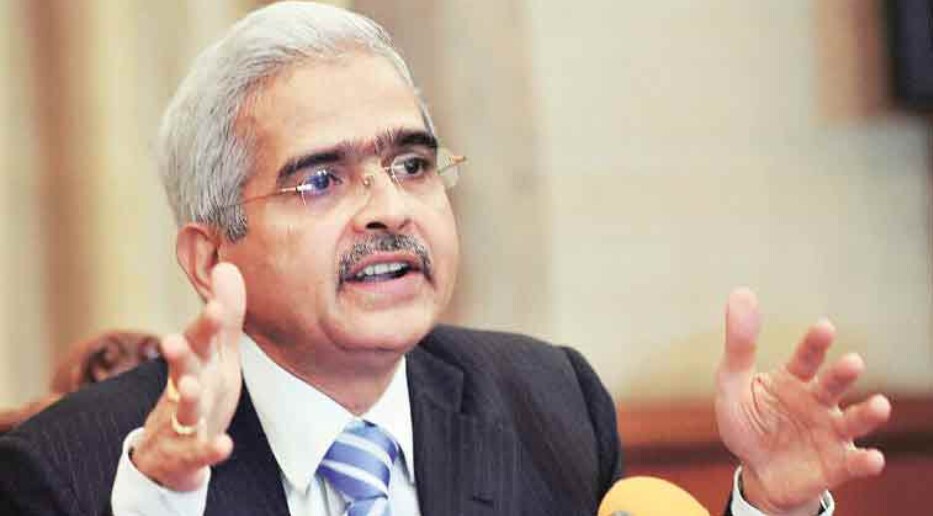
Managements of Indian banks say the Reserve Bank of India's (RBI) monetary policy committee's change in stance to 'neutral' at its latest meeting has come as a positive development for industry, and they see a cut in the benchmark interest rate between December and March.
RBI kept the repo rate unchanged at 6.5% for the 10th consecutive meeting on Wednesday. However, its stance shifted to 'neutral' from 'withdrawal of accommodation' earlier.
Jaideep Iyer, head of strategy at RBL Bank, said, "As a banker, I am quite happy that we saw change in stance prior to the actual rate cut." He noted this is the first expected change in the rate cycle at a time when the banking sector has a significant amount of loans linked to external benchmarks and mostly repo.
"So, from a banking standpoint, we expect liquidity to be easy for a while when bank rates come down; retail deposit rates start inching down before we have a rate cut cycle; to that extent, I think it is good," he said.
According to Venkatraman Venkateswaran, CFO of Federal Bank, the change in stance gives the assurance that it has been thought through. He added the next big thing was Kharif sowing, though he did not expect a big risk weather-wise in the next few months. "The monster is behind us," he said.
"Now that it has been done, we continue to hold the view that a rate cut will happen in January-February," said SBI MD Ashwini Tiwari, who cited RBI to add that adding the overall liquidity was good.
Axis Bank's deputy MD, Rajiv Anand, expected a rate cut between December and March. On the change in liquidity stance by the RBI, Anand said the market didn't yet have the confidence, which is why yield on short-term papers had not come down.
"It is because of various reasons, including government spending becoming a bit anaemic at this point in time. We believe that should catch up in the second half; therefore, my expectation is that in the second half of the year, we will see short-end rates coming down," he said.
Iyer said what banks would look for is sustainable, durable liquidity. He added that he expected the RBI to maintain positive liquidity for elongated periods. He said there should be confidence that it was going to be the norm rather than an exception.
Once that happened, there would be a reduction in liability costs for banks, he said. Iyer said there were expectations of a rate cut in December, but he also noted that the West Asia conflict and crude were the jokers in the pack, making any prediction difficult.
Considering just the domestic factors, he bet on a cut in December.
Looking at the yield curve, Rajiv Anand said he was bullish on everything beyond five years. He said, "The demand-supply situation has changed significantly; the government will issue bonds at the same price or lower as we go forward," adding that more buyers are expected because of inclusion in the JP Morgan and FTSE indexes, as well as sooner than later Bloomberg inclusion.
"We are bullish on long-term bond rates, which is good for the economy, corporates, and government."
On credit growth slowing, Tewari said it was a recent phenomenon. "Even as growth of unsecured loans has come down in line with what RBI wanted, construction and real estate have picked up very strongly and infra has picked up after elections."
The bank's credit growth expectation of 13-15% was lower than the earlier 15-17%, but it was important to remember that the base was also higher, he said.
He explained that deposit rates usually come down after rate cuts, but always with a lag because those who are locked in fixed deposits will wait for maturity before they are repriced. As long as credit growth continued to outpace that in deposits, there would be pressure on the deposit rate.
He also said deposit rates had not peaked and there would be an increase if credit growth continued. "Banks have to look at other instruments to fund growth, including infra bonds, other bonds, or CPs if the rates there are showing a lower trajectory, which currently seems to be the case," he said.

-
Indians Are Travelling, But Not Every Journey Is A Holiday | The Week In Whys

Pilgrims, patients and working women are the real travellers, and the system hasn't quite caught up with them.
-
Getting To Work Costs Women More | The Reason Why
It is not just about women paying more than men. It is about women paying much more in cities than in villages.
-
AI Bias In Investing Cannot Be Eliminated, But It Can Be Governed
Framing is a particularly important example as identical financial information presented in terms of gains rather than losses can lead an LLM to reach a different assessment.
-
Joining The Dots | Dark Skies, Steady Diya: Why Hope Holds This Diwali
With war, a weak rupee and foreign outflows weighing on sentiment, policymakers at the NDTV World Summit and market veterans at NDTV Profit Ignite: Diwali Edition offered the same advice: stay invested and filter out the noise.
-
The Curious Case of Equitas Small Finance Bank And A CEO Who Quit For Stock
PN Vasudevan believes persistent investor concerns over a perceived conflict of interest had become a governance overhang on Equitas Small Finance Bank's stock, even as the lender improved profitability and asset quality.
-
Talking Points This Week: AI Cash Burn, A Tiger Comeback And An India That Still Finds Its Own Path
India is not immune to higher oil or tighter global liquidity, yet its earnings base is broader, its domestic policy levers are still available.
-
Foreign Investors Own Half Of HDFC Bank and ICICI Bank. An LTCG Cut Could Matter Most Here
Foreign portfolio investors have US$115 billion parked in HDFC Bank, ICICI Bank. If the government cuts long-term capital gains tax, Jefferies says returning foreign money could land here first.
-
'Never Seen This Level Of Negativity': Sandeep Tandon Says The Next Rally May Be Closer Than You Think
Veteran investor Sandeep Tandon says foreign selling is easing, large-caps are due a comeback and mid-caps are crowded, while he turns positive on gold, power and pharma this Diwali.
-
Indians Stay With Family, Not In Hotels | The Reason Why
India still lacks enough clean, reliable and affordable hotels for budget-conscious travellers.
-
The Economic Imperative: Analysing The Material Driving Force Behind India-Canada Strategic Reset
This economic complementarity is further reinforced by deep institutional investment ties and talent mobility, which form the bedrock of the bilateral framework.










