ATF Likely To Be Included In GST Soon, Says Union Minister Hardeep Singh Puri
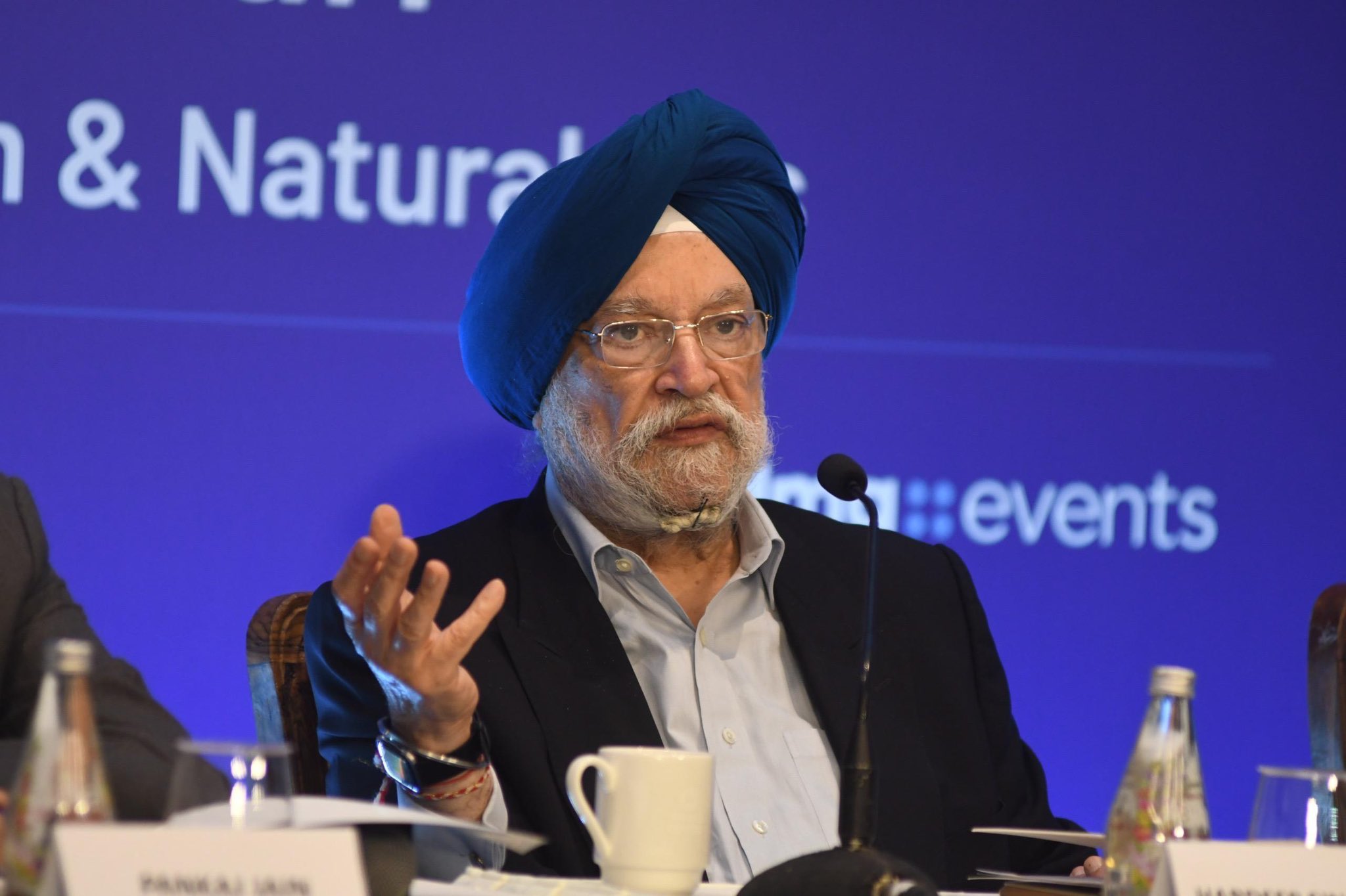
Aviation turbine fuel is likely to be brought under the Goods and Services Tax in the near future, said Union Minister of Petroleum and Natural Gas Hardeep Singh Puri. He further stated that natural gas is also under consideration for GST inclusion.
During a press briefing at a curtain-raiser event for India Energy Week 2025, Puri stated that the GST Council, which comprises the Finance Minister and State Finance Ministers, is actively considering the matter. "Our sense from the last GST meeting was that ATF is likely to come under GST soon," he said.
Though he refrained from specifying a timeline, adding only that it would happen "sooner rather than later."
Currently, ATF attracts an 11% central excise duty, with a concessional 2% rate for regional connectivity scheme routes and varying VAT rates across different states. Inclusion under GST could benefit the civil aviation industry by reducing the cascading effect of taxes.
At present, ATF manufacturers cannot claim input tax credits for GST paid on inputs, which increases the final cost. Puri emphasised, "If you bring something under GST, you will not lose. In fact, it will be a win-win for you," drawing on his experience as a former Civil Aviation Minister.
In addition to ATF, natural gas is also being considered for GST inclusion. States like Gujarat, Maharashtra, and Andhra Pradesh, which were initially hesitant, are now recognising its potential advantages. "They are more or less seeing the benefits," Puri remarked, though he did not provide a definitive timeline.
Current Tax Structure
Currently, ATF is subject to an 11% central excise duty, reduced from 14% in September 2018, with a concessional 2% rate applied to routes under the Regional Connectivity Scheme or UDAN.
Additionally, state VAT on ATF varies widely, ranging from 1% to 29%, and can differ even between airports within the same state.
For UDAN routes, state VAT is further reduced to 1-4%, while international airlines are exempt from taxes on ATF.
Despite the central government's recent efforts to encourage states to lower VAT on ATF, rates in major metro airports remain high, such as Kolkata at 25%, Chennai at 29%, Delhi at 25%, and Mumbai at 18%.
Hence, airlines face a total blended tax rate of approximately 25-27%, significantly impacting their operating costs.
Whom Will It Benefit?
If ATF is brought under the GST, the impact on companies with significant domestic operations will depend on the applicable GST rate and the availability of input tax credit.
Assuming an 18% GST rate, airlines such as IndiGo, with 72% domestic operations, and SpiceJet, with 80% domestic operations, could benefit from a 7-9 percentage point reduction in total fuel costs. However, the actual reduction in fuel cost per available seat kilometre, or CASK, would be lower.
If a 28% GST rate is applied without input tax credit, there would largely be no benefit for airlines. While, if a 28% GST rate is implemented with input tax credit, the GST collected on ticket sales—5% for economy seats and 12% for premium seats—could be adjusted against input tax, providing some relief.

-
Gold Is Rs 22,000 Cheaper Than A Month Ago. Should You Buy Amid The Wedding Season?

Gold's potential slide to $3,500 could save around Rs 4,700 per 10 grams, but a soft inflation print could just as easily push prices back up. One way to split the risk is to buy in parts, some now and the rest after the Fed's Dec. 9 decision.
-
AI Agents Are Gaining Power. Who Governs Them?
Artificial intelligence agents promise to transform productivity by moving machines from assisting decisions to executing them. But as organisations delegate greater authority to these AI-agents, they must first establish who controls that authority and who remains accountable when things go wrong.
-
Why Swapping Your Old Gold Can Trigger A Rs 5 Lakh Tax Bill, And How You Can Avoid It Legally
Swapping old gold for new is taxed as a sale and a fresh purchase. Getting your own gold remade can cut most of that bill, though it has its own costs.
-
The AI Trade is Done. The Real Opportunity for Investors Starts in 2027 | Unhedged Position
As pureplay AI stocks plunge and circular, capex-led financing unwinds, 2027 is set to be a year of reckoning for AI companies. Yet the bust clears the way for a better opportunity for investors in 2027 -- shifting the spotlight from AI builders to the companies using AI.
-
Leadership As Mission: Why The Age Of AI Demands More Human Leadership
Debjani Ghosh examines how AI is changing leadership, arguing that its success must be measured by its impact on people and the accountability of those guiding its use.
-
We May Need Another Tukaram Mundhe To Fight Air Pollution | The Reason Why
Developers may install basic measures such as sprinklers and green nets, resume work, and continue violating rules when this equipment stops working.
-
Extracting Value From Battery Scrap Could Be Challenging For India | The Reason Why
A discarded lithium-ion battery still contains valuable materials such as lithium, nickel and cobalt. These can be recovered and reused. When such batteries are crushed and shredded, they produce a dark powder called black mass.
-
One El Nino, India Can Handle. Two Could Break The Granary
India's grain stocks can absorb one bad year, but a second El Nino could drain the buffer in two to three years, economists say.
-
India's Troika Of Good Luck | Joining The Dots
As Jensen Huang's exit drags Nvidia down, a cooling AI trade and resilient earnings have revived investor interest in India. A likely RBI rate hike looms.
-
Talking Points This Week: Leadership Shock At Nvidia, Earnings Strength, And The Fog Over Hormuz
The Anthropic IPO pricing and first trading day, Nvidia's upcoming earnings, and any fresh signals from Iran will set the tone for the following week.









