Zero-For-Zero Strategy Explained — How It Can Help India Blunt Trump's Tariff Threats
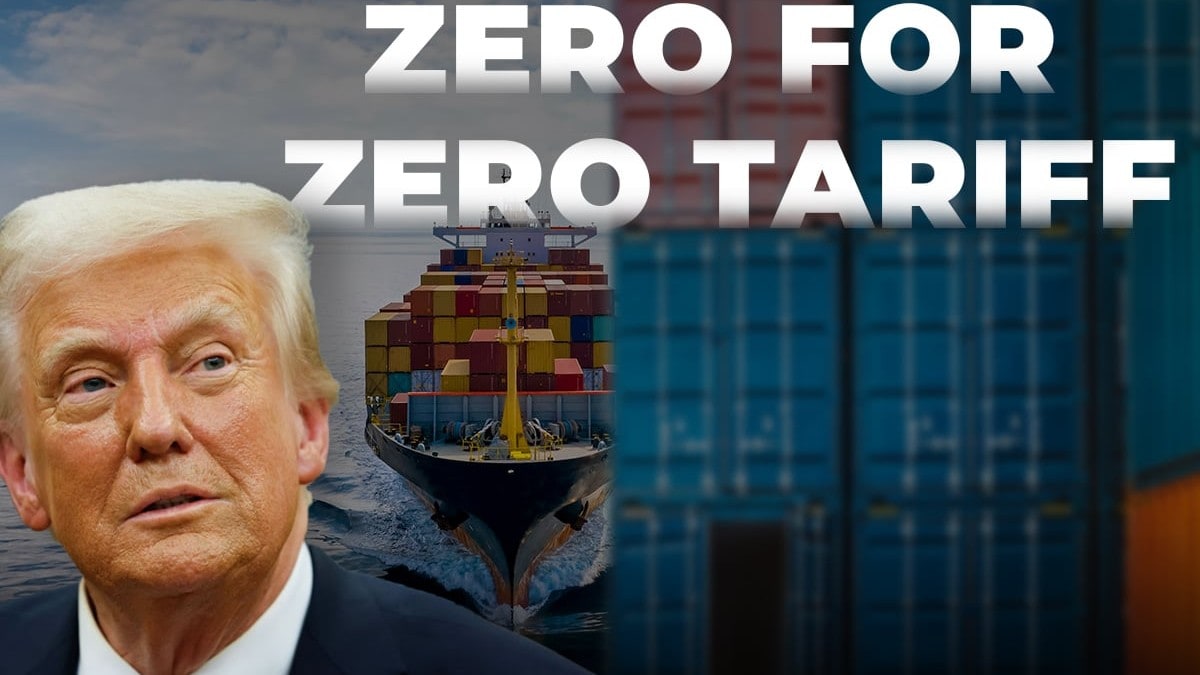
A section of industry stakeholders have pitched for "zero-for-zero" levies as an alternative at a time India looks to hammer out a bilateral trade agreement with the United States amid a looming threat of tariffs.
Among those who have backed this approach are Global Trade Research Initiative and the Confederation of Indian Textile Industry, which underscored that elimination of tariffs on a targeted line of products would be beneficial for India instead of entering into a broad trade pact with the US.
Zero-for-zero tariffs can allow India to maintain the competitiveness of its exports to the American market, while protecting sensitive sectors like agriculture and automobile from ramped-up US imports, they pointed out.
Here's a look at what is the strategy behind the zero-for-zero approach, and how it can blunt the impact of reciprocal tariffs threatened by US President Donald Trump.
How Zero-For-Zero Tariff Works
Zero-for-zero tariff is an approach where two countries can identify specific product categories and eliminate the levies on them, instead of imposing a blanket range of tariffs or inking a broader trade deal.
The GTRI, the Indian think-tank that has been pushing for the zero-for-zero approach since last month, said around 90% of industrial goods currently traded between India and the US could be covered under such an arrangement.
India held a trade surplus of around $46 billion with the US in 2024, as per the US Census Bureau data. Since the balance of trade is leaned in favour of India, a zero-for-zero approach will make the country the net beneficiary, as per the proponents of this strategy.
However, for such an arrangement to work, both India and the US will have to agree on the specific product lines or sectors on which tariffs can be eliminated.
Why Zero-For-Zero Is Preferred Over BTA
The zero-for-zero approach is mooted as a macro-level trading arrangement, which can be brought into effect within a span of a few days as compared to a bilateral trade agreement that will require several months to be hammered out.
India and the US plan to hold deliberations till at least September before arriving at the BTA. Taking cue from India's trade-pact negotiations with the European Union and the United Kingdom, it can be assumed that there is a high probability of talks getting prolonged.
The Trump administration has hinted at no reprieve for India from reciprocal tariffs during the negotiation period, with the president reiterating on multiple occasions that he plans to slap the reciprocal tariffs on a number of countries, including India, from April.
The GTRI, along with the CITI, believe that a zero-for-zero approach could help India blunt the impact of reciprocal tariffs.
If 90% of the traded industrial goods, excluding sensitive sectors, can be brought under the ambit of a zero-for-zero arrangement, then the reciprocal tariffs on the remaining 10% of traded goods will not cause much impact on India, according to the GTRI.
To support its point, the think-tank pointed out on Saturday that India's annual passenger car exports to the US stands at around $13 million. Even if reciprocal tariffs are levied by the US on automobile imports, it would not have much impact on India due to the relatively low stakes involved.
The signing of the BTA may also leave the Indian automobile and agriculture industry vulnerable. The GTRI pointed towards the case of Australia, where the domestic car industry faced a collapse after the import tariffs were lowered to 5% from 45% in the late 1980s.
The US, via a trade pact, may also seek a foothold in the Indian food consumption market, which could adversely impact the estimated 70-crore people involved in the Indian agriculture industry, the think tank argued.
"Opening even a few agricultural products to the US imports could set a dangerous precedent, leading to increased pressure for further concessions," GTRI founder Ajay Srivastava told news agency PTI last week. "With India's total agriculture, dairy, and marine exports to the US amounting to just $5 billion, retaliatory US tariffs would not significantly harm India."
China Plus One
The textile industry, in particular, is excited by the prospects of zero tariffs with the China Plus One factor playing out. With the Trump administration already imposing 20% additional tariffs on China, Indian textile exports are expected to become more competitive. China Plus One refers to the business strategy to reduce reliance on China and diversify manufacturing into other markets.
The waiver of tariffs can increase US' textile and apparel imports to $16 billion from $10.8 billion at present. No major impact of reciprocal tariff is seen on India as US' textile exports to India stood at only $0.41 billion, according to CITI.
The Challenges
The US aims to expand its footprint in the Indian automobile and agriculture sectors. It may choose to put pressure on New Delhi to ink a bilateral trade pact, rather than averting a broader deal through a zero-for-zero approach.
The duties levied on luxurious cars and motorcycle imports from the US have often been referred to by Trump while attacking India over its tariff policy. Since his first term in the White House, Trump has been pushing for lower Indian duties on Harley-Davidson motorcycles.
Washington is also seeking increased access for its farm products in the Indian market, with US Commerce Secretary Howard Lutnick saying last week that agriculture cannot be "off the table" during the trade negotiations with India.
What also indicated the Trump regime's potential disinterest in a zero-for-zero approach was Lutnick saying that the US and India should enter into a grand trade pact, rather than a "product-by-product" arrangement.

-
One Battle After Another: India's Corporate Dynasties Battle For Control

2026 could go down as Corporate India's year of succession wars, governance battles and family fault lines.
-
Rs 50-Lakh Gold In Bank Locker, Rs 3 Lakh Of Protection: The Gap Most Families Don't Know About
The RBI ties a bank's liability to the annual locker rent and families who want to insure their jewellery face a separate question about how to prove what was inside.
-
The More Food Turns Into Fuel, The Harder It Is To Read Agricultural Markets | The Reason Why
A policy designed to reduce dependence on imported fuel can create new pressures elsewhere in the food economy.
-
Your iPhone Costs 12 Grams Of Gold, A Car About 100. What Does Your Life Weigh?
Measured in rupees, almost everything looks more expensive than it did a generation ago. Measured in grams of gold, a lot of it has become cheaper.
-
Gold Is Rs 22,000 Cheaper Than A Month Ago. Should You Buy Amid The Wedding Season?
Gold's potential slide to $3,500 could save around Rs 4,700 per 10 grams, but a soft inflation print could just as easily push prices back up. One way to split the risk is to buy in parts, some now and the rest after the Fed's Dec. 9 decision.
-
AI Agents Are Gaining Power. Who Governs Them?
Artificial intelligence agents promise to transform productivity by moving machines from assisting decisions to executing them. But as organisations delegate greater authority to these AI-agents, they must first establish who controls that authority and who remains accountable when things go wrong.
-
Why Swapping Your Old Gold Can Trigger A Rs 5 Lakh Tax Bill, And How You Can Avoid It Legally
Swapping old gold for new is taxed as a sale and a fresh purchase. Getting your own gold remade can cut most of that bill, though it has its own costs.
-
The AI Trade is Done. The Real Opportunity for Investors Starts in 2027 | Unhedged Position
As pureplay AI stocks plunge and circular, capex-led financing unwinds, 2027 is set to be a year of reckoning for AI companies. Yet the bust clears the way for a better opportunity for investors in 2027 -- shifting the spotlight from AI builders to the companies using AI.
-
Leadership As Mission: Why The Age Of AI Demands More Human Leadership
Debjani Ghosh examines how AI is changing leadership, arguing that its success must be measured by its impact on people and the accountability of those guiding its use.
-
We May Need Another Tukaram Mundhe To Fight Air Pollution | The Reason Why
Developers may install basic measures such as sprinklers and green nets, resume work, and continue violating rules when this equipment stops working.









