What Could RBI’s Acquisition Financing Norms Look Like?
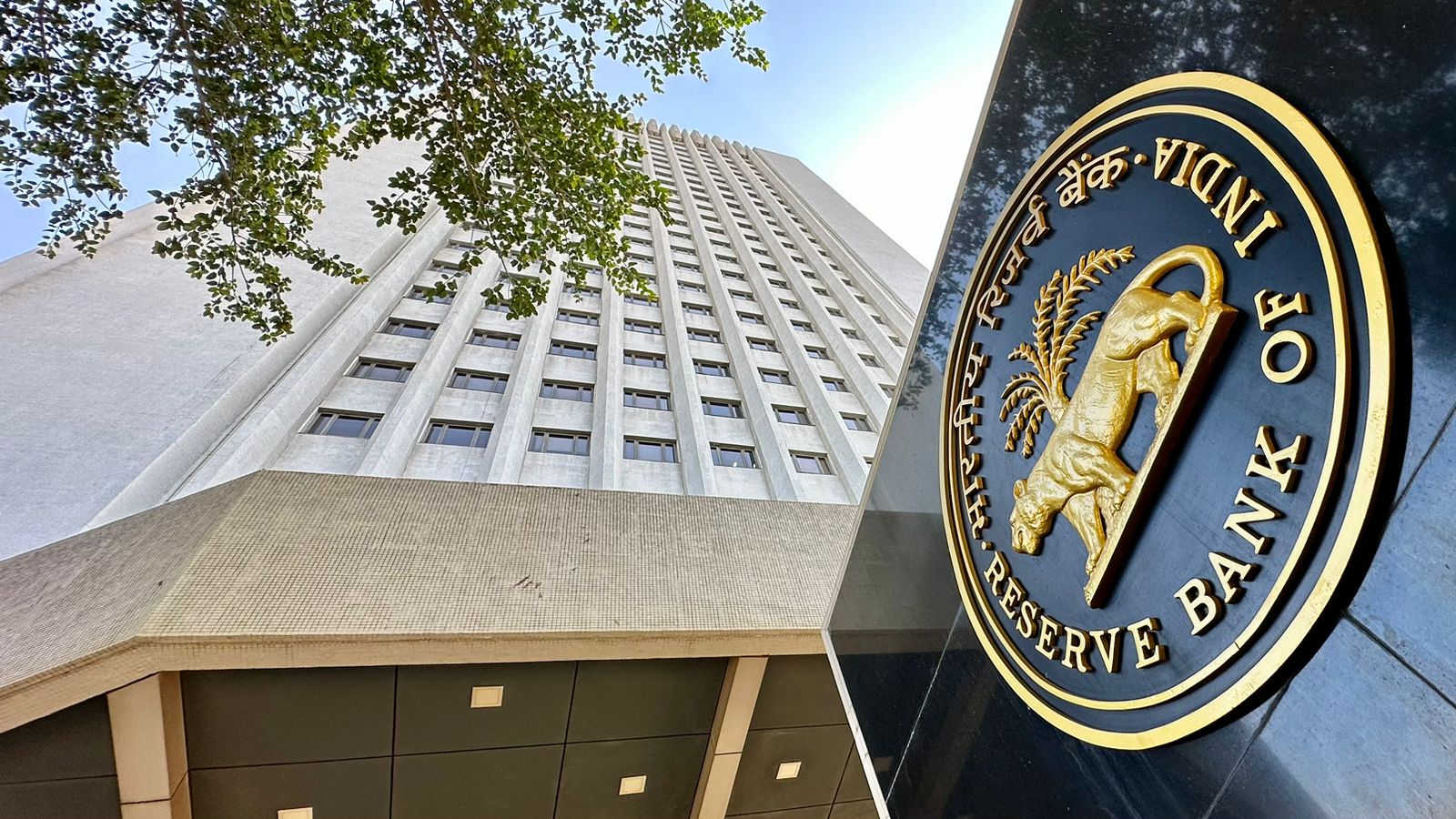
The Reserve Bank of India has opened the doors towards acquisition financing for domestic banks lending to Indian corporates. The move was preluded by a bevy of bankers seeking a free hand.
The regulatory easing on acquisition financing was likely owing to the intense competition posed by private credit players, according to a person with direct knowledge of the matter.
Lenders have been lobbying the central bank to ease up on leveraged buyouts as they were losing on a key demand of corporate clients. Competition posed by private credit was a major challenge for lenders. While private credit is a highly structured transaction, banks were seeking a level playing field from the regulator.
“If you see the activity in calendar year 2024 itself, the total M&A activity aggregated to about $120 billion, the way Indian companies acquired Indian entities,” CS Setty, chairman, State Bank of India, told NDTV Profit in an interview.
While foreign branches of domestic lenders could finance acquisitions abroad, they were not allowed to finance anything internally. Foreign banks too can fund such acquisitions.
The new norms would likely involve strong guardrails to avoid any excessive leverage in the system, the person quoted above said. Banks would be expected to follow internal lending and investment limits under the new norms.
Currently, banks can only lend up to 20% of their capital base directly to a single borrower. The amount is limited to 25% when it comes to lending to a group of borrowers. Similarly for lending and investments the upper limit is at 40% of capital base towards a single company. These restrictions will continue to apply.
Moreover, financial sector acquisitions will remain exempted from the scope of acquisition financing, the person quoted above said.
The RBI will continue to closely monitor all such deals financed by the banks, this person added.
But is the system geared toward assessing transactions in the first place? Setty believes at least the large lenders do.
“There is a lot of maturity in the system in underwriting and there is robust data available. Assuming that the acquirer company or target company are listed, there is much more scrutiny from a shareholder perspective,” Setty said.
Analysts see this as a domain for the large banks still.
“Since acquisition financing has been not allowed in Indian banks for long, it is difficult to say what the level of expertise is at the system level,” Karthik Srinivasan of ICRA said. “Large banks may have developed this due to their foreign presence. But for the smaller lenders this may still be an enabling provision to develop in the future.”
The move to approve acquisition financing is part of a broader regulatory push to ease credit flow for the banking sector. RBI also removed system level restrictions on funding large corporates, while retaining internal bank limits.
The earlier limit, where if a borrower received Rs 10,000 crore loans from banks, at least half of their total liabilities were to be from other sources, has been done away with. NDTV Profit reported on Thursday that since Indian banks have a capital base of over Rs 26 lakh crore cumulatively, the need for an artificial Rs 10,000 crore was felt to be too limiting. If large borrowers did not meet that threshold, the banks lending to them were also expected to set aside provisions.
This will now be replaced with macroprudential tools which measure the extent of leverage in the system and recommend suitable solutions.
As such, any risks arising out of higher corporate lending can more easily be controlled now, analysts believe.
“There are two reasons…Capital buffers are significantly higher. Second credit to industry was at 22-23% of GDP back in 2013 when the troubles started, today that number has dropped down to about 13%. So you have seen a massive deleveraging,” said Pranav Gundlapalle, senior research analyst at Bernstein.
Even if there is euphoric lending over the next 2-3 years, the risk in the banking system will be quite limited, Gundlapalle said.

-
The Economic Imperative: Analysing The Material Driving Force Behind India-Canada Strategic Reset

This economic complementarity is further reinforced by deep institutional investment ties and talent mobility, which form the bedrock of the bilateral framework.
-
Medicine Pricing: Where Must Profit Stop?
India must confront excessive margins, hidden incentives and regulatory gaps that threaten the integrity of medicine.
-
Why Amazon And Flipkart Are Struggling To Beat Meesho In India's Smaller Cities
With 274 million users and lowest-cost logistics, Meesho is defending its value commerce crown against giants like Amazon and Flipkart.
-
High US Salaries, No Green Card Certainty: The Financial Calculation Facing Indian H-1B Families
The suspension of PERM processing at eight technology employers does not cancel existing H-1B visas. What it does is force a question many Indian families have been avoiding: is the US salary worth tying your career and family plans to one employer?
-
Swiggy vs Eternal: Food Delivery's Two Rivals Are No Longer In The Same Race
Eternal is building a private AI assistant, dark.ai. Swiggy is still working out how to make Instamart pay, with an operating loss of Rs 895 crore in the July-September quarter while Blinkit stayed profitable.
-
Where You Live Shapes How You Get To Work | The Reason Why
Two-wheelers are the most popular way to get to work in India, accounting for nearly 43% of workplace commutes.
-
Unhedged Position: Can India See An Indonesia-Style Time Correction?
The Nifty is trading below levels it first clocked in 2024. Is there, then, as I have suggested in the headline, potential that the current time correction drags on painfully for the next three-five, even ten years?
-
Navigating Friction And Energy Realities: An Analysis Of Marco Rubio's October Visit To India
Occurring at a critical juncture marked by stalled trade negotiations and escalating geopolitical pressures over global energy supplies, the visit offers a profound window into modern US-India relations.
-
India Exports Capital. Why Not Export Trusteeship?
The big question, then, is whether India can build an institution that global borrowers, investors, banks, and lawyers can trust, even without an Indian connection.
-
France's Economy & Politics Are In Crisis | The Reason Why
Let's look at how the French economy and politics evolved under Nicolas Sarkozy, Franois Hollande and Emmanuel Macron.










