India's Imports Of Solar Components Still High Even As Exports Jump
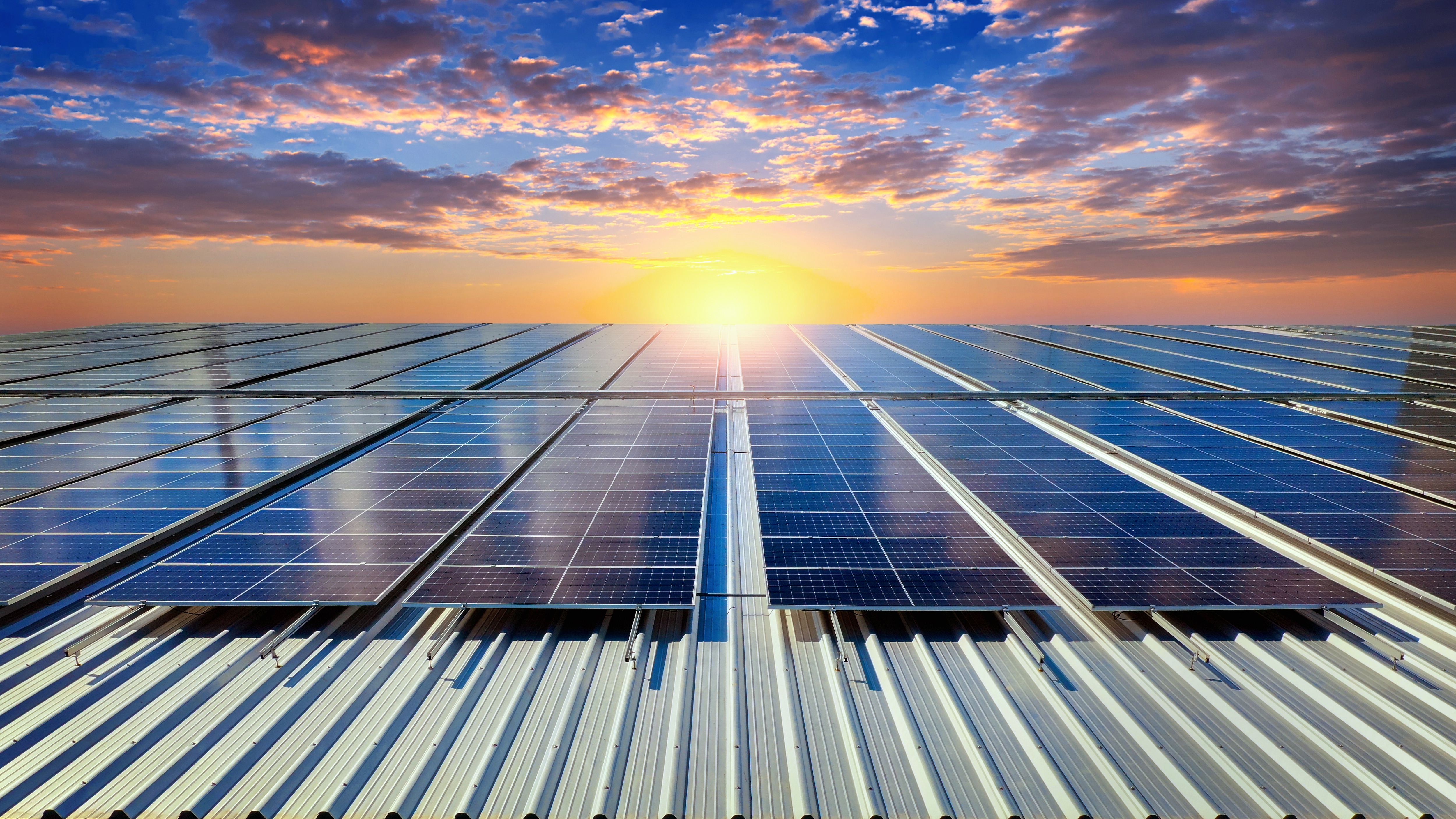
Generation of solar power in India has been growing at a five-year compounded annual growth rate of 13.9% till 2023, according to the Press Information Bureau. This growth coincides with policy shifts favoring solar capacity expansion since fiscal 2018.
Data from the Ministry of Commerce and Industry reveals a surprising trend in India's solar industry. While the domestic solar module manufacturing capacity has reached a level that can potentially meet internal needs, India still imports a significant number of solar modules and panels. Incidentally, this coincides with a rise in India's exports of solar components.
Solar Import Bill
India imported Rs 28,726.8 crore worth of solar photovoltaic cells, assembled in the form of solar modules or solar panels, from April 2023 till January 2024. This value is 3.86 times higher than fiscal 2023.
Despite India's self-sufficiency, China has been the top exporter for solar modules or panels since domestic producers still prefer to import the panels due to price differences.
China's Elaborate Rerouting
India's 25% import duty on Chinese solar cells and modules is aimed to boost domestic manufacturing. However, China appears to have found loopholes.
Chinese producers are shipping solar components to Southeast Asian countries like Cambodia, Malaysia, Thailand or Vietnam for minor processing in an attempt to avoid paying anti-dumping duties, according to the US Department of Commerce's findings last August.
This strategy's results are also reflected in the Ministry of Commerce's import data on solar panels. India's imports of solar panels from China indeed dropped 20% in the April–January period compared to 2021–2022. Vietnam's solar-panel exports to India have skyrocketed from Rs 2.15 lakh to a staggering Rs 6,713.2 crore in the same period. Imports from Malaysia and Singapore grew seven times and three times respectively. Cambodia, with no previous solar-panel exports to India, has now entered the market with Rs 167.2 crore worth of exports in the April–January period.
Solar Export Bill
India's solar module or panel exports have grown at a three-year CAGR of 343% to Rs 12,104.2 crore in the April–January period in comparison to approximately Rs 618 crore in 2021–22.
The export potential for Indian manufacturers comes due to domestic companies' preference for importing cheaper Chinese components and countries like the US preferring Indian products compared to China's.
India's Top Solar-Panel Buyer
The Indian manufacturers are thriving, and this is largely driven by exports to the US, which has imposed restrictions on Chinese imports and accounts for 98% of India's exported solar modules or panels.
Factors To Benefit Domestic Producers
Low Chinese Silicon Prices
Prices of polysilicon, a key raw material for solar panels, have hit a three-year low due to overcapacity and fierce competition, according to a recent Bloomberg report. The China Silicon Industry Association has said that average prices have dropped 20% in the past week itself.
The same capacities that producers added when prices spiked in 2021 are now flooding the market, causing Chinese producers to see losses. Companies are now unwilling to sell as buyers are requesting extremely low prices, the association said. This leaves the domestic manufacturers an opportunity to sell more products locally as well.
Domestic Demand
The Indian producers could also see a domestic demand revival due to government push. Under some of the Ministry of New and Renewable Energy's current schemes, it has been mandated to source solar PV cells and modules from domestic sources. The Approved Models and Manufacturers of Solar Photovoltaic Modules (Requirements for Compulsory Registration) Order, 2019, is a list that states only the models and manufacturers included in the list are eligible for use in government projects.
Efforts made by various Indian companies can also help improve the value chain of the Indian solar component, which in turn will help lower prices. The Adani Group has begun commercial production of wafers and ingots, used for making solar power cells and modules, at its Gujarat factory. They also aim to make polysilicon in 2027/28. Companies like Reliance New Solar Energy Solar Ltd., a subsidiary of Reliance Industries Ltd., and Jindal India Solar Energy Ltd. have also announced plans to enter the polysilicon manufacturing space. This will not only help reduce India's import bill but also boost domestic manufacturing.
Big Export Potential
Waaree Energies, which is India's largest solar PV module manufacturer, has an aggregate capacity of 12 gigawatts. China's tensions with the US and the EU created a large opportunity for India.
In its draft red herring prospectus, Waaree Energies said that while India's manufacturing capacity of solar modules is expected to reach 90–95 GW by 2028, domestic demand is estimated to be around 40–45 GW. This indicates a surplus of solar module supply, which can be exported to other countries.
The high financial potential for solar module exports is also reflected in Waaree Energies' export sales. The company's export sales have grown 9.6 times from fiscal 2021 to fiscal 2023.

-
One Battle After Another: India's Corporate Dynasties Battle For Control

2026 could go down as Corporate India's year of succession wars, governance battles and family fault lines.
-
Rs 50-Lakh Gold In Bank Locker, Rs 3 Lakh Of Protection: The Gap Most Families Don't Know About
The RBI ties a bank's liability to the annual locker rent and families who want to insure their jewellery face a separate question about how to prove what was inside.
-
The More Food Turns Into Fuel, The Harder It Is To Read Agricultural Markets | The Reason Why
A policy designed to reduce dependence on imported fuel can create new pressures elsewhere in the food economy.
-
Your iPhone Costs 12 Grams Of Gold, A Car About 100. What Does Your Life Weigh?
Measured in rupees, almost everything looks more expensive than it did a generation ago. Measured in grams of gold, a lot of it has become cheaper.
-
Gold Is Rs 22,000 Cheaper Than A Month Ago. Should You Buy Amid The Wedding Season?
Gold's potential slide to $3,500 could save around Rs 4,700 per 10 grams, but a soft inflation print could just as easily push prices back up. One way to split the risk is to buy in parts, some now and the rest after the Fed's Dec. 9 decision.
-
AI Agents Are Gaining Power. Who Governs Them?
Artificial intelligence agents promise to transform productivity by moving machines from assisting decisions to executing them. But as organisations delegate greater authority to these AI-agents, they must first establish who controls that authority and who remains accountable when things go wrong.
-
Why Swapping Your Old Gold Can Trigger A Rs 5 Lakh Tax Bill, And How You Can Avoid It Legally
Swapping old gold for new is taxed as a sale and a fresh purchase. Getting your own gold remade can cut most of that bill, though it has its own costs.
-
The AI Trade is Done. The Real Opportunity for Investors Starts in 2027 | Unhedged Position
As pureplay AI stocks plunge and circular, capex-led financing unwinds, 2027 is set to be a year of reckoning for AI companies. Yet the bust clears the way for a better opportunity for investors in 2027 -- shifting the spotlight from AI builders to the companies using AI.
-
Leadership As Mission: Why The Age Of AI Demands More Human Leadership
Debjani Ghosh examines how AI is changing leadership, arguing that its success must be measured by its impact on people and the accountability of those guiding its use.
-
We May Need Another Tukaram Mundhe To Fight Air Pollution | The Reason Why
Developers may install basic measures such as sprinklers and green nets, resume work, and continue violating rules when this equipment stops working.









