Piyush Goyal Likely To Head To US Again With Eye On Tariff Delays
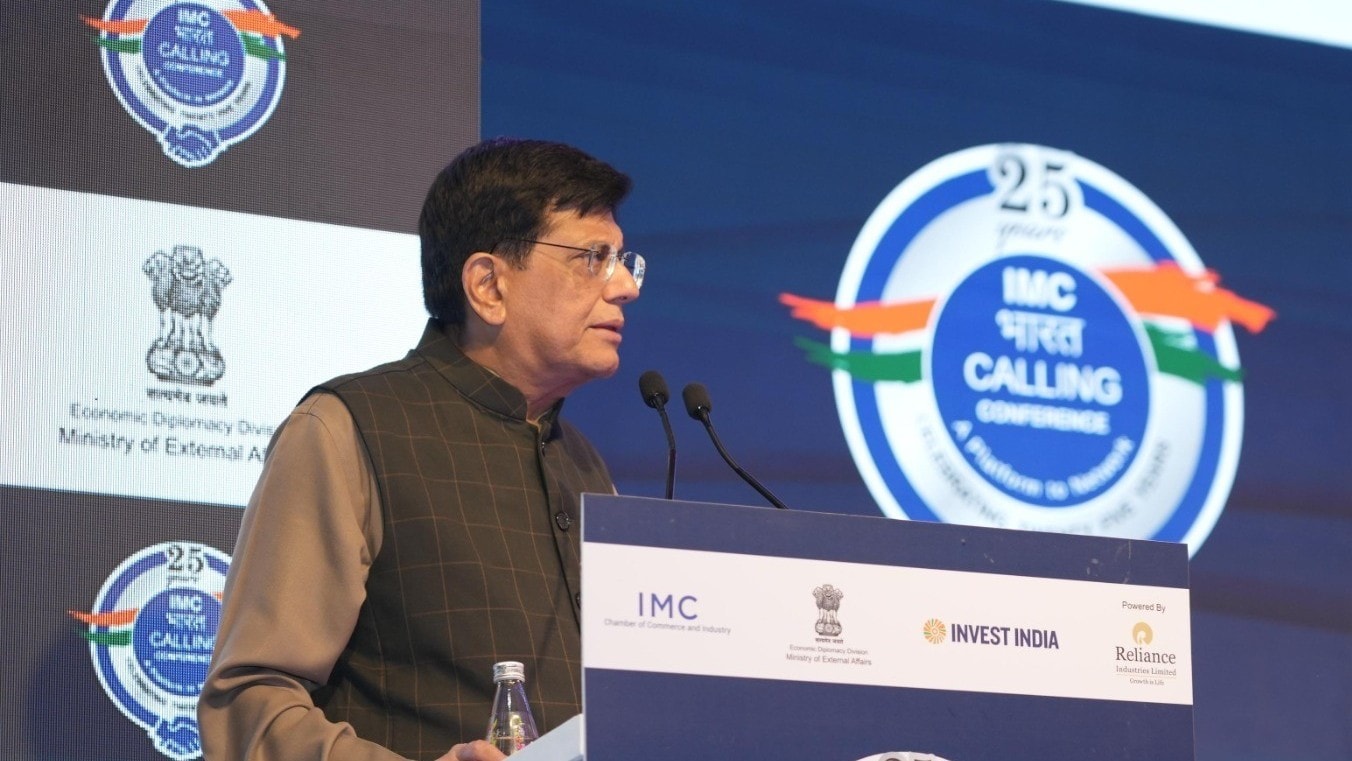
Commerce and Industry Minister Piyush Goyal is set to visit Washington DC again soon, in a bid to possibly seek time for tariffs being imposed on India, according to sources.
Goyal's second visit comes amid the US' plans to impose reciprocal tariffs from April 2. It has already announced tariffs on China, Canada and Mexico, while leaving out India so far.
Goyal and his team of negotiators returned only on Saturday (March 8) from the US, after talks with US Trade Representative Jamieson Greer and US Commerce Secretary Howard Lutnick.
Meanwhile, amid rising tariff uncertainties, the government is also considering the implementation of the incentives it had announced in this year's Budget under the Export Promotion Mission within a month.
The incentives, worth about Rs 2,250 crore, will entail facilitating access to export credit, providing cross bordering factoring support and additional handholding in tackling non-tariff measures from various overseas markets.
According to the sources, several Indian exporters are currently holding back due to tariff uncertainties. While February export figures, barring petroleum and gems/jewellery, are seen largely being steady, there is some impact anticipated.
The trade data numbers for February will be announced on March 17.
At present, shipments can take anywhere between 20 and 50 days, which could make pricing potentially uncompetitive in case of tariff adjustments.
The commerce ministry is also set to meet export promotion councils on March 13, to seek their inputs on how tariffs might impact key Indian exports across sectors.
Exporters' View
Despite some impact being seen and heightening tariff concerns, Indian exporters remain confident of a positive outcome of the ongoing US-India trade deliberations.
Ashwani Kumar, President of the Federation of Indian Export Organisations, said while it's "too early" to see how tariff wars will pan out, India stands to benefit.
"Each country is looking for their own profits. In any case, India will benefit from this situation, we expect to gain $2.5 billion from these tariff wars. Our garments, engineering exports will continue to grow," said Kumar.
He added that there will be "some way out if US imposes an additional tariff of 5-10%." "There might be cases where consumers will end up paying...To get something, we'll have to lose something," he added.
Story So Far
A potential bilateral trade agreement between India and the US made its way to the joint statement issued following Prime Minister Narendra Modi's meeting with President Donald Trump in February. As part of the BTA, the two nations have agreed to boost trade to $500 billion by 2030.
The trade deal will also entail deeper market access to India for US companies, and also tariff concessions on both sides. US Commerce Secretary Lutnick has stated that India should open up its agricultural market, a sector it has so far remained protectionist of, given that the country is a very large agrarian economy.
"It just can't stay closed...Indian market for agriculture has to open up... How you do that and the scale by which you do that, may be, do quotas, may be do limits. You can be smarter when you have your most important trading partner on the other side of the table," Lutnick had remarked at an event.
President Trump has also revealed that India signaled its readiness to make deeper tariff cuts, after he ramped up pressure on the country to lower trade barriers that he deems "unfair".
On Monday, officials from India's commerce ministry clarified that there have been no commitments made to the United States so far, sources said.
India and the US will be involved in talks till September 2025 to iron out the details related to their bilateral trade, the officials said in a meeting called by the Parliamentary Standing Committee on External Affairs, said the persons privy to the development.
The officials, who represented the commerce ministry at the meeting, said India's trade situation is not comparable with that of Mexico, Canada, or China — the three countries that were the first targets of Trump's tariff actions.

-
One Battle After Another: India's Corporate Dynasties Battle For Control

2026 could go down as Corporate India's year of succession wars, governance battles and family fault lines.
-
Rs 50-Lakh Gold In Bank Locker, Rs 3 Lakh Of Protection: The Gap Most Families Don't Know About
The RBI ties a bank's liability to the annual locker rent and families who want to insure their jewellery face a separate question about how to prove what was inside.
-
The More Food Turns Into Fuel, The Harder It Is To Read Agricultural Markets | The Reason Why
A policy designed to reduce dependence on imported fuel can create new pressures elsewhere in the food economy.
-
Your iPhone Costs 12 Grams Of Gold, A Car About 100. What Does Your Life Weigh?
Measured in rupees, almost everything looks more expensive than it did a generation ago. Measured in grams of gold, a lot of it has become cheaper.
-
Gold Is Rs 22,000 Cheaper Than A Month Ago. Should You Buy Amid The Wedding Season?
Gold's potential slide to $3,500 could save around Rs 4,700 per 10 grams, but a soft inflation print could just as easily push prices back up. One way to split the risk is to buy in parts, some now and the rest after the Fed's Dec. 9 decision.
-
AI Agents Are Gaining Power. Who Governs Them?
Artificial intelligence agents promise to transform productivity by moving machines from assisting decisions to executing them. But as organisations delegate greater authority to these AI-agents, they must first establish who controls that authority and who remains accountable when things go wrong.
-
Why Swapping Your Old Gold Can Trigger A Rs 5 Lakh Tax Bill, And How You Can Avoid It Legally
Swapping old gold for new is taxed as a sale and a fresh purchase. Getting your own gold remade can cut most of that bill, though it has its own costs.
-
The AI Trade is Done. The Real Opportunity for Investors Starts in 2027 | Unhedged Position
As pureplay AI stocks plunge and circular, capex-led financing unwinds, 2027 is set to be a year of reckoning for AI companies. Yet the bust clears the way for a better opportunity for investors in 2027 -- shifting the spotlight from AI builders to the companies using AI.
-
Leadership As Mission: Why The Age Of AI Demands More Human Leadership
Debjani Ghosh examines how AI is changing leadership, arguing that its success must be measured by its impact on people and the accountability of those guiding its use.
-
We May Need Another Tukaram Mundhe To Fight Air Pollution | The Reason Why
Developers may install basic measures such as sprinklers and green nets, resume work, and continue violating rules when this equipment stops working.









