Piyush Goyal To Flag Key Issues At Informal WTO Meet Amid US' Rejection Of India's Claims
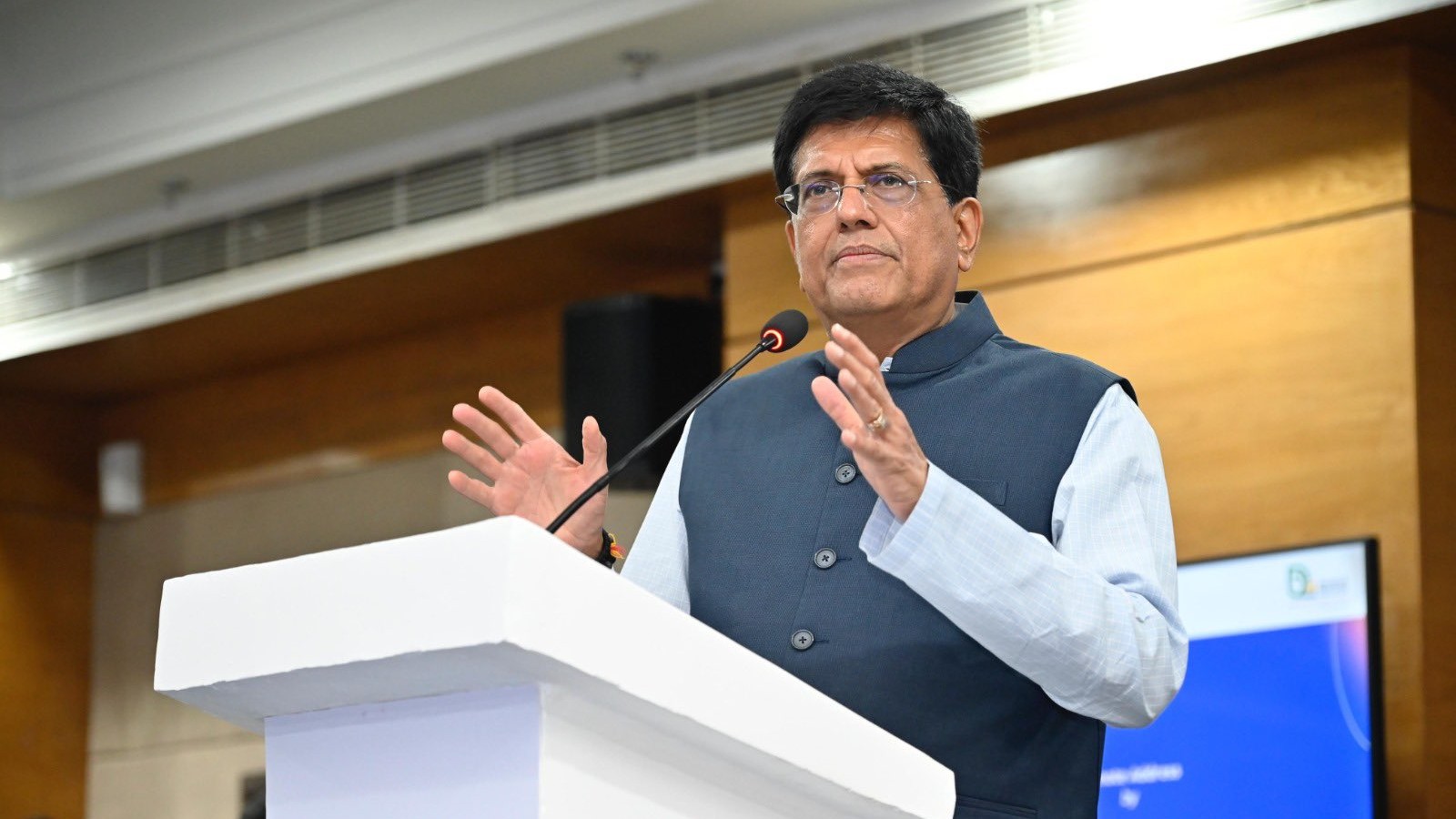
Commerce Minister Piyush Goyal on Tuesday is expected to raise key WTO reforms at an informal gathering of ministers on the margins of the OECD Ministerial Council Meeting.
The crucial meet comes amid US' rejection of India's claim that American tariffs on steel and aluminium are safeguard measures under the World Trade Organization rules.
Goyal is expected to bring up key issues, like finding permanent solution to the public stock holding in agriculture, fisheries agreement, investment facilitation proposal and the dysfunctional appellate body of the Geneva-based forum.
The minister's move against the WTO comes days after Commerce Secretary designate Rajesh Agarwal also slammed the body for failing to "maintain a global trading order, thereby causing market failure".
US' rejection comes after India on May 9 submitted a formal notification to the WTO. India's position was that the US tariffs—imposed under Section 232 of the US Trade Expansion Act of 1962—amounted to safeguard measures under WTO rules, entitling India to withdraw equivalent concessions.
Given this rejection, India now faces several options, such as retaliation, raising a formal dispute or settling through talks.
"One option is to launch a formal WTO dispute...India could argue that the US is abusing the national security exception, using earlier WTO rulings that set limits on how Article XXI can be invoked. However, this legal route carries risks, as the US has a history of ignoring WTO rulings," according to Ajay Srivastava, founder of think tank Global Trade Research Initiative.
"A stronger approach would be for India to impose retaliatory tariffs on its own, even without WTO authorisation. Other countries like the EU, Canada, and China have done this against the US Section 232 tariffs as a political signal of resistance. While this sends a clear message, it also brings the risk of US countermeasures and possible legal battles," he added.
However, according to Srivastava the recommended path is "a pragmatic route" by using the ongoing bilateral Free Trade Agreement negotiations.
"By pushing the US to eliminate or reduce the Section 232 tariffs on steel and aluminum as part of the FTA deal, India could secure a negotiated solution that addresses its concerns, while avoiding the lengthy and uncertain process of legal action or retaliation. This approach would allow India to use its negotiating leverage to gain meaningful market access benefits, without escalating the dispute through trade or legal fights at this stage," he added.
The fresh developments at the WTO also come in the backdrop of President Donald Trump doubling the existing 25% tariffs on steel and aluminium imports, raising them to 50% starting June 4.

-
Extracting Value From Battery Scrap Could Be Challenging For India | The Reason Why

A discarded lithium-ion battery still contains valuable materials such as lithium, nickel and cobalt. These can be recovered and reused. When such batteries are crushed and shredded, they produce a dark powder called black mass.
-
One El Nino, India Can Handle. Two Could Break The Granary
India's grain stocks can absorb one bad year, but a second El Nino could drain the buffer in two to three years, economists say.
-
India's Troika Of Good Luck | Joining The Dots
As Jensen Huang's exit drags Nvidia down, a cooling AI trade and resilient earnings have revived investor interest in India. A likely RBI rate hike looms.
-
Talking Points This Week: Leadership Shock At Nvidia, Earnings Strength, And The Fog Over Hormuz
The Anthropic IPO pricing and first trading day, Nvidia's upcoming earnings, and any fresh signals from Iran will set the tone for the following week.
-
Signature Play: The Classic Cocktail Is Dead. Or Is It?
Classic cocktails are disappearing from India's cocktail menus. But they're still being ordered, taught to bartenders and borrowed from. So, who's really having the last drink?
-
A New Samvat Wishlist: Inclusive Prosperity And Human Development
India has strengthened its economic foundations through infrastructure, digital access and enterprise. Its next growth chapter must deepen productivity, create better livelihoods and widen participation in prosperity.
-
Love, Sex Aur Dhokha: The Audacious Plot To Spy On Jensen Huang
A Taipei dinner, a Singapore chip buyer and a suspected Chinese asset: inside the alleged spy operation that got close to NVIDIA's Jensen Huang.
-
Ten Things I Learnt This Samvat
Patience can be a trap. Cheap stocks can stay cheap. Leverage can wipe you out. What did Samvat 2082 teach us? Niraj Shah writes on 10 lessons from the year gone by.
-
Talking Points This Week: Tech Nerves, FII Buying, And A Faraway Banking Shock
The global markets are not shining this Diwali. The exception in the large markets is, India.
-
Midterm Rally Lasted A Day. The Hard Reality Of A Divided US May Last Two Years | Opinion
Between a contested AI boom, a debt ceiling that arrives in 2027 and a president with every incentive to act alone, the next two years may prove more volatile than the first day's rally suggests.









