India-UK FTA: What Gets Cheaper And What Gets Costlier For India
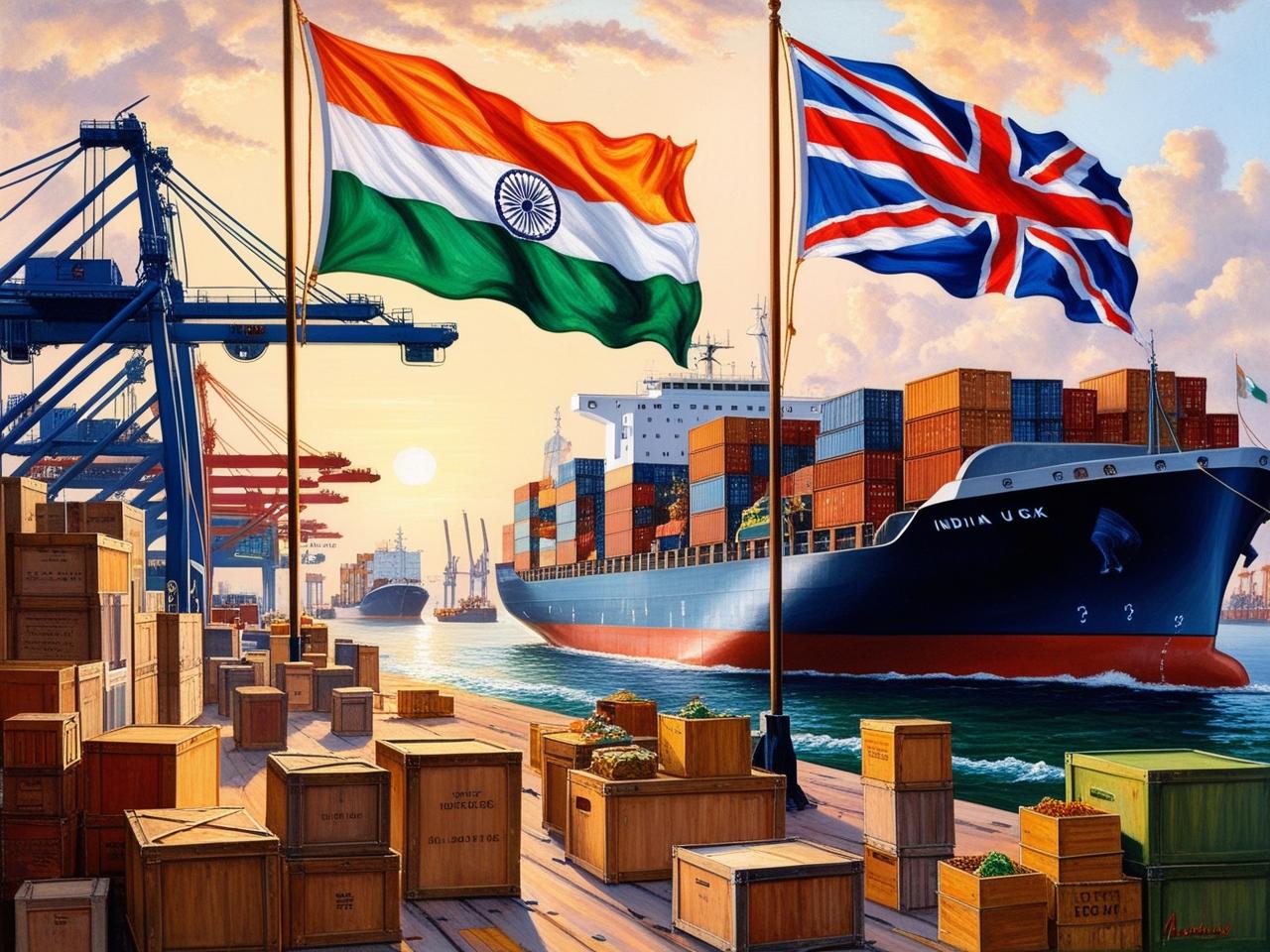
India's leading export segments, including apparel, auto components, carpets and marine products, are set to benefit the most from the India-UK Free Trade Agreement signed on Tuesday. The pact, which eliminates tariffs on nearly all industrial goods, is expected to unlock new export opportunities in the UK market.
As per estimates based on the compound annual growth rate of the last five years plus a 20% boost from tariff elimination, woven and knitted apparel, made-ups, and auto components are among the top gainers, each projected to nearly double exports to the UK by 2027.
What Gets Cheaper
Apparel & Textiles
Woven apparel exports from India, currently valued at $753 million, are projected to grow to $1,616 million by 2027. Knitted apparel is expected to rise from $654 million to $1,130 million. Both gain from a 9% tariff advantage under the FTA.
Made-ups, including home furnishings, are projected to rise from $276 million to $477 million, while carpets could grow from $102 million to $185 million—both benefiting from an 8% duty cut.
Footwear
India's footwear exports to the UK, now at $279 million, are expected to climb to $545 million by 2027, aided by a 7% tariff reduction.
Auto Components & Vehicles
With the UK's $88,810-million import base in this category, India's auto parts exports are projected to double from $286 million to $572 million, helped by an 8% tariff edge.
Marine Products
Seafood exports—including prawns and fish—could rise from $107 million to $185 million, also supported by an 8% duty removal.
Chemicals & Metals
Organic chemical exports are expected to increase from $420 million to $966 million by 2027 due to a 4% tariff cut. Aluminium products may also see gains, rising from $102 million to $200 million.
Scotch Whisky
India has agreed to halve tariffs on Scotch whisky—from 150% to 75%—with a further reduction to 40% over the next decade, making premium UK spirits significantly cheaper in the Indian market.
Alcobev Companies Express Concerns
Indian Spirits
While the broader FTA removes tariffs on 99% of Indian exports, the alcoholic beverage sector says it has been left behind.
The Confederation of Indian Alcoholic Beverage Companies flagged concerns over the lack of protection for domestic spirits against cheaper UK imports.
“The government has not fully heeded the pleas of the Indian Alcobev industry,” said CIABC Director General Anant S. Iyer.
“Without a Minimum Import Price and removal of non-tariff barriers, Indian spirits are vulnerable to dumping.”
He warned that if similar terms are used in FTAs with the EU and US, the local wine and spirits sector could face long-term damage. The CIABC has also asked for action on excise duty disparities in Indian states, saying the government's $1-billion export target for the sector by 2030 is at risk without proper market access.
The Big Picture
The India-UK FTA gives 99% of Indian exports zero-duty access to the UK, covering textiles, leather, footwear, gems and jewellery, chemicals, and more.
In return, India will gradually remove duties on 90% of UK goods, with 85% becoming tariff-free over the next decade.
The deal is expected to double bilateral trade from $60 billion to $120 billion by 2030, and includes commitments on services, investment, and mobility of professionals.

-
We May Need Another Tukaram Mundhe To Fight Air Pollution | The Reason Why

Developers may install basic measures such as sprinklers and green nets, resume work, and continue violating rules when this equipment stops working.
-
Extracting Value From Battery Scrap Could Be Challenging For India | The Reason Why
A discarded lithium-ion battery still contains valuable materials such as lithium, nickel and cobalt. These can be recovered and reused. When such batteries are crushed and shredded, they produce a dark powder called black mass.
-
One El Nino, India Can Handle. Two Could Break The Granary
India's grain stocks can absorb one bad year, but a second El Nino could drain the buffer in two to three years, economists say.
-
India's Troika Of Good Luck | Joining The Dots
As Jensen Huang's exit drags Nvidia down, a cooling AI trade and resilient earnings have revived investor interest in India. A likely RBI rate hike looms.
-
Talking Points This Week: Leadership Shock At Nvidia, Earnings Strength, And The Fog Over Hormuz
The Anthropic IPO pricing and first trading day, Nvidia's upcoming earnings, and any fresh signals from Iran will set the tone for the following week.
-
Signature Play: The Classic Cocktail Is Dead. Or Is It?
Classic cocktails are disappearing from India's cocktail menus. But they're still being ordered, taught to bartenders and borrowed from. So, who's really having the last drink?
-
A New Samvat Wishlist: Inclusive Prosperity And Human Development
India has strengthened its economic foundations through infrastructure, digital access and enterprise. Its next growth chapter must deepen productivity, create better livelihoods and widen participation in prosperity.
-
Love, Sex Aur Dhokha: The Audacious Plot To Spy On Jensen Huang
A Taipei dinner, a Singapore chip buyer and a suspected Chinese asset: inside the alleged spy operation that got close to NVIDIA's Jensen Huang.
-
Ten Things I Learnt This Samvat
Patience can be a trap. Cheap stocks can stay cheap. Leverage can wipe you out. What did Samvat 2082 teach us? Niraj Shah writes on 10 lessons from the year gone by.
-
Talking Points This Week: Tech Nerves, FII Buying, And A Faraway Banking Shock
The global markets are not shining this Diwali. The exception in the large markets is, India.









