China Hits Back At Trump Tariffs With 34% Duties On All US Goods
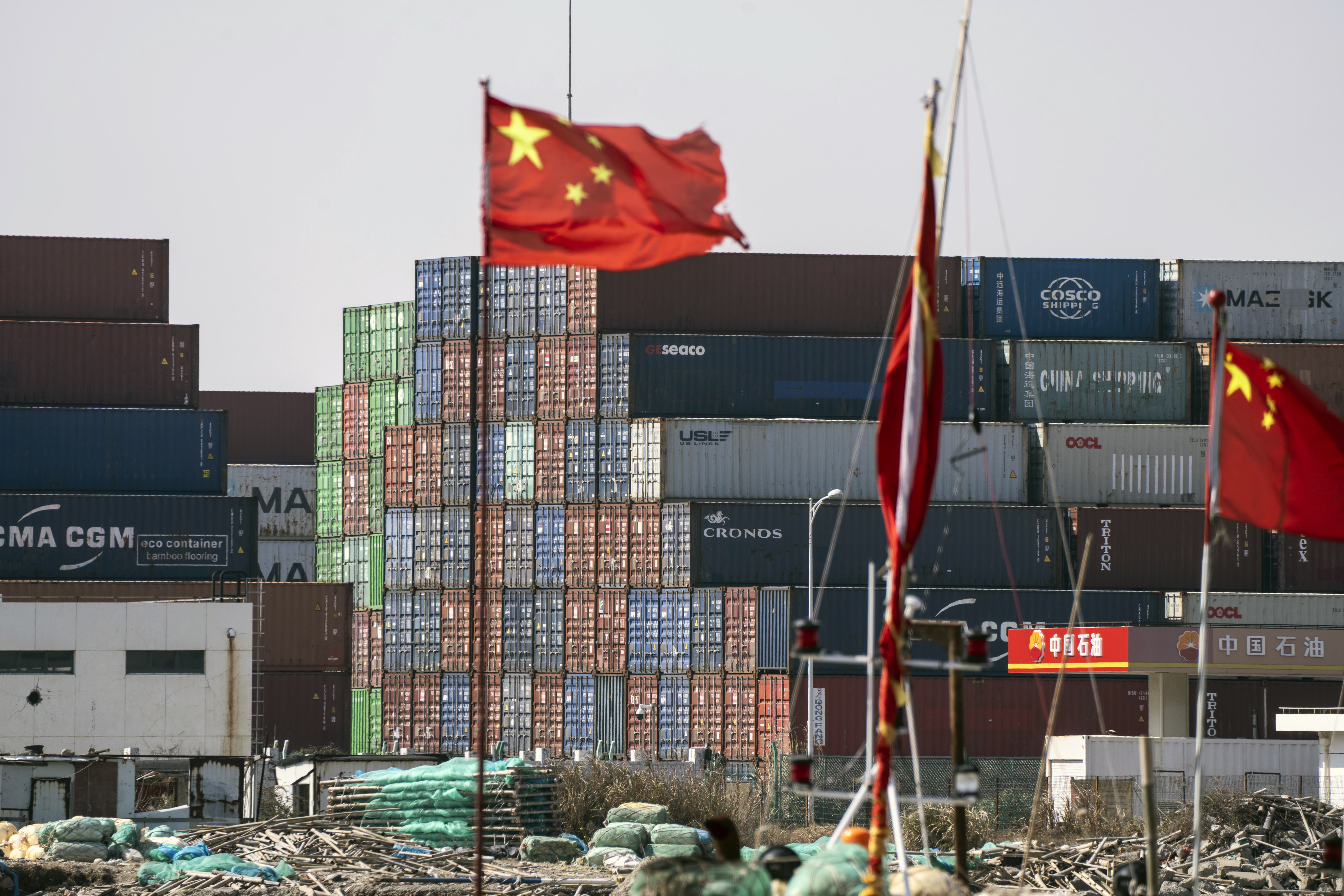
China retaliated against new US tariffs with a slew of measures, including levies on all American imports and export controls on rare earths, escalating the trade fight with President Donald Trump.
Beijing will impose a 34% tariff on all imports from the US starting April 10, matching the level of Trump's so-called reciprocal tariffs on Chinese products. Chinese authorities also announced other measures including:
Immediately restrict exports of seven types of rare earths
Launch anti-dumping probe into medical CT X-ray tubes from the US and India
Halt imports of poultry products from two American companies
Add 11 American defense companies to an unreliable entity list
Impose export controls on 16 US firms
Halt imports of sorghum from a US company
China's measures, announced on a holiday, followed Trump's announcement of reciprocal tariffs on global trade partners, introducing the steepest American duties in a century. The latest US tariffs will raise levies on nearly all Chinese products to at least 54%, potentially crippling Chinese exports to the US.
Tensions between Washington and Beijing have worsened since Trump's return to the White House. The US president has yet to speak with his Chinese counterpart more than two months after his inauguration. Both countries are locked in a stalemate over China's alleged role in the flow of fentanyl into America, which Trump cited as a reason for the previous two rounds of tariffs.
“The speed in which the counter measures were rolled out shows a high level of deliberation and a suite of appropriate responses to hit back at the US,” said Dylan Loh, assistant professor at the Nanyang Technological University in Singapore. “It strikes the balance between inflicting some pain but not being seen as a overreaction.”
European stocks plunged and headed for a correction after China's announcement. US stock-index futures also extended losses, sending contracts on the S&P 500 down 2.2% at 6:40 a.m. in New York. Treasuries surged further, with the yield on the 10-year plunging 15 basis points to 3.88%. An index of the dollar pared its gains.
In commodities, soybeans fell as much as 2% in Chicago to the lowest since early March. Wheat and corn dropped more than 1%, extending earlier losses.
Before this week's announcement, the tariff imbalance between the US and China was stark: American duties on Chinese goods towered over the tariffs China charges the US. China's average tariff on US goods stood at 17.8%, less than the 32.8% the US charged on Chinese goods, according to a Bloomberg Economics analysis.
Last year, China imported almost $164 billion of goods from the US, the lowest amount in four years.

“The US action does not abide by international trade rules, severely undermines China's legitimate and lawful rights and interests, and is typical unilateral bullying,” the Finance Ministry said in a statement announcing the 34% tariffs.
The economic conflict between the two governments has extended to private companies in both countries. Chinese officials have pushed back against Walmart Inc.'s efforts to pressure Chinese suppliers to cut prices to offset Trump's tariffs. Hong Kong tycoon Li Ka-shing drew Beijing's ire by agreeing to sell his company's ports in Panama, a move criticized as an attempt to appease Trump.
Trump justified his new tariffs as a fair way to match the barriers that other countries enact on US firms and goods. His administration has also accused China of erecting non-tariff barriers that disadvantage US exports and companies, complaints that were laid out in an annual report published by the USTR this week.
The latest measures reflect China's message to the Trump administration that both sides are equal, and Beijing will not simply submit or accept the situation, said Wen-Ti Sung, a non-resident fellow at the Atlantic Council's Global China Hub.
Still, China is leaving some “off-ramp,” he said. “China's retaliation seems still proportional and targeted by design, focusing mainly on agricultural goods and defense contractors, both of which are key Trump coalition constituencies.”

-
Getting To Work Costs Women More | The Reason Why

It is not just about women paying more than men. It is about women paying much more in cities than in villages.
-
AI Bias In Investing Cannot Be Eliminated, But It Can Be Governed
Framing is a particularly important example as identical financial information presented in terms of gains rather than losses can lead an LLM to reach a different assessment.
-
Joining The Dots | Dark Skies, Steady Diya: Why Hope Holds This Diwali
With war, a weak rupee and foreign outflows weighing on sentiment, policymakers at the NDTV World Summit and market veterans at NDTV Profit Ignite: Diwali Edition offered the same advice: stay invested and filter out the noise.
-
The Curious Case of Equitas Small Finance Bank And A CEO Who Quit For Stock
PN Vasudevan believes persistent investor concerns over a perceived conflict of interest had become a governance overhang on Equitas Small Finance Bank's stock, even as the lender improved profitability and asset quality.
-
Talking Points This Week: AI Cash Burn, A Tiger Comeback And An India That Still Finds Its Own Path
India is not immune to higher oil or tighter global liquidity, yet its earnings base is broader, its domestic policy levers are still available.
-
Foreign Investors Own Half Of HDFC Bank and ICICI Bank. An LTCG Cut Could Matter Most Here
Foreign portfolio investors have US$115 billion parked in HDFC Bank, ICICI Bank. If the government cuts long-term capital gains tax, Jefferies says returning foreign money could land here first.
-
'Never Seen This Level Of Negativity': Sandeep Tandon Says The Next Rally May Be Closer Than You Think
Veteran investor Sandeep Tandon says foreign selling is easing, large-caps are due a comeback and mid-caps are crowded, while he turns positive on gold, power and pharma this Diwali.
-
Indians Stay With Family, Not In Hotels | The Reason Why
India still lacks enough clean, reliable and affordable hotels for budget-conscious travellers.
-
The Economic Imperative: Analysing The Material Driving Force Behind India-Canada Strategic Reset
This economic complementarity is further reinforced by deep institutional investment ties and talent mobility, which form the bedrock of the bilateral framework.
-
Medicine Pricing: Where Must Profit Stop?
India must confront excessive margins, hidden incentives and regulatory gaps that threaten the integrity of medicine.










