Zuckerberg Lobbied Trump On Digital Taxes Before Tariff Threat
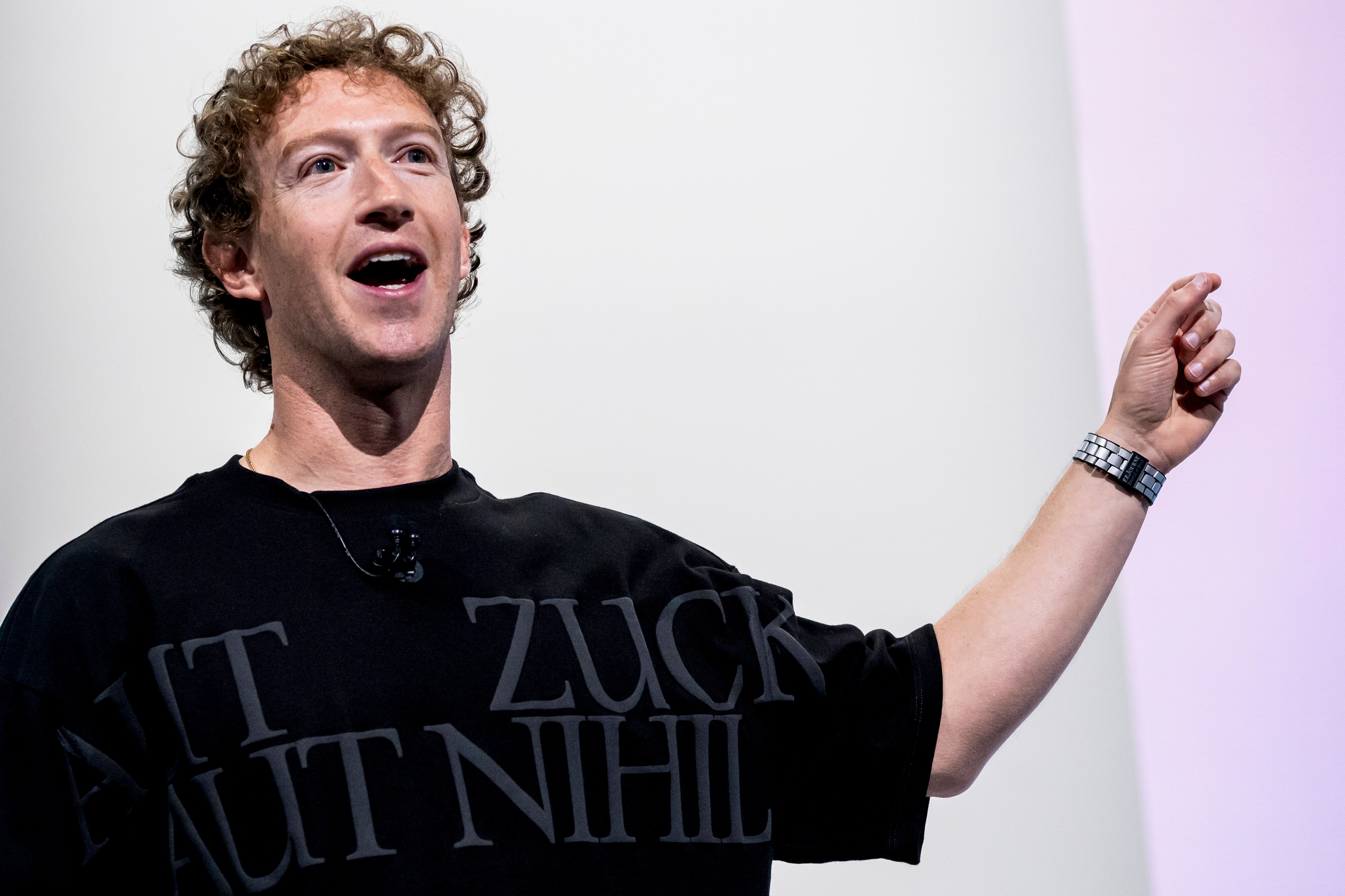
President Donald Trump threatened to inflict “substantial” tariffs on countries that impose digital taxes just days after Meta Platforms Inc. Chief Executive Officer Mark Zuckerberg raised concerns about the levies during a White House meeting.
The Facebook co-founder visited Trump late last week, according to people familiar with the private meeting, who asked not to be named as the details aren't public. During the meeting, one of the people said, Trump and Zuckerberg discussed the threat of digital service taxes, which are imposed on the revenue that tech companies get from users in a particular country. Meta generates the vast majority of its revenue through advertising targeted at Instagram, Facebook and WhatsApp users.
Days later, Trump said that digital taxes and related regulation harm and discriminate against American technology, while giving “a complete pass to China's largest Tech Companies.” The president added that he was putting all countries with such taxes “on notice” and would impose “substantial” tariffs and export restrictions on US semiconductors unless “these discriminatory actions are removed.”
“I will stand up to Countries that attack our incredible American Tech Companies,” Trump said Monday in a post on his social media platform, Truth Social.
The president's comments reignited a long-running feud with US trading partners, one that started long before last week's meeting with Zuckerberg. US officials have pressed the matter in trade talks with other nations and the European Union, arguing that digital taxes unfairly impact US tech companies like Meta, Amazon.com Inc. and Google owner Alphabet Inc.
Nations with digital services taxes include France, Italy, Austria, Spain and the UK. Rates and thresholds vary among jurisdictions.
In a statement, Meta confirmed that the two men had met. “Mark Zuckerberg visited the White House last week to discuss Meta's domestic infrastructure investments and advancing American tech leadership abroad,” the company said. Spokespeople for the White House didn't respond to requests for comment.
Since Trump's return to power, Zuckerberg has sought to get in the good graces of the president, who once called the Meta CEO a “criminal” and threatened to throw him in jail. That effort has included an overhaul of the company's moderation and diversity policies, as well as several visits to the White House and the president's Mar-a-Lago resort in Florida, along with a $1 million contribution from Meta to Trump's inauguration, which Zuckerberg attended.
Zuckerberg has also increased his presence in Washington, spending tens of millions of dollars on two adjacent homes near the Naval Observatory, where Vice President JD Vance resides, and bringing several Trump allies into his company and onto its board of directors.
With their relationship improved, Zuckerberg and Trump have repeatedly spoken about subjects ranging from artificial intelligence to European regulation of Big Tech. During their White House meeting last week, Trump and Zuckerberg revisited those themes, discussing AI, including plans for Meta's massive data center in rural Louisiana, along with what the two men see as regulatory overreach in Europe, according to one of the people.
Trump publicly touted the Louisiana data center during a Cabinet meeting on Tuesday, holding up a graphic provided to him by Zuckerberg showing the project superimposed over a map of Manhattan to demonstrate its scale. Trump said he was told the data center would cost $50 billion and expressed awe at its scope.

-
Extracting Value From Battery Scrap Could Be Challenging For India | The Reason Why

A discarded lithium-ion battery still contains valuable materials such as lithium, nickel and cobalt. These can be recovered and reused. When such batteries are crushed and shredded, they produce a dark powder called black mass.
-
One El Nino, India Can Handle. Two Could Break The Granary
India's grain stocks can absorb one bad year, but a second El Nino could drain the buffer in two to three years, economists say.
-
India's Troika Of Good Luck | Joining The Dots
As Jensen Huang's exit drags Nvidia down, a cooling AI trade and resilient earnings have revived investor interest in India. A likely RBI rate hike looms.
-
Talking Points This Week: Leadership Shock At Nvidia, Earnings Strength, And The Fog Over Hormuz
The Anthropic IPO pricing and first trading day, Nvidia's upcoming earnings, and any fresh signals from Iran will set the tone for the following week.
-
Signature Play: The Classic Cocktail Is Dead. Or Is It?
Classic cocktails are disappearing from India's cocktail menus. But they're still being ordered, taught to bartenders and borrowed from. So, who's really having the last drink?
-
A New Samvat Wishlist: Inclusive Prosperity And Human Development
India has strengthened its economic foundations through infrastructure, digital access and enterprise. Its next growth chapter must deepen productivity, create better livelihoods and widen participation in prosperity.
-
Love, Sex Aur Dhokha: The Audacious Plot To Spy On Jensen Huang
A Taipei dinner, a Singapore chip buyer and a suspected Chinese asset: inside the alleged spy operation that got close to NVIDIA's Jensen Huang.
-
Ten Things I Learnt This Samvat
Patience can be a trap. Cheap stocks can stay cheap. Leverage can wipe you out. What did Samvat 2082 teach us? Niraj Shah writes on 10 lessons from the year gone by.
-
Talking Points This Week: Tech Nerves, FII Buying, And A Faraway Banking Shock
The global markets are not shining this Diwali. The exception in the large markets is, India.
-
Midterm Rally Lasted A Day. The Hard Reality Of A Divided US May Last Two Years | Opinion
Between a contested AI boom, a debt ceiling that arrives in 2027 and a president with every incentive to act alone, the next two years may prove more volatile than the first day's rally suggests.









