Zomato IPO - Biggest Since Coal India, Ends Today
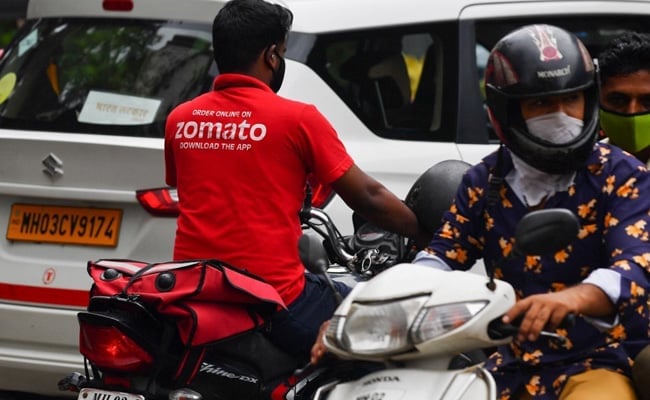
Zomato's Rs 9,375 crore initial public offering (IPO), the biggest public offering in more than a decade, closes for subscription today. The IPO of the online food delivery service provider is the second-largest IPO after the Rs 15,199.44 crore Coal India share sale way back in October 2010. It is also the first Indian mega startup to go public. The leading online food delivery service provider's IPO opened for bidding on Wednesday, July 14, and will close by 5:00 pm today.
Zomato's shares have been in high demand among retail individual investors and qualified institutional buyers. The IPO was subscribed nearly eight times by noon on the third and final day of the issue today, according to subscription data on the exchanges. The portion reserved for retail investors in the IPO was subscribed 5.75 times by 12 noon on Friday. The portion set aside for the non-institutional investors (NII) was subscribed 1.20 times, while the portion reserved for qualified institutional buyers (QIB) was subscribed 12.06 times - the highest among the three groups of investors. Ahead of the IPO, Zomato had raised more than Rs 4,196 crore from anchor investors.
The IPO consists of a fresh issue of Rs 9,000 crore and an offer for sale of Rs 375 crore by the promoter - Info Edge India. The restaurant aggregator will use the IPO proceeds to fund organic and inorganic growth initiatives and for general corporate purposes.
Zomato has fixed the price band of the primary market offering in the price band of Rs 72-76 per share. The shares of Zomato are likely to be listed on stock exchanges BSE and NSE on July 27.
Backed by China's Ant Group, Zomato is the most prominent startups in the country today and also has a presence in 24 countries.
Zomato IPO is likely to pave the way for other leading digital firms, such as Paytm, Flipkart and Ola, to go public. On Friday, Paytm filed draft papers for an initial public offering of up to Rs 16,600 crore, according to market regulator SEBI.

-
India Exports Capital. Why Not Export Trusteeship?

The big question, then, is whether India can build an institution that global borrowers, investors, banks, and lawyers can trust, even without an Indian connection.
-
France's Economy & Politics Are In Crisis | The Reason Why
Let's look at how the French economy and politics evolved under Nicolas Sarkozy, Franois Hollande and Emmanuel Macron.
-
You May Inherit The Business. You Must Earn Its Credibility.
Succession tests the founder's ability to share authority as much as it tests the next generation's readiness to assume it.
-
Signing Deals Is One Thing; Making Them Work Is Another | The Week In Whys
Sometimes, things don't turn out as planned. Indian companies have lost some bids to rivals, some projects won't produce until 2030.
-
FOMC Wall, PERM Suspension, Hospital Stocks | Talking Points This Week
A PERM suspension would directly affect green-card sponsorship rather than H-1B visas, so the near-term earnings impact could remain relatively limited. The key question is whether this marks a new phase in US scrutiny of Indian IT.
-
Everything, Everywhere, All At Once: Dalal Street's Week To Forget | Joining The Dots
Visa curbs, a Starlink spat and cancer drug caps: what connects this week's shocks for Indian markets
-
India Is Going Abroad For Critical Minerals. But It May Take Years To Pay Off | The Reason Why
Although India's steps are in the right direction, they remain modest compared with India's growing dependence.
-
When Everyone Has AI, What Gives You An Edge?
India's young workforce is entering an uncertain world of work where powerful AI tools are becoming widely accessible. The advantage will belong to those who combine deep expertise with digital fluency, and the distinctly human capabilities that technology cannot manufacture.
-
Wrong Labels, High Pesticide Residues Holding Back Agri Exports | The Reason Why
India needs stronger domestic food-safety and labelling standards, with best practices becoming part of everyday business for farmers, traders and food companies.
-
India Is Easy To Enter, Harder To Attract | The Week In Whys
The question is no longer just whether India can attract companies and capital. It is how much value they create here, how deeply they invest, and whether India remains relatively attractive when they have plenty of other options.