Zero Balance Account: Top Banks' Interest Rates, Other Facilities Compared
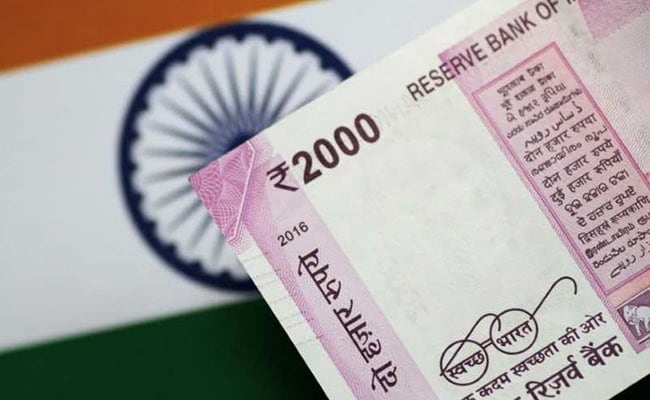
A zero balance savings account does not require customers to maintain any particular minimum average balance. Most leading banks offer the option of zero balance account. State Bank of India (SBI) offers the facility of opening a zero balance account in the form of a Basic Savings Bank Deposit (BSBD), Digital Savings and Insta Savings accounts. Axis Bank offers a basic saving deposit account and Axis ASAP savings account. HDFC Bank's BSBD or basic savings bank deposit account is also a zero balance account, wherein the customer is not required to any particular minimum balance.
Here's a comparison of zero balance savings accounts (basic savings bank deposit account) offered by SBI, HDFC Bank and Axis Bank:
SBI zero balance savings account (basic savings bank deposit account)
This account can be opened by any individual provided he or she has valid KYC or know your customer documents. This zero balance savings account is primarily meant for poor sections of the society to encourage them to start saving without any burden of charges or fees, according to SBI's corporate website, sbi.co.in.
Benefits of zero balance savings account (basic savings bank deposit account) of SBI
A basic RuPay ATM-cum-debit card will be issued free of cost to the users of this account. However, there is no annual maintenance charge. The receipt or credit of money through electronic payment channels such as NEFT and RTGS is also free. The deposit or collection of cheques drawn by central/state governments is free.
SBI does not charge anything on activation of inoperative zero balance savings accounts (BSBDA). There are no account closure charges, the lender said.
A maximum of four withdrawals are allowed in a month. These withdrawals include ATM withdrawals at own and other bank's ATMs and transactions through other modes including RTGS, NEFT, clearing, branch cash withdrawal/transfer, internet debits, standing instructions, EMI etc. No further customer debits are allowed during the month.
Interest rates offered on zero balance savings account/BSBD by SBI:
The interest rates offered by SBI on BSBD accounts are the same as those on regular savings bank accounts. For savings deposits balance up to Rs. 1 crore, BSBD accounts fetches an interest rate of 3.5 per cent per annum. On savings deposits balance over Rs. 1 crore, the BSBD account offers an interest rate of 4 per cent per annum.
HDFC Bank's zero balance savings account (HDFC Bank BSBD account):
Customers can access the network of branches of the bank through this account. Key features of HDFC Bank BSBD account include zero balance and a free RuPay card, according to HDFC Bank on its website - hdfcbank.com.
Benefits of HDFC Bank BSBD account:
Customers will be able to avail a safe deposit locker and super saver facilities, according to HDFC Bank's website, hdfcbank.com. HDFC Bank issues a free passbook facility for all individual account holders and customers also get free cash and cheque deposit facility at branches and ATMs. Customers get four withdrawals free per month including ATM, RTGS, NEFT, clearing, branch cash withdrawal/transfer, internet debits, standing instructions, EMI etc. In case of more than four withdrawals in a month, HDFC Bank would convert the existing BSBD account into a regular savings account and all rules and charges as per regular savings account would be applicable.
Customers also get free lifetime BillPay, InstaQuery and e-mail statement facilities. NetBanking, PhoneBanking and MobileBanking allow you to check account balance, pay utility bills, or even stop cheque payments via SMS, according to HDFC Bank.
Interest rates on HDFC Bank zero balance account
On account balance above Rs 50 lakh and above, HDFC Bank offers an interest rate of 4 per cent. On account balance below Rs 50 lakh, HDFC Bank pays an interest rate of 3.5 per cent.
Axis Bank zero balance account details
Axis Bank's zero balance account offers a zero balance facility, a free debit card and unlimited free cash deposit.
Benefits of Axis Bank zero balance account
Axis Bank's zero balance account allows you to access more than 12,000 Axis Bank ATMs, over 2,500 Axis Bank branches as well as internet, mobile and phone banking services. Deposit and withdrawal of cash at bank branch as well as ATMs is offered. Receipt/credit of money through electronic payment channels or by means of collection/deposit of cheques is also offered. Axis Bank allows customers up to four withdrawals a month (including branch cash, Axis/ other ATM cash withdrawal, PoS (Point of Sale), Micro ATM, NEFT/RTGS, DD/PO, ECS/SI debit transactions) and the facility of unlimited deposits, the bank said on its website, axisbank.com.
You can get monthly e-statements, passbook, and SMS alerts. Besides, Axis Bank zero balance account offers accidental insurance cover of Rs. 1 lakh to all account holders, at no charge or premium.
The zero balance account is available for primary and joint account holders. The daily withdrawal limits of Rs. 40,000 at ATMs and Rs. 1,00,000 for shopping transactions are quite high, according to Axis Bank. A RuPay debit card can also be issued for customers who cannot read and write, according to the bank.
Axis Bank zero balance account holders can seek help from 'Bank Mitra', an individual or an organisation, representative of a bank and authorised to offer basic banking services in rural and urban areas where there are no bank branches or ATMs.
Interest rates on Axis Bank Zero Balance Account
With effect from July 1, 2017, interest earned on zero balance account will be credited on the last business day of each quarter of the financial year. From August 8, 2017, customers can earn up to 4 per cent interest per annum on account balance of Rs. 50 lakh and above. Interest earned is 3.5 per cent per annum on account balance less than Rs 50 lakh.

-
Indians Are Travelling, But Not Every Journey Is A Holiday | The Week In Whys

Pilgrims, patients and working women are the real travellers, and the system hasn't quite caught up with them.
-
Getting To Work Costs Women More | The Reason Why
It is not just about women paying more than men. It is about women paying much more in cities than in villages.
-
AI Bias In Investing Cannot Be Eliminated, But It Can Be Governed
Framing is a particularly important example as identical financial information presented in terms of gains rather than losses can lead an LLM to reach a different assessment.
-
Joining The Dots | Dark Skies, Steady Diya: Why Hope Holds This Diwali
With war, a weak rupee and foreign outflows weighing on sentiment, policymakers at the NDTV World Summit and market veterans at NDTV Profit Ignite: Diwali Edition offered the same advice: stay invested and filter out the noise.
-
The Curious Case of Equitas Small Finance Bank And A CEO Who Quit For Stock
PN Vasudevan believes persistent investor concerns over a perceived conflict of interest had become a governance overhang on Equitas Small Finance Bank's stock, even as the lender improved profitability and asset quality.
-
Talking Points This Week: AI Cash Burn, A Tiger Comeback And An India That Still Finds Its Own Path
India is not immune to higher oil or tighter global liquidity, yet its earnings base is broader, its domestic policy levers are still available.
-
Foreign Investors Own Half Of HDFC Bank and ICICI Bank. An LTCG Cut Could Matter Most Here
Foreign portfolio investors have US$115 billion parked in HDFC Bank, ICICI Bank. If the government cuts long-term capital gains tax, Jefferies says returning foreign money could land here first.
-
'Never Seen This Level Of Negativity': Sandeep Tandon Says The Next Rally May Be Closer Than You Think
Veteran investor Sandeep Tandon says foreign selling is easing, large-caps are due a comeback and mid-caps are crowded, while he turns positive on gold, power and pharma this Diwali.
-
Indians Stay With Family, Not In Hotels | The Reason Why
India still lacks enough clean, reliable and affordable hotels for budget-conscious travellers.
-
The Economic Imperative: Analysing The Material Driving Force Behind India-Canada Strategic Reset
This economic complementarity is further reinforced by deep institutional investment ties and talent mobility, which form the bedrock of the bilateral framework.










