Yes Bank Explains Its Decision To Release Divergence Report
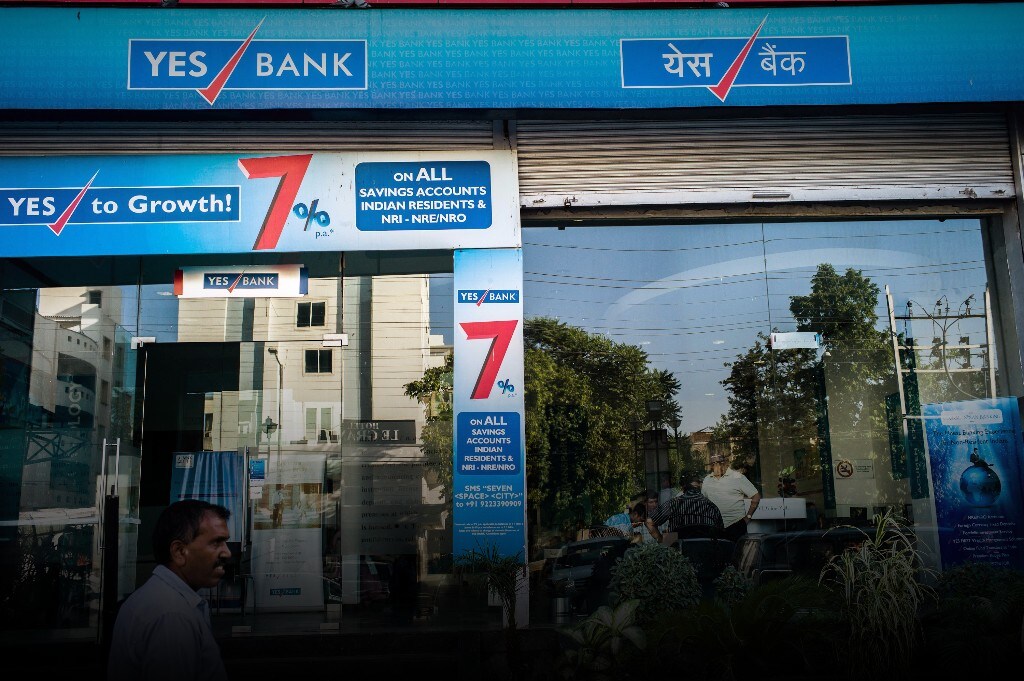
Yes Bank Ltd. offered clarifications on its decision to release parts of a confidential risk assessment report days after the Reserve Bank of India censured it for doing so.
The private lender, in response to queries by the National Stock Exchange, said it decided to disclose a part of the report dealing with divergence in bad loan reporting as it saw this information as “unpublished price sensitive information”. As per capital market regulations, listed firms have to disclose such information to stock exchanges to avoid asymmetry of information.
The bank in its assessment was of the view that the disclosure pertaining to divergence was a UPSI and required prompt dissemination to the stock exchanges to ensure compliance with SEBI (PIT) Regulations and the NSE and BSE circulars. Further, in terms of Regulation 30 of SEBI (Listing Obligations and Disclosure Requirements) Regulations, 2015 (“Listing Regulations”), the listed companies are required to make timely disclosures with respect to material price sensitive information.Yes Bank Statement
The private lender said it had been receiving queries from various stakeholders on the divergence in bad loan reporting for FY18. As such, once this information was available with the bank, it felt appropriate to release this information to investors.
The RBI, in its letter to Yes Bank on Friday, had said the bank had disclosed the divergence report, included in the broader risk assessment report, selectively. “The risk assessment report also identifies several other lapses and regulatory breaches in various areas of the bank's functioning and the disclosure of just one part of the RAR is viewed by the RBI as a deliberate attempt to mislead,” the central bank had said.
In response to a query on what lapses and breaches had been pointed out by the RBI, Yes Bank said this information was part of a confidential report and cannot be divulged.
It is humbly submitted that the RAR has been marked as “confidential” by the RBI and hence, the bank is not in a position to provide any further details of the same to the stock exchange(s), unless allowed by the RBI. Further, the RBI has mandated that no part of the RAR and information contained therein, except for the information on “divergence” as prescribed in the RBI Notification dated April 18, 2017, and SEBI circular dated July 18, 2017, can be made public.Yes Bank Statement
As per the RBI's regulations, banks are required to disclose any divergence of more than 15 percent in the assessment of bad loans. These disclosures “shall be made in the notes to accounts in the ensuing annual financial statements published immediately following communication of such divergence by the RBI to the bank”, the RBI had said in its notification dated April 18, 2017.
Yes Bank argued that it is not the only bank to have reported the result of this divergence assessment outside of the mandated format. “ We would also like to submit that few of the peers have also submitted the information pertaining to ‘divergence' to the stock exchanges along with their quarterly results, that is much ahead of finalisation of their annual results,” the lender said.
The bank said its intention was “not to mislead investors, as suggested by the RBI in its letter”.
It is respectfully submitted that the bank has not indulged in any sort of misrepresentation or in providing any misleading information to the stock exchanges and the investors.Yes Bank Statement

-
Getting To Work Costs Women More | The Reason Why

It is not just about women paying more than men. It is about women paying much more in cities than in villages.
-
AI Bias In Investing Cannot Be Eliminated, But It Can Be Governed
Framing is a particularly important example as identical financial information presented in terms of gains rather than losses can lead an LLM to reach a different assessment.
-
Joining The Dots | Dark Skies, Steady Diya: Why Hope Holds This Diwali
With war, a weak rupee and foreign outflows weighing on sentiment, policymakers at the NDTV World Summit and market veterans at NDTV Profit Ignite: Diwali Edition offered the same advice: stay invested and filter out the noise.
-
The Curious Case of Equitas Small Finance Bank And A CEO Who Quit For Stock
PN Vasudevan believes persistent investor concerns over a perceived conflict of interest had become a governance overhang on Equitas Small Finance Bank's stock, even as the lender improved profitability and asset quality.
-
Talking Points This Week: AI Cash Burn, A Tiger Comeback And An India That Still Finds Its Own Path
India is not immune to higher oil or tighter global liquidity, yet its earnings base is broader, its domestic policy levers are still available.
-
Foreign Investors Own Half Of HDFC Bank and ICICI Bank. An LTCG Cut Could Matter Most Here
Foreign portfolio investors have US$115 billion parked in HDFC Bank, ICICI Bank. If the government cuts long-term capital gains tax, Jefferies says returning foreign money could land here first.
-
'Never Seen This Level Of Negativity': Sandeep Tandon Says The Next Rally May Be Closer Than You Think
Veteran investor Sandeep Tandon says foreign selling is easing, large-caps are due a comeback and mid-caps are crowded, while he turns positive on gold, power and pharma this Diwali.
-
Indians Stay With Family, Not In Hotels | The Reason Why
India still lacks enough clean, reliable and affordable hotels for budget-conscious travellers.
-
The Economic Imperative: Analysing The Material Driving Force Behind India-Canada Strategic Reset
This economic complementarity is further reinforced by deep institutional investment ties and talent mobility, which form the bedrock of the bilateral framework.
-
Medicine Pricing: Where Must Profit Stop?
India must confront excessive margins, hidden incentives and regulatory gaps that threaten the integrity of medicine.










