Yes Bank Crisis: Impact On EMIs, Business Loan Repayment And More
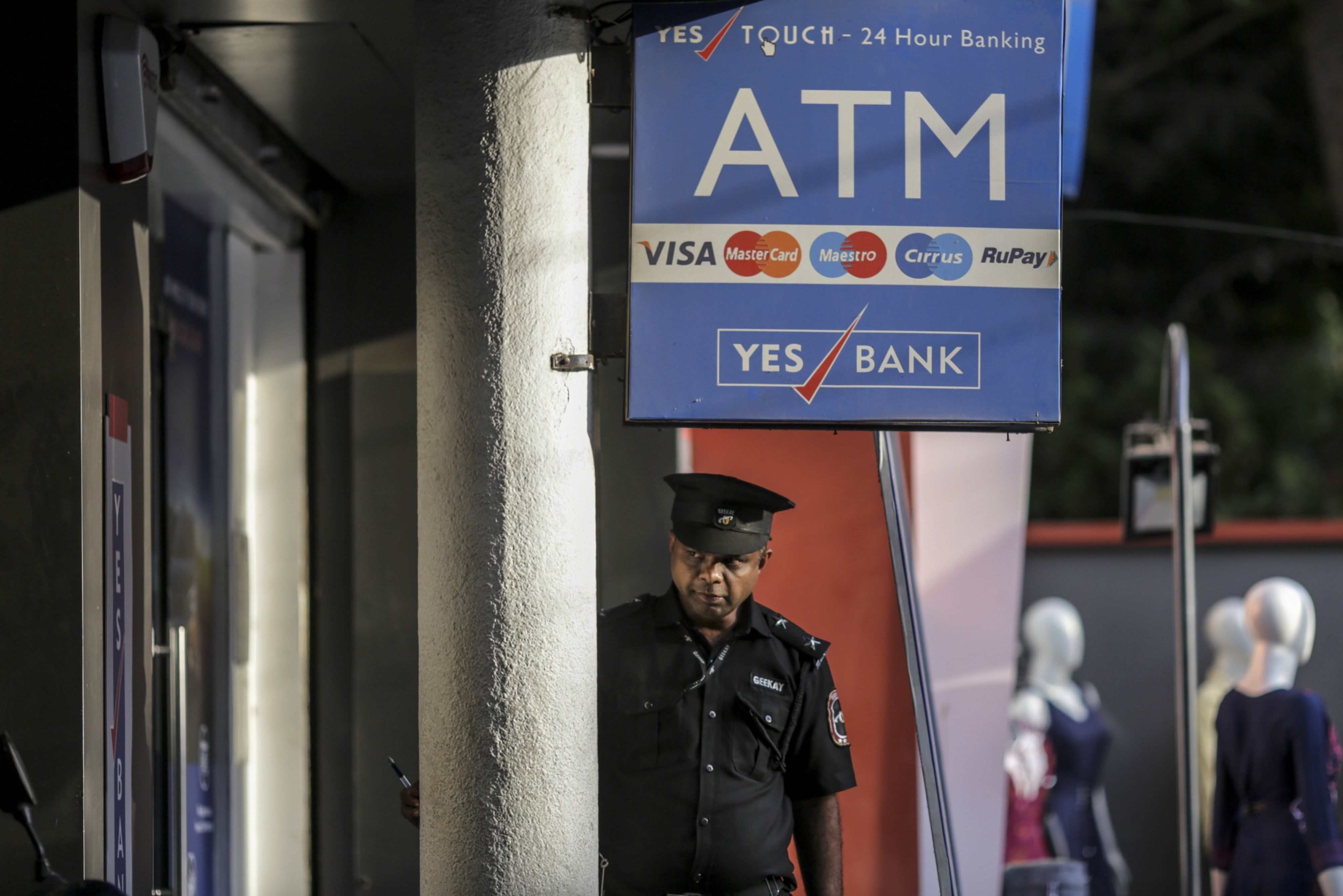
With the Reserve Bank of India imposing a Rs 50,000 withdrawal limit on account holders and depositors of Yes Bank Ltd., there's confusion over loan repayments.
Yes Bank's outstanding advances stood at Rs 2.24 lakh crore as of Sept. 30. Will the bank allow electronic mandates for loan repayments or equated monthly instalments if they exceed Rs 50,000 or will the withdrawal limit apply?
BloombergQuint spoke with senior bankers to get a sense of what happens:
Home Loan EMIs
According to the head of retail and small business lending at a large private bank, loan repayments for retail customers are unlikely to get impacted by the limitations placed by the RBI. Typically, in situations where banks are faced with a moratorium, the borrowers can still make loan repayments through electronic mandates since it is not a personal withdrawal.
Otherwise, banks might see a spike in retail bad loans, which could be detrimental to the system, the private banker said.
Typically, payment gateways have different paths for cash withdrawals, fund transfers to other bank accounts and repayment of loans. This can be used to ensure that while withdrawals are blocked, repayments are not, the banker explained.
MSME Loan Repayments
Loans to micro, small and medium enterprises might work differently compared with mortgages. Since small businesses depend on working capital limits which are drawn down over time, MSME borrowers might face some trouble in using their limits, a senior public sector banker said speaking on the condition of anonymity.
As part of its restrictions on Yes Bank, the RBI has also blocked the bank from issuing any fresh credit or renewing any loans it may have extended.
The RBI statement said that Yes Bank can make payments towards bills already received, employee salaries, rent and taxes. But Yes Bank being a large private bank has a number of inter-linkages with the payment system. Already, RazorPay and PhonePe have highlighted service disruptions.
MSMEs with accounts in Yes Bank will also struggle to make payments for goods and services tax and other taxes, since this is the end of the financial year. As MSMEs typically work with just one bank, they might find it difficult to ensure that their statutory dues are cleared in time, a senior foreign banker said on the condition of anonymity.
Impact On Money Markets
The foreign banker quoted above said the banking system is likely to see no impact on the spot foreign exchange transactions, repo transactions or those involving government securities since these are all guaranteed by the Clearing Corporation of India Ltd.
Issues might crop up in the swaps market since rating agencies will downgrade Yes Bank after the RBI's actions. That will be counted as a credit event by the International Swaps & Derivatives Association.
While large companies are unlikely to face trouble in their foreign exchange operations, SMEs and other smaller companies dependent on Yes Bank are likely to face some issues, the foreign banker said.
Opportunity For Rivals
Restrictions on lending and deposit withdrawals on a large large private bank could give other banks an opportunity to expand
According to the senior public sector banker quoted above, well-rated borrowers could look at moving out of Yes Bank and approach other lenders in the system for their needs. This could lead to some benefits on loan disbursal for other banks.
However, in case of smaller borrowers or those who are low rated, banks might not be keen on taking on fresh exposure. This would mean that these borrowers are unable to receive credit from any major lender, increasing the chances of a default, the banker explained.
According to Ashish Gupta of Credit Suisse, the situation at Yes Bank creates an unnerving precedent and uncertainty for deposit holders and debt providers. This is likely to impact deposit flows to other small and mid-sized private banks in the country, Gupta said in his report on Friday. The interruptions in flow of liquidity will further affect India's credit crunch, since private banks have been driving most of the incremental credit growth in the country.
Related Coverage:
- Here's How Much Mutual Funds Are Exposed To Yes Bank Debt
- Yes Bank Shares Fall 85% Intraday To Lowest On Record
- Max Financial Falls The Most Since July 2016 On Yes Bank Crisis
- Mutual Funds With Equity Exposure To Yes Bank
- SBI Gets Board Approval To Explore Investment In Yes Bank, Shares Fall
- Yes Bank's Bonfire Of Insanity Was Left To Burn
- Indian Rupee Slides, Bonds Rally After RBI Seizes Yes Bank
- What Experts Made Of Moratorium On Yes Bank
- Government Puts Yes Bank Under Moratorium, RBI Supersedes Board, Withdrawals Capped At Rs 50,000

-
The Economic Imperative: Analysing The Material Driving Force Behind India-Canada Strategic Reset

This economic complementarity is further reinforced by deep institutional investment ties and talent mobility, which form the bedrock of the bilateral framework.
-
Medicine Pricing: Where Must Profit Stop?
India must confront excessive margins, hidden incentives and regulatory gaps that threaten the integrity of medicine.
-
Why Amazon And Flipkart Are Struggling To Beat Meesho In India's Smaller Cities
With 274 million users and lowest-cost logistics, Meesho is defending its value commerce crown against giants like Amazon and Flipkart.
-
High US Salaries, No Green Card Certainty: The Financial Calculation Facing Indian H-1B Families
The suspension of PERM processing at eight technology employers does not cancel existing H-1B visas. What it does is force a question many Indian families have been avoiding: is the US salary worth tying your career and family plans to one employer?
-
Swiggy vs Eternal: Food Delivery's Two Rivals Are No Longer In The Same Race
Eternal is building a private AI assistant, dark.ai. Swiggy is still working out how to make Instamart pay, with an operating loss of Rs 895 crore in the July-September quarter while Blinkit stayed profitable.
-
Where You Live Shapes How You Get To Work | The Reason Why
Two-wheelers are the most popular way to get to work in India, accounting for nearly 43% of workplace commutes.
-
Unhedged Position: Can India See An Indonesia-Style Time Correction?
The Nifty is trading below levels it first clocked in 2024. Is there, then, as I have suggested in the headline, potential that the current time correction drags on painfully for the next three-five, even ten years?
-
Navigating Friction And Energy Realities: An Analysis Of Marco Rubio's October Visit To India
Occurring at a critical juncture marked by stalled trade negotiations and escalating geopolitical pressures over global energy supplies, the visit offers a profound window into modern US-India relations.
-
India Exports Capital. Why Not Export Trusteeship?
The big question, then, is whether India can build an institution that global borrowers, investors, banks, and lawyers can trust, even without an Indian connection.
-
France's Economy & Politics Are In Crisis | The Reason Why
Let's look at how the French economy and politics evolved under Nicolas Sarkozy, Franois Hollande and Emmanuel Macron.










