Yen Sinks As Forex Market Adjusts To Aggressive Central Bank Rate Hikes
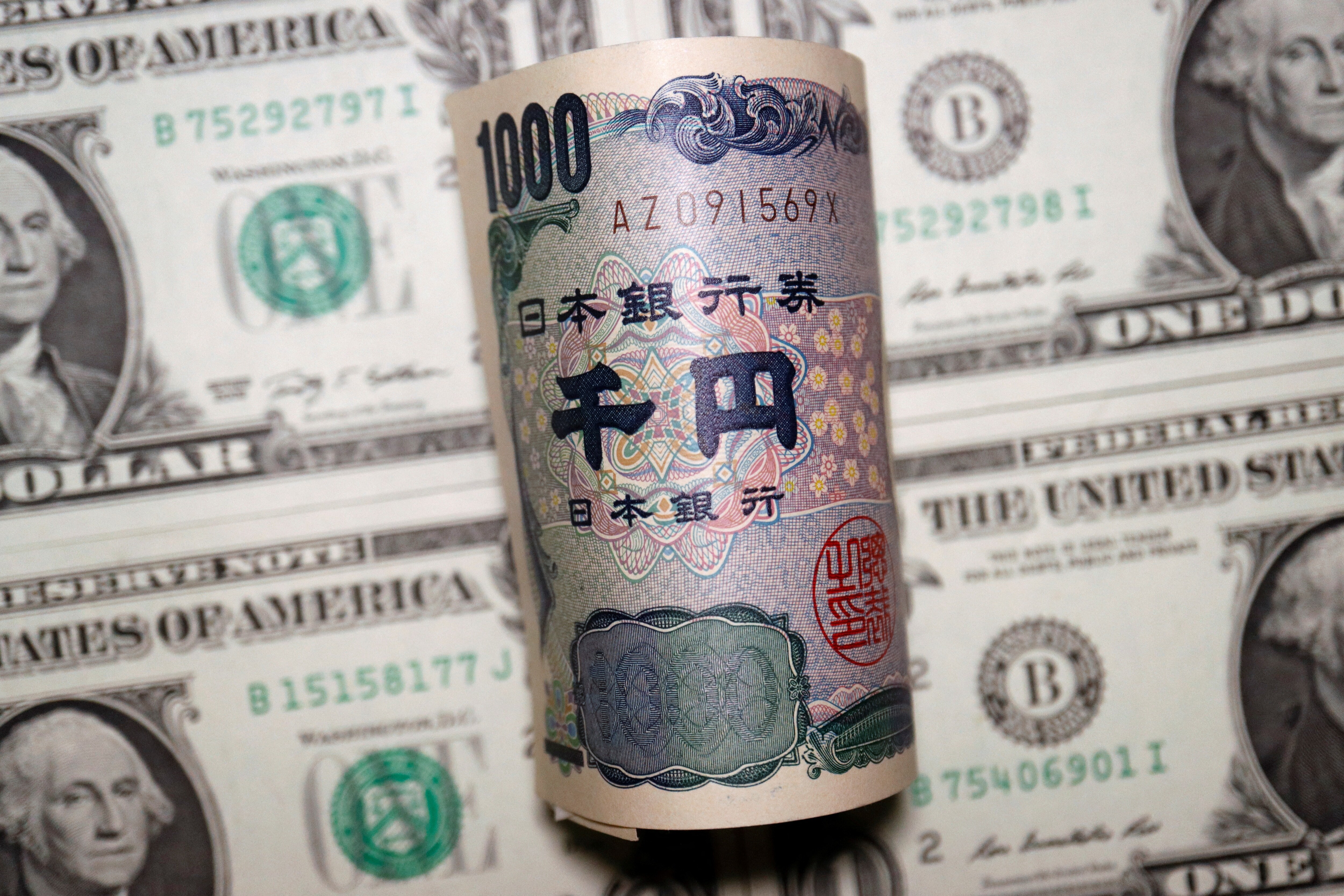
The Japanese yen tumbled against the dollar on Friday after the Bank of Japan bucked a wave of tightening and stuck with its ultra-accommodative stance, adding to soaring volatility in currency markets hit by a series of rate hikes this week.
Currency markets have been roiled by one of the biggest runs of monetary policy tightening in decades, including the Federal Reserve's mid-week three-quarters-of-a-percentage-point rate increase, its biggest since 1995, and the Swiss National Bank's surprise decision to hike rates by 50 basis points.
Japan's central bank swam against the current on Friday, keeping its policy settings unchanged and vowing to defend its bond yield cap of 0.25 per cent with unlimited buying.
"Everybody expected the BOJ to do something. They didn't," said Boris Schlossberg, managing director of FX strategy at BK Asset Management.
The yen, which on Wednesday hit a 24-year low of 135.6 per dollar, plunged in reaction to the BOJ decision. The Japanese currency was last down 2.09 per cent against the greenback at 134.885 yen, and was 1.62 per cent lower versus the euro.
The 135 level has been a technical resistance point for the yen and breaking through it could force many shorts against the dollar-yen currency pair to have to cover their bets, potentially pushing the pair up to 137 or 140, said Schlossberg.
"If we start to really creep higher from this point, I think it will definitely force some of these early shorts out of the trade," he said.
Graphic: Yen near 24-year lows
The dollar rose from a one-week low against major peers, bouncing off a two-day slide after the Fed's mid-week rate increase of 75 basis points, a move that was anticipated by markets as the Fed attempts to tame stubbornly high inflation.
The dollar index, which measures the currency against a basket of six rivals, was up 0.732 per cent at 104.64, putting it on track for a weekly rise of around 0.4 per cent ahead of a long weekend in the United States.
"Today we're seeing a rebalancing of the market," said Simon Harvey, head of FX analysis at Monex Europe. "Markets are still adjusting to the central bank meetings from throughout the week."
The euro was last down 0.53 per cent at $1.0496 versus the dollar.
The Swiss National Bank's surprise decision to raise rates by half a percentage point continued to reverberate through markets, with the franc touching 1.0098 against the euro, its strongest since April 13, as investors bet the SNB would not try to stop the strengthening currency as it has in the past.
Giving up earlier gains against the Swiss currency, the dollar lost 0.31 per cent to 0.9696 francs, after tumbling the most in seven years versus the Swissy in the previous session.
"The surprise rate hike in Switzerland, as well as the European Central Bank's announcement that it is working on a tool to prevent the fragmentation of the European bond markets, will help to limit USD strength around current levels," strategists at UBS's Global Wealth Management's Chief Investment Office said in a research note.
Sterling dropped 0.99 per cent to $1.2229, giving back most of its gains from when the Bank of England decided to lift rates again, albeit by less than many in the market had expected, along with a hawkish signal about future policy action.
Currency markets are also having to contend with a massive drop in risk sentiment that has roiled equity markets.
The Australian dollar, which is very sensitive to the broad global investment mood, fell 1.53 per cent to just under $0.6938 after stock markets in Asia tumbled, while Wall Street edged higher after a steep selloff on Thursday.

-
Your iPhone Costs 12 Grams Of Gold, A Car About 100. What Does Your Life Weigh?

Measured in rupees, almost everything looks more expensive than it did a generation ago. Measured in grams of gold, a lot of it has become cheaper.
-
Gold Is Rs 22,000 Cheaper Than A Month Ago. Should You Buy Amid The Wedding Season?
Gold's potential slide to $3,500 could save around Rs 4,700 per 10 grams, but a soft inflation print could just as easily push prices back up. One way to split the risk is to buy in parts, some now and the rest after the Fed's Dec. 9 decision.
-
AI Agents Are Gaining Power. Who Governs Them?
Artificial intelligence agents promise to transform productivity by moving machines from assisting decisions to executing them. But as organisations delegate greater authority to these AI-agents, they must first establish who controls that authority and who remains accountable when things go wrong.
-
Why Swapping Your Old Gold Can Trigger A Rs 5 Lakh Tax Bill, And How You Can Avoid It Legally
Swapping old gold for new is taxed as a sale and a fresh purchase. Getting your own gold remade can cut most of that bill, though it has its own costs.
-
The AI Trade is Done. The Real Opportunity for Investors Starts in 2027 | Unhedged Position
As pureplay AI stocks plunge and circular, capex-led financing unwinds, 2027 is set to be a year of reckoning for AI companies. Yet the bust clears the way for a better opportunity for investors in 2027 -- shifting the spotlight from AI builders to the companies using AI.
-
Leadership As Mission: Why The Age Of AI Demands More Human Leadership
Debjani Ghosh examines how AI is changing leadership, arguing that its success must be measured by its impact on people and the accountability of those guiding its use.
-
We May Need Another Tukaram Mundhe To Fight Air Pollution | The Reason Why
Developers may install basic measures such as sprinklers and green nets, resume work, and continue violating rules when this equipment stops working.
-
Extracting Value From Battery Scrap Could Be Challenging For India | The Reason Why
A discarded lithium-ion battery still contains valuable materials such as lithium, nickel and cobalt. These can be recovered and reused. When such batteries are crushed and shredded, they produce a dark powder called black mass.
-
One El Nino, India Can Handle. Two Could Break The Granary
India's grain stocks can absorb one bad year, but a second El Nino could drain the buffer in two to three years, economists say.
-
India's Troika Of Good Luck | Joining The Dots
As Jensen Huang's exit drags Nvidia down, a cooling AI trade and resilient earnings have revived investor interest in India. A likely RBI rate hike looms.









