Yellen Heads To China This Week, Furthering US Move To Mend Ties

(Bloomberg) -- US Treasury Secretary Janet Yellen will travel to Beijing on July 6-9, becoming the second member of Joe Biden's cabinet to head to the Chinese capital in recent weeks as the world's two largest economies look to mend ties after a spate of bilateral tensions.
Yellen's trip will take place just three weeks after Secretary of State Antony Blinken visited China, highlighting the efforts by the Biden administration to reinstate lines of communication with counterparts in Beijing.
The trip announcement ends months of speculation over when — and whether — the top US economic policymaker would head to Beijing. The Treasury chief has said for months she intends to visit, but an escalation in tensions stemming from then-House Speaker Nancy Pelosi's trip last year to Taiwan — which Beijing claims as part of China — and the flight of a Chinese balloon over the US left the plans in limbo.
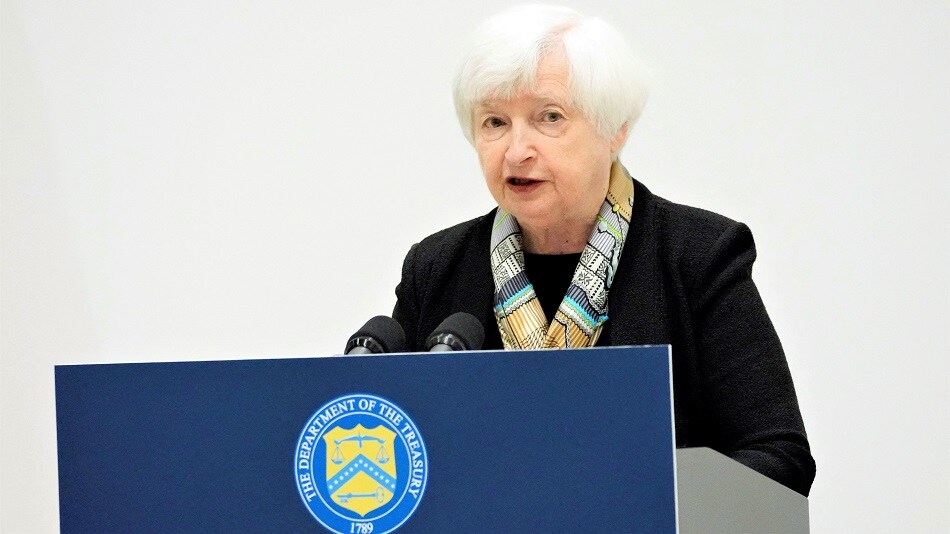
In Beijing, Yellen will meet with senior Chinese government officials to discuss the importance of responsibly managing the US-China relationship, communicating directly about areas of concern, and working together to address global challenges, the Treasury Department said.
While a senior Treasury official didn't say which government representatives Yellen will be meeting with in Beijing, they said she was not expected to meet with Chinese President Xi Jinping.
Trip Objectives
The official said that through this trip, the US will seek to deepen and increase the frequency of communication between the two countries, stabilize the relationship, avoid miscommunication and expand collaboration where possible.
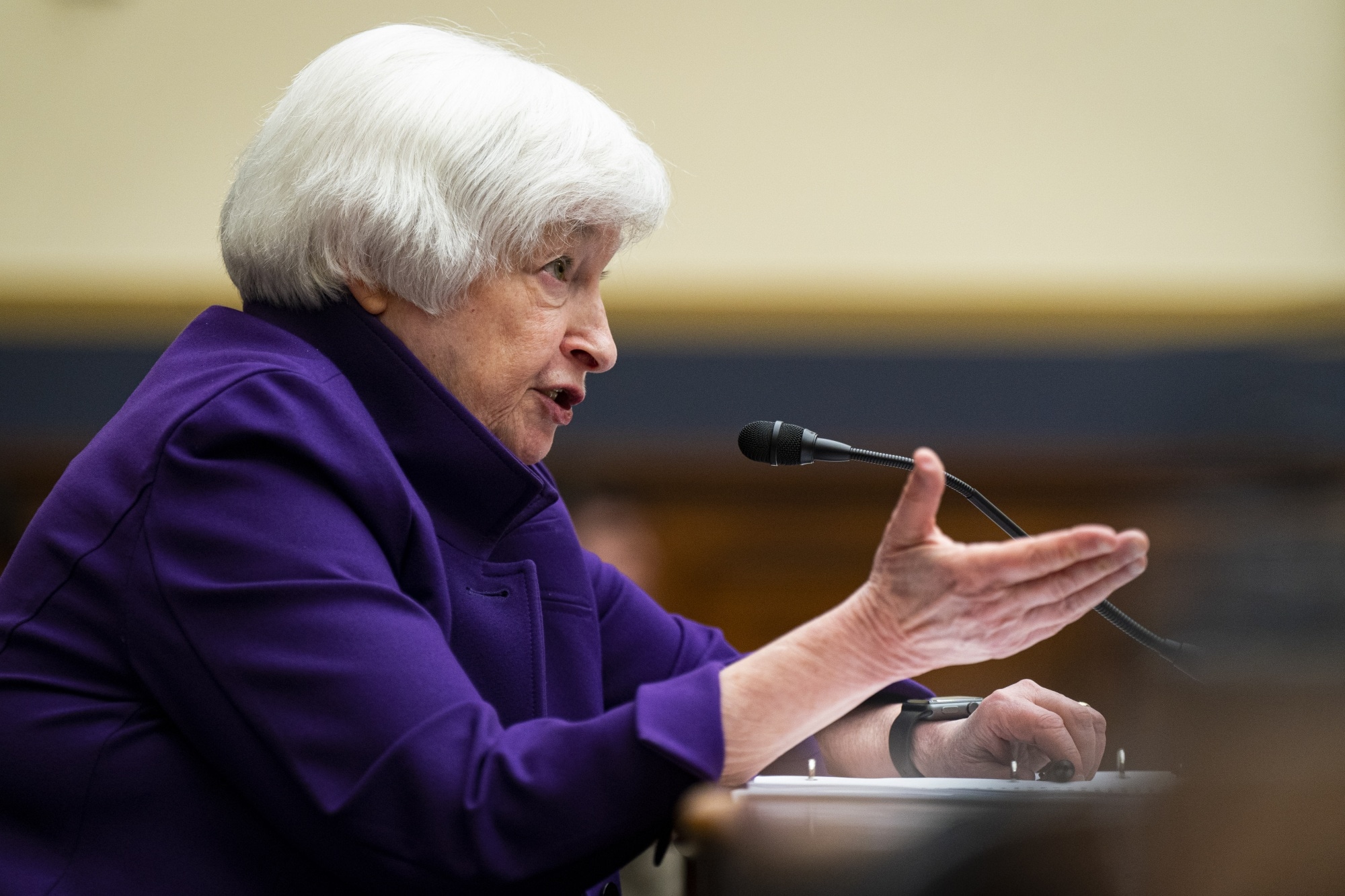
A key priority for the Treasury with China has been pressing Beijing to boost debt relief for developing nations in distress. Yellen's visit will follow a recent agreement in principle for Zambia, which she has praised.
The Treasury chief may face questions from her counterparts on the Biden administration's plans to regulate and potentially cut off US corporate investment in China in sensitive technologies.
In Beijing, Yellen plans to convey US concern and press for corrective action on areas like coercive actions and nonmarket economic practices used by China, the Treasury official said.
Communication Channels
The Treasury doesn't expect significant breakthroughs stemming from this initial travel, the official said. Rather, it hopes to build longer-term channels of communication with the Chinese government's new economic team and more regularly discuss issues in the bilateral economic relationship.
Consultations between top economic officials typically involve comparing notes on the outlooks for growth, and Yellen will have the opportunity to get Chinese authorities' assessment of recent data that have spurred private economists to downgrade their estimates. By contrast, resilient US growth and elevated inflation have spurred expectations for further Federal Reserve tightening — a dynamic that's sent the dollar higher against China's yuan.
Read More: Chinese Regulators Step Up Yuan Surveys as Selloff Worsens
US-China engagement today is a shadow of what it once was. The Treasury secretary at one point would meet with China's equivalent every six months, through the “Strategic Economic Dialogue,” but such forums became defunct in the Trump administration — which levied a raft of import tariffs on Beijing.
Both Yellen and top White House officials in recent months have sought to stress that the US is not seeking to decouple from its geopolitical rival but rather de-risk. Even so, in an April speech she warned that the US is prepared to accept economic costs in order to protect national-security interests from threats posed by China.
Yellen's new counterpart in Beijing is Vice Premier He Lifeng, a longtime confidant of President Xi. He succeeds Liu He — a fluent English-speaking veteran of the international stage who had studied at Harvard University. When Yellen and Liu met in January in Zurich, their rapport was such that they at one point left their aides behind as they kept talking. Analysts will be keen to monitor the new Yellen-He dynamic.
Among other potential issues in the upcoming talks: a recent crackdown by China on access to information about its companies, and continuing questions about prospects for Chinese firms listing on US exchanges. For their part, Chinese leaders have been continuously emphasizing that their country welcomes overseas firms.
Read More: Xi Vows to Protect Foreign Investors in Charm Offensive
“They've got some economic challenges and I think they want to make sure that they maintain a climate for foreign investment that is positive,” Yellen said in a recent interview.
As for a bilateral summit, President Joe Biden said in mid-June he anticipated meeting with Xi in the next several months. The two met in Indonesia in November during the Group of 20 summit.
On Friday, Biden received China's new ambassador to the US, Xie Feng. Even before the formal step of presenting himself at the White House, Xie criticized Biden's off-the-cuff remarks at a donor event on June 20 in which the president referred to Xi as a dictator.
(Updates with Biden receiving China's new ambassador.)
More stories like this are available on bloomberg.com
©2023 Bloomberg L.P.

-
Indians Stay With Family, Not In Hotels | The Reason Why

India still lacks enough clean, reliable and affordable hotels for budget-conscious travellers.
-
The Economic Imperative: Analysing The Material Driving Force Behind India-Canada Strategic Reset
This economic complementarity is further reinforced by deep institutional investment ties and talent mobility, which form the bedrock of the bilateral framework.
-
Medicine Pricing: Where Must Profit Stop?
India must confront excessive margins, hidden incentives and regulatory gaps that threaten the integrity of medicine.
-
Why Amazon And Flipkart Are Struggling To Beat Meesho In India's Smaller Cities
With 274 million users and lowest-cost logistics, Meesho is defending its value commerce crown against giants like Amazon and Flipkart.
-
High US Salaries, No Green Card Certainty: The Financial Calculation Facing Indian H-1B Families
The suspension of PERM processing at eight technology employers does not cancel existing H-1B visas. What it does is force a question many Indian families have been avoiding: is the US salary worth tying your career and family plans to one employer?
-
Swiggy vs Eternal: Food Delivery's Two Rivals Are No Longer In The Same Race
Eternal is building a private AI assistant, dark.ai. Swiggy is still working out how to make Instamart pay, with an operating loss of Rs 895 crore in the July-September quarter while Blinkit stayed profitable.
-
Where You Live Shapes How You Get To Work | The Reason Why
Two-wheelers are the most popular way to get to work in India, accounting for nearly 43% of workplace commutes.
-
Unhedged Position: Can India See An Indonesia-Style Time Correction?
The Nifty is trading below levels it first clocked in 2024. Is there, then, as I have suggested in the headline, potential that the current time correction drags on painfully for the next three-five, even ten years?
-
Navigating Friction And Energy Realities: An Analysis Of Marco Rubio's October Visit To India
Occurring at a critical juncture marked by stalled trade negotiations and escalating geopolitical pressures over global energy supplies, the visit offers a profound window into modern US-India relations.
-
India Exports Capital. Why Not Export Trusteeship?
The big question, then, is whether India can build an institution that global borrowers, investors, banks, and lawyers can trust, even without an Indian connection.










