WTO In Survival Mode Pushes Back On Splintering Global Trade
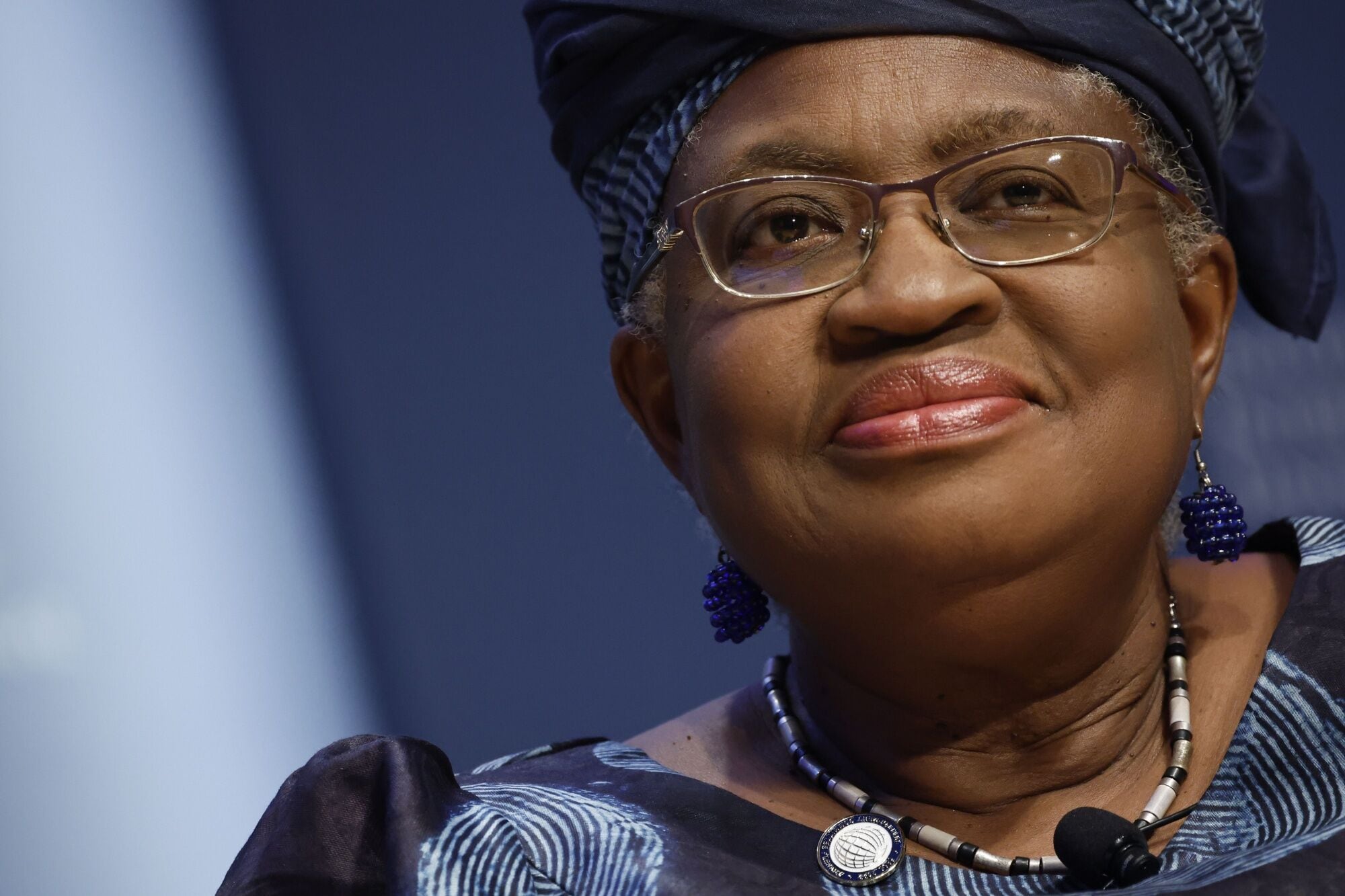
(Bloomberg) -- Fragmentation of the global economy into separate blocs would be “extremely costly” and make the world a less stable place, the World Trade Organization said in a report published Tuesday.
The report, which notes that geopolitical tensions among major economies are beginning to affect trade flows, offers a counter argument to the ascendant view that the last quarter century of global economic integration was a mistake.
“The WTO is not perfect — far from it,” wrote WTO Director-General Ngozi Okonjo-Iweala. “But the case for strengthening the trading system is far stronger than the case for walking away from it.”
“The alternative to rules-based integration is power-based fragmentation and a world of greater uncertainty, increased socioeconomic exclusion and heightened environmental decline,” she said.
The WTO estimates that the cost of splitting the world trade system into separate blocs would be about 5% of real income at the global level, with some developing economies withstanding double-digit losses.
The Geneva-based trade body urged policymakers to pursue greater international cooperation and broader economic integration — an approach the WTO described as “reglobalization.”
Economic Fragmentation
Without singling out President Joe Biden's administration, the WTO report focused on an “evolving narrative” that questions whether international trade does more harm than good.
Over the past year, US Treasury Secretary Janet Yellen, National Security Advisor Jake Sullivan and US Trade Representative Katherine Tai have all talked of a different approach to free trade in speeches that supported the Biden administration's embrace of a more protectionist approach.
Such views are increasingly manifesting themselves in the form of trade tensions between China and the US, the WTO said, and that's affecting the composition of bilateral trade flows — particularly for sensitive product categories, like semiconductors.
National Security
The WTO report found that national-security concerns are “playing a rapidly increasing role in trade policy” and illustrated how trade openness, historically has helped foster stability in international relations.
“Security concerns are no longer exclusively expressed in relation to conflict but encompass the much wider notion of economic security,” the report said. “As a result, security concerns percolate through trade policy more widely.”
The WTO examined the nexus of trade and peace by documenting the strong negative correlation between trade openness and conflict probability. The report cited studies that found a doubling of trade between two economies reduces the probability of conflict by 20% on average.
More stories like this are available on bloomberg.com
©2023 Bloomberg L.P.

-
One Battle After Another: India's Corporate Dynasties Battle For Control

2026 could go down as Corporate India's year of succession wars, governance battles and family fault lines.
-
Rs 50-Lakh Gold In Bank Locker, Rs 3 Lakh Of Protection: The Gap Most Families Don't Know About
The RBI ties a bank's liability to the annual locker rent and families who want to insure their jewellery face a separate question about how to prove what was inside.
-
The More Food Turns Into Fuel, The Harder It Is To Read Agricultural Markets | The Reason Why
A policy designed to reduce dependence on imported fuel can create new pressures elsewhere in the food economy.
-
Your iPhone Costs 12 Grams Of Gold, A Car About 100. What Does Your Life Weigh?
Measured in rupees, almost everything looks more expensive than it did a generation ago. Measured in grams of gold, a lot of it has become cheaper.
-
Gold Is Rs 22,000 Cheaper Than A Month Ago. Should You Buy Amid The Wedding Season?
Gold's potential slide to $3,500 could save around Rs 4,700 per 10 grams, but a soft inflation print could just as easily push prices back up. One way to split the risk is to buy in parts, some now and the rest after the Fed's Dec. 9 decision.
-
AI Agents Are Gaining Power. Who Governs Them?
Artificial intelligence agents promise to transform productivity by moving machines from assisting decisions to executing them. But as organisations delegate greater authority to these AI-agents, they must first establish who controls that authority and who remains accountable when things go wrong.
-
Why Swapping Your Old Gold Can Trigger A Rs 5 Lakh Tax Bill, And How You Can Avoid It Legally
Swapping old gold for new is taxed as a sale and a fresh purchase. Getting your own gold remade can cut most of that bill, though it has its own costs.
-
The AI Trade is Done. The Real Opportunity for Investors Starts in 2027 | Unhedged Position
As pureplay AI stocks plunge and circular, capex-led financing unwinds, 2027 is set to be a year of reckoning for AI companies. Yet the bust clears the way for a better opportunity for investors in 2027 -- shifting the spotlight from AI builders to the companies using AI.
-
Leadership As Mission: Why The Age Of AI Demands More Human Leadership
Debjani Ghosh examines how AI is changing leadership, arguing that its success must be measured by its impact on people and the accountability of those guiding its use.
-
We May Need Another Tukaram Mundhe To Fight Air Pollution | The Reason Why
Developers may install basic measures such as sprinklers and green nets, resume work, and continue violating rules when this equipment stops working.









