Parle, Britannia Remain India's Most-Favoured FMCG Brands, Says Worldpanel Report

Legacy biscuit and confectionery maker Parle has retained its position as the most-favoured Indian FMCG brand for in-home consumption for a record 13 years in a row, according to annual Brand Footprint India 2025 report by Worldpanel by Numerator. Peer Britannia, on the other hand, emerged as the most-chosen brand for out-of-home consumption.
These rankings are based on consumer reach points, which factor in actual purchases and their frequency. With a consumer reach point score of 8,605 million, Parle continues to sit at the top of the pack, followed by Britannia (8,241 million), Amul (6,517 million) and Clinic Plus (3,977 million).
HUL's Surf Excel cracked the top five among brands with a CRP growth of 24% to 3,438 million, pushing Tata Consumer Products to sixth place. Among other brands, Haldiram's rose from 11th spot to 9th, while Godrej expert and Mysore Sandal entered into the list of top 100 Indian brands.
In the out-of-home consumption segment, the data shows that Britannia bagged the top rank with 655 million CRPs, a growth of 3% in 2024 over last year. The brand was followed by domestic snacking biggie Balaji, which saw a 41% growth in CRP to 510 million. Balaji added more than 10 million new shoppers versus last year as it expanded into new markets with more choices. The top 5 brands in this list also includes Haldiram's and Cadbury.
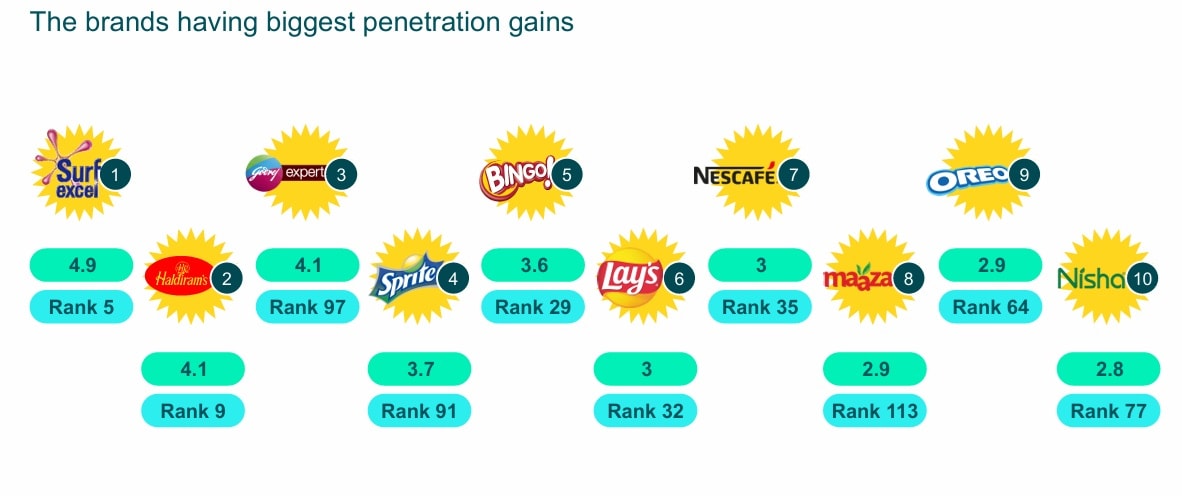
Image: Kantar
Godrej No1, Lay's and Arokya join the billion CRP brands club, which houses a total of 32 brands, according to the Worldpanel report.
Amul has emerged as the most chosen out-of-home beverage brand.
Overall, the Worldpanel report covers 447 brands within FMCG under categories of food, homecare, health & beauty, beverages and dairy.
FMCG Slowdown
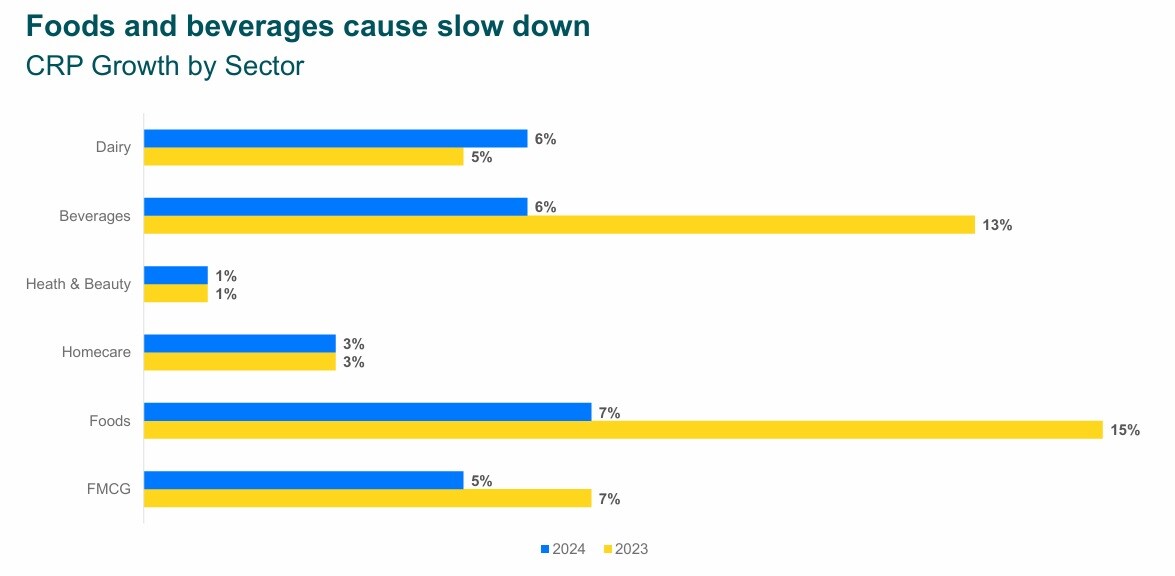
The CRP of FMCG brands — a measure of consumer activity — grew 4.3% to 120 billion in 2024, according to Worldpanel's latest findings. The pace of growth, however, slowed from 7% in the previous year, mirroring the consumption pattern in the economy and the slowdown in the sector.
Foods and beverages led the slowdown.
Other categories like homecare, health and beauty saw flattish growth.
Dairy, the lone sector, saw a meagre growth increasing from 5% to 6%. While dairy brands have low penetration, higher purchase occasions are leading to more consumer reach point, according to the report.

-
Love, Sex Aur Dhokha: The Audacious Plot To Spy On Jensen Huang

A Taipei dinner, a Singapore chip buyer and a suspected Chinese asset: inside the alleged spy operation that got close to NVIDIA's Jensen Huang.
-
Ten Things I Learnt This Samvat
Patience can be a trap. Cheap stocks can stay cheap. Leverage can wipe you out. What did Samvat 2082 teach us? Niraj Shah writes on 10 lessons from the year gone by.
-
Talking Points This Week: Tech Nerves, FII Buying, And A Faraway Banking Shock
The global markets are not shining this Diwali. The exception in the large markets is, India.
-
Midterm Rally Lasted A Day. The Hard Reality Of A Divided US May Last Two Years | Opinion
Between a contested AI boom, a debt ceiling that arrives in 2027 and a president with every incentive to act alone, the next two years may prove more volatile than the first day's rally suggests.
-
Blue Wave Will Derail the AI Trade but Won't Dismantle the AI Era | Unhedged Position
The Democrats' sweep of the US Congress will see politics collide with economic forces both over the long and short term.
-
It's Time To Take The GST Council's Bet On Trust Global
Payment records can prove India's services exports, and clear, proportionate rules can bring foreign digital sellers into the tax net.
-
Opinion | India at 38: From Innovation Overperformer to Innovation Powerhouse
India now has 453 VC-backed deep science startups, 18 of them late-stage, after 117 percent growth since 2020. Laurus Labs, at USD 9.3 billion, is the most valuable deep science company in any middle-income economy outside China.
-
Navigating Energy Crossroads: S Jaishankar's Call For Diversified Supply Chains At G20 Ministerial Meeting
As geopolitical fault lines continue to test maritime trade routes and commodity flows, Jaishankar's message remains pertinent: true economic resilience requires open markets, protected transit lines, and a genuine commitment to multilateral cooperation rather than coercion.
-
Indians Are Travelling, But Not Every Journey Is A Holiday | The Week In Whys
Pilgrims, patients and working women are the real travellers, and the system hasn't quite caught up with them.