World Environment Day: Let’s Not Stop At One Elephant
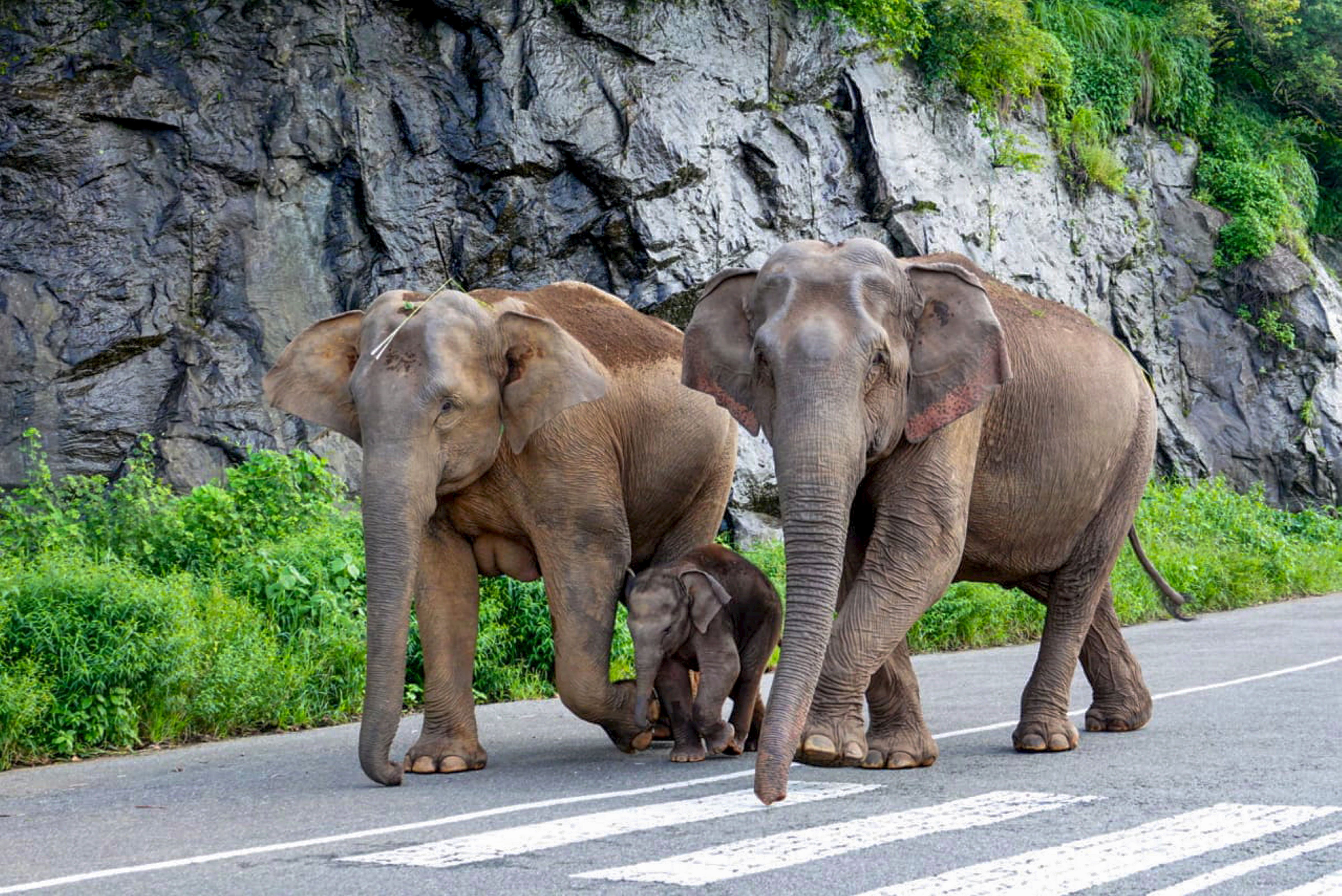
It isn't every day that the country outrages over the death of an elephant.
A recent incident from Kerala—where a pregnant elephant died after eating a pineapple laced with firecrackers—has shaken the internet and people's consciousnesses. An elephant is a tremendous animal: expressive, tightly bonded, towering in its size, and its sentience. Elephants are feared and revered, the two feelings often becoming one.

The dead elephant in question was foraging in a crop field—near a forest stretch in Palakkad—when it consumed the pineapple. The pineapple was a bait bomb, a simple, cruel device that blasts the mouth or breaks the jaw of the animal that eats it, so it can't perform the act of eating anymore. On Thursday, Environment Minister Prakash Javadekar tweeted that the culprits would be nabbed and that the attack was against ‘Indian culture'.
Elephants are endangered. For any species facing the threat of extinction, lactating or reproducing females are especially valued. The elephant that died had a foetus inside; the post-mortem pictures show a beautifully formed, horribly dead, calf. The cruelty and unfairness are staggering.
Yet, the outrage we feel towards the death of this elephant—and the death of her calf—ought to be channeled towards tackling a looming danger many wild animals face today.

This is the complete loss of any dignity or agency of wild animals, because of a policy decision bracketing them as pests. Responding to a strong agricultural lobby, the government invited states to give lists of animals that could be declared ‘vermin'. Vermin means pests, and certain species were to be declared pests because they were destroying human property, like crops. This was said to be a move to stem human-wildlife conflict. Animals like Nilgai, rhesus macaque monkeys, and wild pigs were declared vermin in many states and then killed in a variety of ways. Some were shot in cold blood, some put in wire snares. Others—like a Nilgai in Bihar's Vaishali district—were buried alive, crying pitifully, after a mechanical crane dug a grave and pushed the animal in as people watched.
The pineapple that the elephant ate may have been meant for a wild pig. But in the wild, no one is really counting who dies of a snare or poison or with a broken jaw, or which unintended target becomes a victim. In Athagarh in Odisha in December 2018, another female elephant died of a bait bomb, her lower jaw broken, her tongue in pieces. So, one must ask: has the random killing of wild animals solved the human-wildlife conflict problem? The answer is, a predictable, no.
Instead of revenge, we need systems that focus on solutions.

The answer can lie in better distribution, market reach, and a startup ecosystem. Apart from certification systems like Fairtrade, networks for ‘wildlife-friendly' products exist. Businesses, farms, or individuals who don't actively harm wildlife can be certified as wildlife-friendly. A small movement for biodiversity-friendly coffee and tea—from estates which don't poach or injure wildlife—has already taken off in India. The potential for scale-up for organic, elephant, tiger, or leopard friendly produce is huge. In Assam, a new experiment is underway - parts of fields are being left fallow for elephants to feed in, creating ‘elephant meal zones'. Thus, a land-sharing system can also work, if incentivised and planned.
June 5 is World Environment Day. The internet is up in arms, asking for justice for the elephant. They have given her a name: Vinayaki, named after an elephant-headed goddess. The agitation gives an occasion to remember that World Environment Day isn't another day for webinars and graphics, but to come up with solutions that impact real lives.

The government has notified elephant reserves and landscapes in India. Unlike sanctuaries or National Parks, these are not legal categories. At the moment, many of them read like a map of mining in India.
Now, decks are being moved to mine nearly 100 hectares of elephant reserve in Dihing Patkai in Assam for coal.

For the elephants, this is another in a long list of obstacles. If one is to map a day in an elephant's life in East or North-East India, it could be thus. Walk to find food. Dodge fireballs thrown at you. Run. Break-through walls or barriers. Duck, so that sagging wires don't electrocute you, as they did to seven elephants in Dhenkenal, Odisha. Dash across railway lines, so you don't die as 60 other elephants did in the last four years. Circumvent mining pits. Die.
Things are so bad that the Supreme Court has told the state of West Bengal that firebombs should not be thrown at elephants.
If we want less conflict, we need to take the decision of leaving forest and elephant habitat intact, and creating cushions for farmers and elephants in elephant areas that are under cultivation.

It is heartening that within a pandemic of human suffering, people can find the mind space to think of an elephant: to learn of her, to mourn her, and to name her after she has passed. But though the opportunity to help elephants may start with one individual animal, it shouldn't stop there. All elephants need our help. Let's step up to it.
Neha Sinha works with the Bombay Natural History Society. Views expressed are personal.
The views expressed here are those of the author and do not necessarily represent the views of BloombergQuint or its editorial team.

-
Signature Play: The Classic Cocktail Is Dead. Or Is It?

Classic cocktails are disappearing from India's cocktail menus. But they're still being ordered, taught to bartenders and borrowed from. So, who's really having the last drink?
-
A New Samvat Wishlist: Inclusive Prosperity And Human Development
India has strengthened its economic foundations through infrastructure, digital access and enterprise. Its next growth chapter must deepen productivity, create better livelihoods and widen participation in prosperity.
-
Love, Sex Aur Dhokha: The Audacious Plot To Spy On Jensen Huang
A Taipei dinner, a Singapore chip buyer and a suspected Chinese asset: inside the alleged spy operation that got close to NVIDIA's Jensen Huang.
-
Ten Things I Learnt This Samvat
Patience can be a trap. Cheap stocks can stay cheap. Leverage can wipe you out. What did Samvat 2082 teach us? Niraj Shah writes on 10 lessons from the year gone by.
-
Talking Points This Week: Tech Nerves, FII Buying, And A Faraway Banking Shock
The global markets are not shining this Diwali. The exception in the large markets is, India.
-
Midterm Rally Lasted A Day. The Hard Reality Of A Divided US May Last Two Years | Opinion
Between a contested AI boom, a debt ceiling that arrives in 2027 and a president with every incentive to act alone, the next two years may prove more volatile than the first day's rally suggests.
-
Blue Wave Will Derail the AI Trade but Won't Dismantle the AI Era | Unhedged Position
The Democrats' sweep of the US Congress will see politics collide with economic forces both over the long and short term.
-
It's Time To Take The GST Council's Bet On Trust Global
Payment records can prove India's services exports, and clear, proportionate rules can bring foreign digital sellers into the tax net.
-
Opinion | India at 38: From Innovation Overperformer to Innovation Powerhouse
India now has 453 VC-backed deep science startups, 18 of them late-stage, after 117 percent growth since 2020. Laurus Labs, at USD 9.3 billion, is the most valuable deep science company in any middle-income economy outside China.









