World Environment Day: Clearing The ‘Air’ Around Regulation
Learning to eat with our hands was a life skill we acquired early on. Not in any spirit of competition—but because we had to use all fingers, and occasionally, a thumb, to pat down luchi, a kind of fried bread during the year's social highlight, the Durga Puja.
As goddess Durga's clothes and weapons glittered, food was ladled in rhythmic motions into plates made of Sal tree leaves. While everything else in the cultural, annual gathering was luxe and opulent, the leaf-plates stuck out oddly with their brown and roughly-hewn faces.
The point being made was hardly environmental.
Using Sal-leaf plates was old wisdom that was clever, traditional, and incidentally, also good for the environment.
As the country grew into a more marked environmental consciousness though, the Sal plates transformed to Styrofoam and plastic in urban Indian gatherings. You wouldn't even have to use your fingers and thumbs to eat at community celebrations, because shining plastic spoons, made to look like more expensive steel, took over.
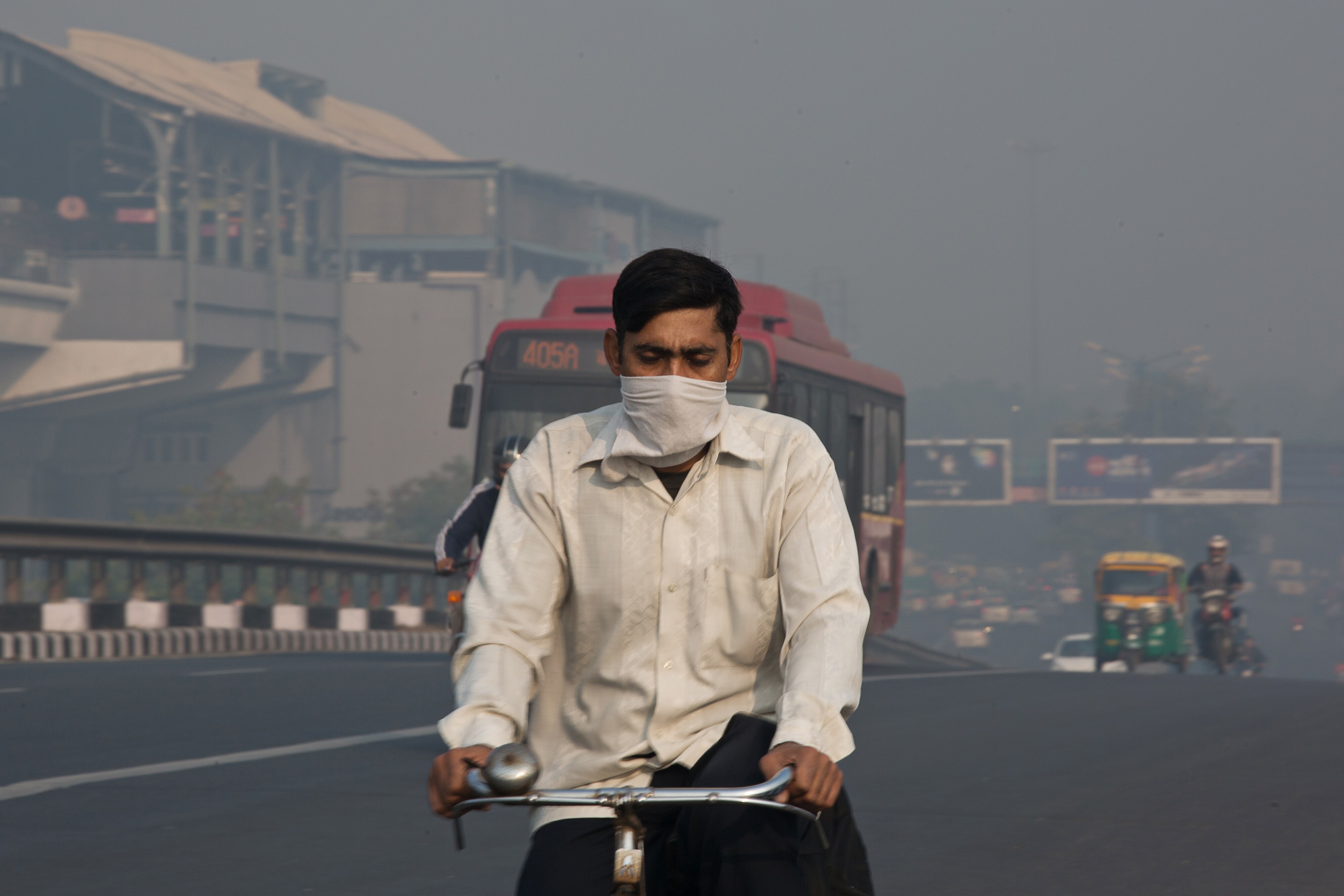
As we celebrate World Environment Day today, the irony is rich and cloying. Last year, India hosted this United Nations-led event, which is a global call for action and policy change. The theme was beating plastic pollution. This year's theme, hosted by China, is combating air pollution. As mountains of plastic grow nation-wide, and as India earns the dubious distinction of having the most polluted cities on earth, we all know we have a huge problem. But what is the big solution to this big problem?

You will be told it is behavioural change. For instance, you shouldn't carry plastic bags, use plastic straws, or throw plastic litter. This is true. Thoughtful and conscientious citizens are the best asset a democracy can have. We all need to do our bit.
But for combating a problem as big as air and plastic pollution, the answers need to come with bold steps on the manufacturing and policy side.
As far as plastic goes, considered among the worst offenders, that costs literally nothing—and also causes the loss of lives. Even in remote places, plastic bottles and plastic packaging—chips, tobacco and others—are filling up wetlands and choking the land.

The largest animal on land, the elephant, and the largest animal in the sea, the whale, are dying, their stomachs lined with awful, demonic plastic.

E-commerce, which has taken off in a big way in India, is also a huge contributor to the problem. Small items come in huge boxes, lined with coils of plastic bubble wrap, or plastic bags filled with air.
Contrast this to methods used to earlier. Things to eat were sold in paper bags, not shining plastic. Fruits and vegetables did not come wrapped in cling film in retail stores. Instead, their own packaging – whether the skin of a banana, the peel of an orange, or the hair and skin of a corn—suited them just fine. Glass bottles were picked up by producers for recycling.
The time to completely do away with non-essential plastic packaging came much before another lapsed World Environment Day deadline.
Firstly, we need to actually enforce Extended Producer Responsibility, so companies can take care of the litter they are creating. Producers should pick up plastic packaging, and consumers can be rewarded for returning it.
Secondly, start-ups that encourage biodegradable packaging should be incentivised by the government. Agricultural waste can play a part – Thailand is trying banana leaves as packaging material in its supermarkets.
Thirdly, non-essential packaging—the layers of cling film, the box within a plastic box, notably in the emergent e-commerce, cling film around bananas and magazines, need to be banned immediately.

As far as this year's World Environment Day theme goes, this is another opportunity to set things right. The most polluted places in India are busy cities. While the government moves to cleaner sources of transport—CNG buses and metros, for instance—other sources of air pollution remain as they were.
One of the biggest sources of air pollution are coal fired plants. A 2016 IIT-Kanpur study found that coal and fly-ash are the biggest contributor of Particulate Matter (PM10) to Delhi, the world's most polluted city. 37 percent of PM 10 comes through coal and fly ash. A nationwide TERI report, published in 2016, found power plants contribute 22 percent of Nitrogen Oxide pollution.

Yet, the government has decided to give coal-fired power plants a break. As per new emission norms, these plants were supposed to reduce their emissions by December 2017. None of the coal plants complied. Instead of cracking down on them, the authorities gave them an extension, one that could last up to 2024. Unfortunately, respiratory ailments and disease, which have especially impact children and the elderly, won't go on vacation in this period.
A look at the other sources of air pollution throw up sectors with little or no intervention. A 2011 study by the Central Pollution Control Board carried out in six cities --Bengaluru, Chennai, Delhi, Kanpur, Mumbai, and Pune—showed that dust from roads and construction is a huge source of particulate matter.
Between 6 to 58 percent of PM10 came from roads, construction activities, and soil. But perhaps because we are told to check our pollution levels in our cars—shifting the discourse from inter-sectoral action to personal activity--there is almost no action to check this source of pollution.
In order to check dust pollution, the environment ministry will have to work with road departments to minimise potholes and keep roads in excellent shape. They will also need to work with pollution boards to cover construction material in every house, street and office.
We don't see this kind of combined, policy-led action. Unfortunately, celebrating World Environment Days with business as usual—lined with gleaming plastic water bottles in state-led events, coming down a bevy of busy, dusty roads—does nothing for either the Indian elephant or the Indian child.
Neha Sinha is with the Bombay Natural History Society. Views expressed are personal.
The views expressed here are those of the author and do not necessarily represent the views of BloombergQuint or its editorial team.

-
Talking Points This Week: AI Cash Burn, A Tiger Comeback And An India That Still Finds Its Own Path

India is not immune to higher oil or tighter global liquidity, yet its earnings base is broader, its domestic policy levers are still available.
-
Foreign Investors Own Half Of HDFC Bank and ICICI Bank. An LTCG Cut Could Matter Most Here
Foreign portfolio investors have US$115 billion parked in HDFC Bank, ICICI Bank. If the government cuts long-term capital gains tax, Jefferies says returning foreign money could land here first.
-
'Never Seen This Level Of Negativity': Sandeep Tandon Says The Next Rally May Be Closer Than You Think
Veteran investor Sandeep Tandon says foreign selling is easing, large-caps are due a comeback and mid-caps are crowded, while he turns positive on gold, power and pharma this Diwali.
-
Indians Stay With Family, Not In Hotels | The Reason Why
India still lacks enough clean, reliable and affordable hotels for budget-conscious travellers.
-
The Economic Imperative: Analysing The Material Driving Force Behind India-Canada Strategic Reset
This economic complementarity is further reinforced by deep institutional investment ties and talent mobility, which form the bedrock of the bilateral framework.
-
Medicine Pricing: Where Must Profit Stop?
India must confront excessive margins, hidden incentives and regulatory gaps that threaten the integrity of medicine.
-
Why Amazon And Flipkart Are Struggling To Beat Meesho In India's Smaller Cities
With 274 million users and lowest-cost logistics, Meesho is defending its value commerce crown against giants like Amazon and Flipkart.
-
High US Salaries, No Green Card Certainty: The Financial Calculation Facing Indian H-1B Families
The suspension of PERM processing at eight technology employers does not cancel existing H-1B visas. What it does is force a question many Indian families have been avoiding: is the US salary worth tying your career and family plans to one employer?
-
Swiggy vs Eternal: Food Delivery's Two Rivals Are No Longer In The Same Race
Eternal is building a private AI assistant, dark.ai. Swiggy is still working out how to make Instamart pay, with an operating loss of Rs 895 crore in the July-September quarter while Blinkit stayed profitable.
-
Where You Live Shapes How You Get To Work | The Reason Why
Two-wheelers are the most popular way to get to work in India, accounting for nearly 43% of workplace commutes.










