World Bank's Finance Corp Taps Blockchain For Carbon Offsets
International Finance Corp (IFC), a World Bank affiliate, told Reuters on Wednesday it is backing a blockchain-enabled platform to trade carbon offsets, aiming to attract more support from institutional investors for climate-friendly projects in emerging markets.
It is a bet that using blockchain - a digital database with information that can be publicly shared within a large decentralised network - will boost the use of carbon offsets to a greater extent than more traditional methods.
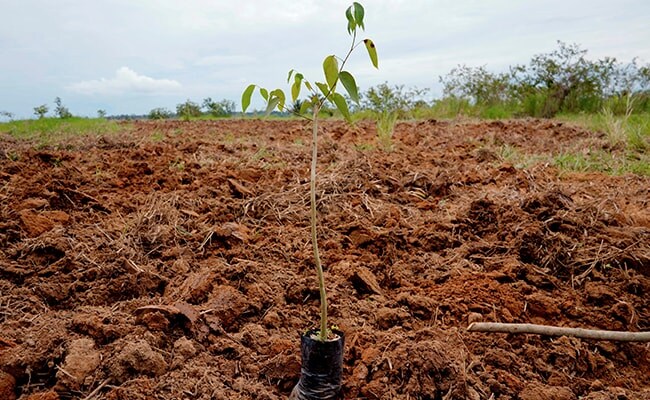
These credits are used by companies and organisations to offset emissions when accounting for their carbon footprint. They are backed by projects that compensate for emissions, such as tree planting or creating solar and wind power.
Several financial technology firms have sprung up over the last year to turn carbon offsets into digital tokens, yet the market has struggled to gain traction with companies and institutional investors amid concerns about the origin and environmental benefits of some of the traded credits. Blockchain technology has also been criticised by environmentalists as being too energy intensive.
Verra, operator of the world's largest registry of carbon credits, has said it will not allow its retired carbon offsets to be tokenised, and has announced a consultation on the tokenisation of its credits.
An IFC spokesperson told Reuters it would only source, tokenise and sell unused credits from an established registry that pass its additional quality checks.
The IFC has partnered with sustainability finance company Aspiration, blockchain technology firm Chia Network and biodiversity investor Cultivo to launch the Carbon Opportunities Fund, which will provide the carbon offsets on blockchain.
Seeded with $10 million as a proof-of-concept, the fund will buy carbon credits from projects chosen by Aspiration and Cultivo, which will then be tokenised using technology from Chia and tracked using the World Bank's Climate Warehouse https://www.theclimatewarehouse.org/work/climate-warehouse database.
A Verra spokesperson said it was speaking with the IFC about its role in the Climate Warehouse.
"It's going to set a standard and a benchmarking for the market that makes it more likely other institutional capital will come in behind it," said Steve Glickman, president of Aspiration's international arm.
Glickman added that only about 10% of carbon credit projects would currently meet the fund's criteria.
Carbon credit markets are largely unregulated as governments have yet to agree on trading rules. Many countries and companies consider offsetting as a way to help meet their net-zero carbon emissions targets by 2050, a crucial goal to mitigate the effects of climate change.
Yet only a third of the 50-60 gigatonnes of emissions that need to be slashed annually can be eliminated through renewable energy sources and efficiency measures, according to Aspiration.
The IFC's fund has identified 250,000-300,000 tonnes of credits that can be bought by year-end and is conducting due diligence on projects that represent around 1 million tonnes of credits that could be available in the next few months.
Bruce Keith, senior investment officer at the IFC, said the platform's transparency would help companies and investors better assign value to the environmental projects behind the offsets.
"Why is a credit from the Amazon worth more or less than a credit from the Congo basin? Or more or less than a credit from a forest in the southern U.S.? You (now) have the means to know that," Keith said.
(This story has not been edited by NDTV staff and is auto-generated from a syndicated feed.)

-
Getting To Work Costs Women More | The Reason Why

It is not just about women paying more than men. It is about women paying much more in cities than in villages.
-
AI Bias In Investing Cannot Be Eliminated, But It Can Be Governed
Framing is a particularly important example as identical financial information presented in terms of gains rather than losses can lead an LLM to reach a different assessment.
-
Joining The Dots | Dark Skies, Steady Diya: Why Hope Holds This Diwali
With war, a weak rupee and foreign outflows weighing on sentiment, policymakers at the NDTV World Summit and market veterans at NDTV Profit Ignite: Diwali Edition offered the same advice: stay invested and filter out the noise.
-
The Curious Case of Equitas Small Finance Bank And A CEO Who Quit For Stock
PN Vasudevan believes persistent investor concerns over a perceived conflict of interest had become a governance overhang on Equitas Small Finance Bank's stock, even as the lender improved profitability and asset quality.
-
Talking Points This Week: AI Cash Burn, A Tiger Comeback And An India That Still Finds Its Own Path
India is not immune to higher oil or tighter global liquidity, yet its earnings base is broader, its domestic policy levers are still available.
-
Foreign Investors Own Half Of HDFC Bank and ICICI Bank. An LTCG Cut Could Matter Most Here
Foreign portfolio investors have US$115 billion parked in HDFC Bank, ICICI Bank. If the government cuts long-term capital gains tax, Jefferies says returning foreign money could land here first.
-
'Never Seen This Level Of Negativity': Sandeep Tandon Says The Next Rally May Be Closer Than You Think
Veteran investor Sandeep Tandon says foreign selling is easing, large-caps are due a comeback and mid-caps are crowded, while he turns positive on gold, power and pharma this Diwali.
-
Indians Stay With Family, Not In Hotels | The Reason Why
India still lacks enough clean, reliable and affordable hotels for budget-conscious travellers.
-
The Economic Imperative: Analysing The Material Driving Force Behind India-Canada Strategic Reset
This economic complementarity is further reinforced by deep institutional investment ties and talent mobility, which form the bedrock of the bilateral framework.
-
Medicine Pricing: Where Must Profit Stop?
India must confront excessive margins, hidden incentives and regulatory gaps that threaten the integrity of medicine.










