World Bank Group President Jim Yong Kim Resigns
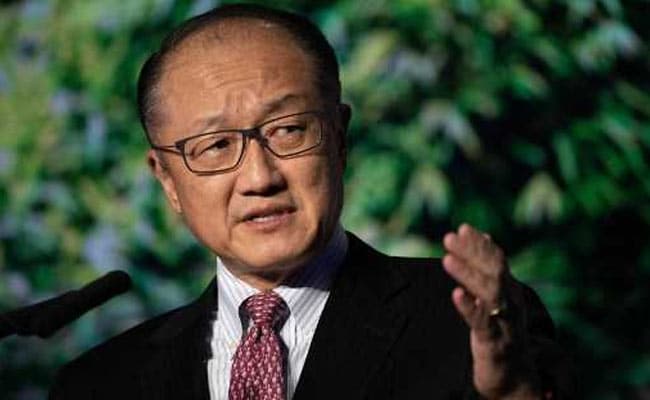
World Bank Group President Jim Yong Kim unexpectedly resigned on Monday, more than three years before his term ends in 2022, amid differences with the Trump administration over climate change and the need for more development resources.
Mr Kim, appointed twice by former US President Barack Obama for five-year terms, had pushed financing for green energy projects and largely dropped support for coal power investments, but had avoided public clashes with the Trump administration, which has made reviving the US coal sector a priority.
Just last month, the World Bank announced it would double its investments to fight climate change to around $200 billion over the next five years.
Mr Kim told World Bank employees in an email that he was leaving the world's largest lender and donor to poor and middle-income countries on February 1 to join a private-sector firm focused on infrastructure investments in the developing world.
"The opportunity to join the private sector was unexpected, but I've concluded that this is the path through which I will be able to make the largest impact on major global issues like climate change and the infrastructure deficit in emerging markets," Mr Kim said.
Mr Kim said details about his new job would be released later. The physician and former Dartmouth College president said he would also rejoin the board of Partners in Health, a health advocacy group he co-founded 30 years ago.
Kristalina Georgieva, who in 2017 became the World Bank's chief executive officer, will assume the role of interim president when Mr Kim departs, the bank said. Ms Georgieva, a Bulgarian national, had previously held senior European Union posts after serving 15 years at the World Bank, starting as an environmental economist in 1993.
Two people familiar with Mr Kim's shock announcement to the World Bank executive board said he was leaving of his own accord and was "not pushed out" by the Trump administration.
US President Donald Trump, however, will wield strong influence in choosing Mr Kim's successor as the United States holds a controlling share of the World Bank's voting rights.
The bank president has traditionally been an American chosen by the US administration, but some of the multilateral lender's 189 member countries could mount a new challenge with alternative candidates.
Mark Sobel, a former US executive director at the International Monetary Fund and a longtime former US Treasury official, said chances were high for a challenge from bigger emerging market countries such as Brazil or China, which have been clamouring for more influence in multilateral institutions commensurate with their economic clout.
"The world is suspicious of the Trump administration, which has a different agenda for the bank," Mr Sobel said in a phone interview. "If they were to put forward somebody that is hardline, that would engender a reaction and antipathy."
The World Bank's board will still need to reach a consensus on a candidate, and a more moderate US nominee would have a better chance of winning approval, he added.
A spokeswoman for the US Treasury, which oversees the US voting interest in the World Bank, said that Treasury Secretary Steven Mnuchin "looks forward to working with his fellow governors in selecting a new leader".
David Malpass, the Treasury's undersecretary for international affairs, has questioned the need for additional resources for the World Bank and other international financial institutions, arguing instead that the lenders should focus more of their resources on poorer countries and lend less to middle-income countries such as China.
Nonetheless, the Treasury backed a $13 billion capital increase for the World Bank last year, which imposed some lending and management reforms, including some caps to the rate of salary increases.

-
AI Bias In Investing Cannot Be Eliminated, But It Can Be Governed

Framing is a particularly important example as identical financial information presented in terms of gains rather than losses can lead an LLM to reach a different assessment.
-
Joining The Dots | Dark Skies, Steady Diya: Why Hope Holds This Diwali
With war, a weak rupee and foreign outflows weighing on sentiment, policymakers at the NDTV World Summit and market veterans at NDTV Profit Ignite: Diwali Edition offered the same advice: stay invested and filter out the noise.
-
The Curious Case of Equitas Small Finance Bank And A CEO Who Quit For Stock
PN Vasudevan believes persistent investor concerns over a perceived conflict of interest had become a governance overhang on Equitas Small Finance Bank's stock, even as the lender improved profitability and asset quality.
-
Talking Points This Week: AI Cash Burn, A Tiger Comeback And An India That Still Finds Its Own Path
India is not immune to higher oil or tighter global liquidity, yet its earnings base is broader, its domestic policy levers are still available.
-
Foreign Investors Own Half Of HDFC Bank and ICICI Bank. An LTCG Cut Could Matter Most Here
Foreign portfolio investors have US$115 billion parked in HDFC Bank, ICICI Bank. If the government cuts long-term capital gains tax, Jefferies says returning foreign money could land here first.
-
'Never Seen This Level Of Negativity': Sandeep Tandon Says The Next Rally May Be Closer Than You Think
Veteran investor Sandeep Tandon says foreign selling is easing, large-caps are due a comeback and mid-caps are crowded, while he turns positive on gold, power and pharma this Diwali.
-
Indians Stay With Family, Not In Hotels | The Reason Why
India still lacks enough clean, reliable and affordable hotels for budget-conscious travellers.
-
The Economic Imperative: Analysing The Material Driving Force Behind India-Canada Strategic Reset
This economic complementarity is further reinforced by deep institutional investment ties and talent mobility, which form the bedrock of the bilateral framework.
-
Medicine Pricing: Where Must Profit Stop?
India must confront excessive margins, hidden incentives and regulatory gaps that threaten the integrity of medicine.
-
Why Amazon And Flipkart Are Struggling To Beat Meesho In India's Smaller Cities
With 274 million users and lowest-cost logistics, Meesho is defending its value commerce crown against giants like Amazon and Flipkart.










