Employees Should Collaborate, Not Plug In Headphones When At Office: Slack CEO
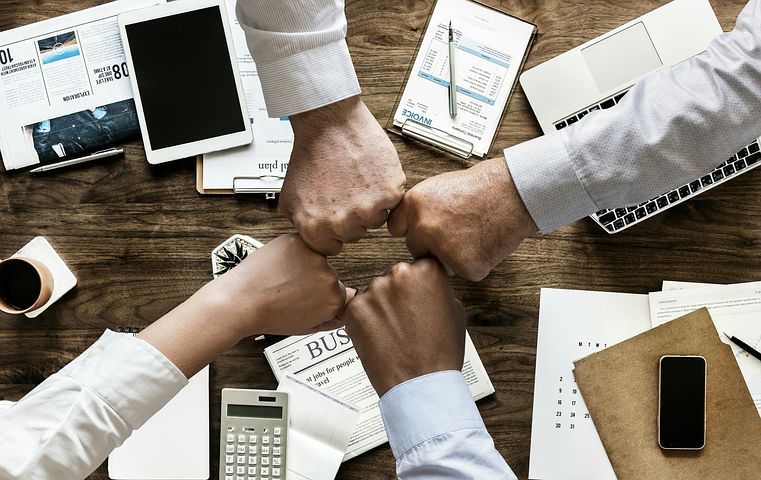
The COVID-19 pandemic has prompted companies worldwide to bring more flexibility to their work culture. Some have permanently shifted the office to the digital space allowing employees to work from home, while others have adopted the hybrid work model.Working from home has perks, as employees spend more time with their families.It also involves online meetings, video calls, and several phone calls throughout the day, but when at the office, according to Stewart Butterfield, CEO of Canada-based software company Slack, employees should take the opportunity to do tasks which they can't perform at home rather than plugging in their headphones. Highlighting the work scenario before the pandemic struck, the CEO told BBC, "The 80 per cent of the floor space that we dedicated to kind of factory-farm, battery-chicken housing for people to use their desks all by themselves and listen to their headphones, and not talk to anyone else... was a bit of a waste."Mr Butterfield emphasised the need to collaborate and build relationships while working from the office. He said that renovations are being carried out at his company to convert the workplace into a social club.He acknowledged that many choose to come to the office and work for several reasons and highlighted that freshers prefer to interact with their peers at the workplace.Mr Butterfield added that he couldn't imagine someone starting their career and losing the opportunity to meet others by working from home.Further, speaking about office meetings, the CEO underlined an idea introduced by Jeff Bezos at Amazon where employees are made to read a six-page memo as a briefing note before the meeting starts which, according to him, eliminates the need to stare at PowerPoint presentations.Mr Butterfield claimed that around 20 to 30 per cent of the meetings that take place "don't actually have to be meetings".He added that such meetings could be effectively fulfilled through written communications.

-
Gold Is Rs 22,000 Cheaper Than A Month Ago. Should You Buy Amid The Wedding Season?

Gold's potential slide to $3,500 could save around Rs 4,700 per 10 grams, but a soft inflation print could just as easily push prices back up. One way to split the risk is to buy in parts, some now and the rest after the Fed's Dec. 9 decision.
-
AI Agents Are Gaining Power. Who Governs Them?
Artificial intelligence agents promise to transform productivity by moving machines from assisting decisions to executing them. But as organisations delegate greater authority to these AI-agents, they must first establish who controls that authority and who remains accountable when things go wrong.
-
Why Swapping Your Old Gold Can Trigger A Rs 5 Lakh Tax Bill, And How You Can Avoid It Legally
Swapping old gold for new is taxed as a sale and a fresh purchase. Getting your own gold remade can cut most of that bill, though it has its own costs.
-
The AI Trade is Done. The Real Opportunity for Investors Starts in 2027 | Unhedged Position
As pureplay AI stocks plunge and circular, capex-led financing unwinds, 2027 is set to be a year of reckoning for AI companies. Yet the bust clears the way for a better opportunity for investors in 2027 -- shifting the spotlight from AI builders to the companies using AI.
-
Leadership As Mission: Why The Age Of AI Demands More Human Leadership
Debjani Ghosh examines how AI is changing leadership, arguing that its success must be measured by its impact on people and the accountability of those guiding its use.
-
We May Need Another Tukaram Mundhe To Fight Air Pollution | The Reason Why
Developers may install basic measures such as sprinklers and green nets, resume work, and continue violating rules when this equipment stops working.
-
Extracting Value From Battery Scrap Could Be Challenging For India | The Reason Why
A discarded lithium-ion battery still contains valuable materials such as lithium, nickel and cobalt. These can be recovered and reused. When such batteries are crushed and shredded, they produce a dark powder called black mass.
-
One El Nino, India Can Handle. Two Could Break The Granary
India's grain stocks can absorb one bad year, but a second El Nino could drain the buffer in two to three years, economists say.
-
India's Troika Of Good Luck | Joining The Dots
As Jensen Huang's exit drags Nvidia down, a cooling AI trade and resilient earnings have revived investor interest in India. A likely RBI rate hike looms.
-
Talking Points This Week: Leadership Shock At Nvidia, Earnings Strength, And The Fog Over Hormuz
The Anthropic IPO pricing and first trading day, Nvidia's upcoming earnings, and any fresh signals from Iran will set the tone for the following week.









