An Australian World Cup Victory Over England Would Be Priceless For Country’s Biggest Bank
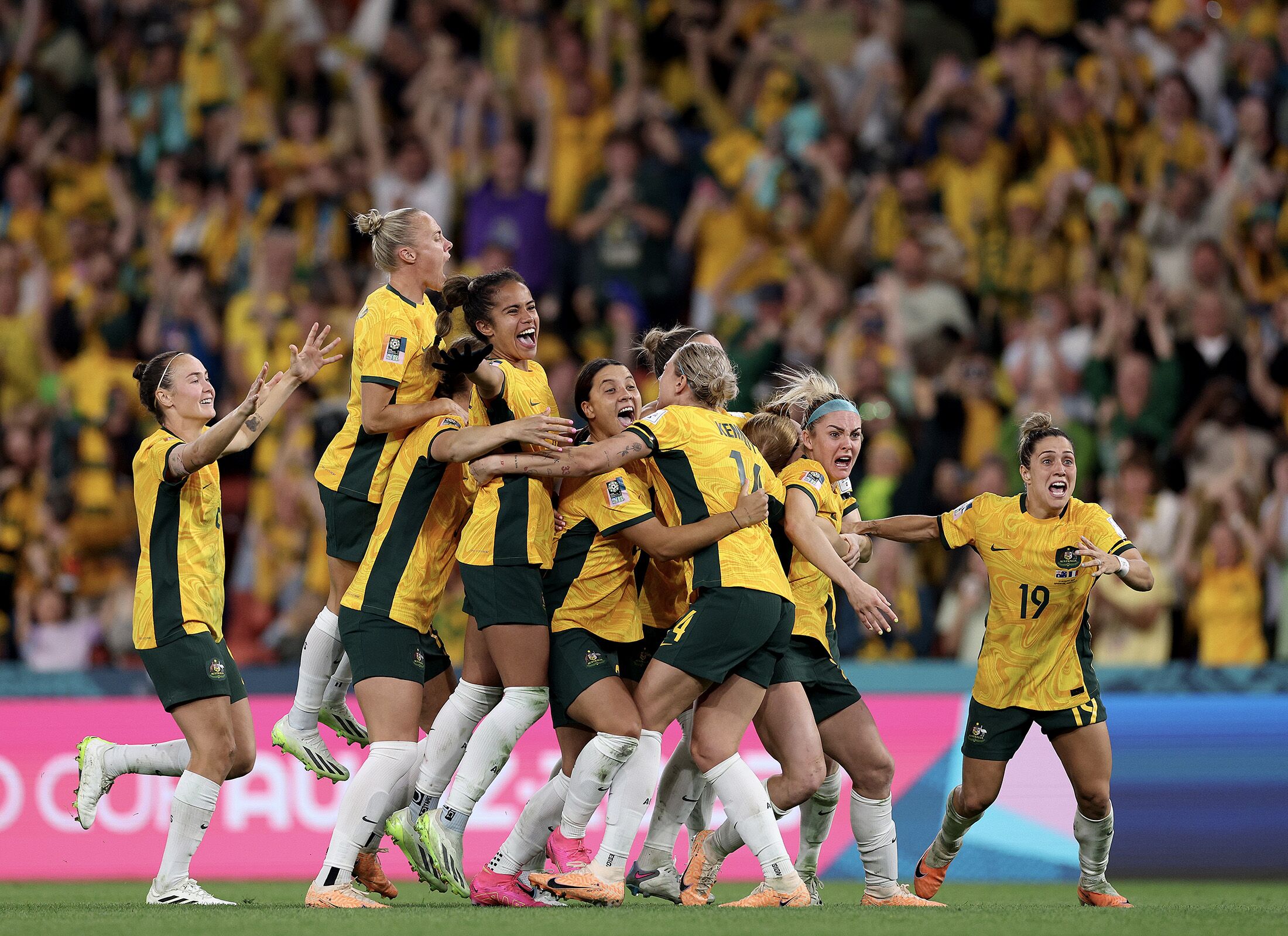
(Bloomberg) -- Australia's biggest bank is emerging as one of the winners from the Women's World Cup.
Commonwealth Bank of Australia, which struck a multimillion-dollar, four-year deal in 2021 to back the national football team, known as the Matildas, is rare among big brands in pursuing a calculated strategy of backing women's sport. It's been a shrewd move, with sponsorship deals coming cheaper than the men's game and generating greater awareness in a sport that's one of the fastest growing for young people in Australia.
“Everyone that sponsored the team and everyone that is telecasting games has got the sale of the century,” Barry O'Brien, chairman of independent media agency Atomic 212°, said in an interview. “The return is exponentially so much more than they could have anticipated.”
And that's before the Matildas play their semi-final against traditional rivals England in Sydney on Wednesday with the support of local fans. The winner will take on Spain on Sunday for the championship.
More than 2 billion people around the world are expected to have watched the Women's World Cup before the end of the tournament, up from 1.1 billion viewers at the previous competition in 2019, according to Euromonitor International. In Australia, the Matildas' dramatic quarter-final win against France on Saturday was the highest rated TV sports event of the last decade and the biggest streaming event ever, according to host broadcaster Seven West Media Ltd.
“There's so much fragmentation from a media point of view that actually when you can find a property or a platform where you can get a mass reach, then obviously that's incredibly valuable,” Monique Macleod, CBA's marketing chief, said in an interview. The bank has also supported the Australian women's cricket team for more than 20 years.
CBA's football content has reached more than 9.5 million people across Australia on Meta Platforms Inc.'s Facebook and Instagram, with engagement higher than any other content from the previous financial year, the bank said. Videos featuring the Matildas are performing five times better this week than at the start of the tournament while the average viewing time is triple that of their typical benchmark.
Still, not everyone has grasped the opportunity in the same way. Research from analytical firm Omdia revealed that the Women's World Cup attracted a fraction of the sponsorship revenue generated by the men's tournament last year. But Macleod says the sheer popularity of this World Cup might help draw more sponsorship in future. Indeed, as awareness and support for the women's team has grown in the country, an increasing number of companies, including Volkswagen AG's Cupra, and Subway have signed sponsorship deals with Football Australia.
Meanwhile CBA plans to implement new initiatives to keep people interested in soccer after the World Cup, reiterating its commitment to help Football Australia achieve its goal of gender parity in participation by 2027.
“This World Cup here and what the team have done have really changed this sport in Australia forever. I think they've done something incredible,” Macleod said. “It's important that we keep the focus on bringing up the youngsters and inspiring them after the World Cup has ended.”
More stories like this are available on bloomberg.com
©2023 Bloomberg L.P.

-
Why Swapping Your Old Gold Can Trigger A Rs 5 Lakh Tax Bill, And How You Can Avoid It Legally

Swapping old gold for new is taxed as a sale and a fresh purchase. Getting your own gold remade can cut most of that bill, though it has its own costs.
-
The AI Trade is Done. The Real Opportunity for Investors Starts in 2027 | Unhedged Position
As pureplay AI stocks plunge and circular, capex-led financing unwinds, 2027 is set to be a year of reckoning for AI companies. Yet the bust clears the way for a better opportunity for investors in 2027 -- shifting the spotlight from AI builders to the companies using AI.
-
Leadership As Mission: Why The Age Of AI Demands More Human Leadership
Debjani Ghosh examines how AI is changing leadership, arguing that its success must be measured by its impact on people and the accountability of those guiding its use.
-
We May Need Another Tukaram Mundhe To Fight Air Pollution | The Reason Why
Developers may install basic measures such as sprinklers and green nets, resume work, and continue violating rules when this equipment stops working.
-
Extracting Value From Battery Scrap Could Be Challenging For India | The Reason Why
A discarded lithium-ion battery still contains valuable materials such as lithium, nickel and cobalt. These can be recovered and reused. When such batteries are crushed and shredded, they produce a dark powder called black mass.
-
One El Nino, India Can Handle. Two Could Break The Granary
India's grain stocks can absorb one bad year, but a second El Nino could drain the buffer in two to three years, economists say.
-
India's Troika Of Good Luck | Joining The Dots
As Jensen Huang's exit drags Nvidia down, a cooling AI trade and resilient earnings have revived investor interest in India. A likely RBI rate hike looms.
-
Talking Points This Week: Leadership Shock At Nvidia, Earnings Strength, And The Fog Over Hormuz
The Anthropic IPO pricing and first trading day, Nvidia's upcoming earnings, and any fresh signals from Iran will set the tone for the following week.
-
Signature Play: The Classic Cocktail Is Dead. Or Is It?
Classic cocktails are disappearing from India's cocktail menus. But they're still being ordered, taught to bartenders and borrowed from. So, who's really having the last drink?
-
A New Samvat Wishlist: Inclusive Prosperity And Human Development
India has strengthened its economic foundations through infrastructure, digital access and enterprise. Its next growth chapter must deepen productivity, create better livelihoods and widen participation in prosperity.









