With Prabhu’s Plan, The Railways Now Needs Gadkari For Execution
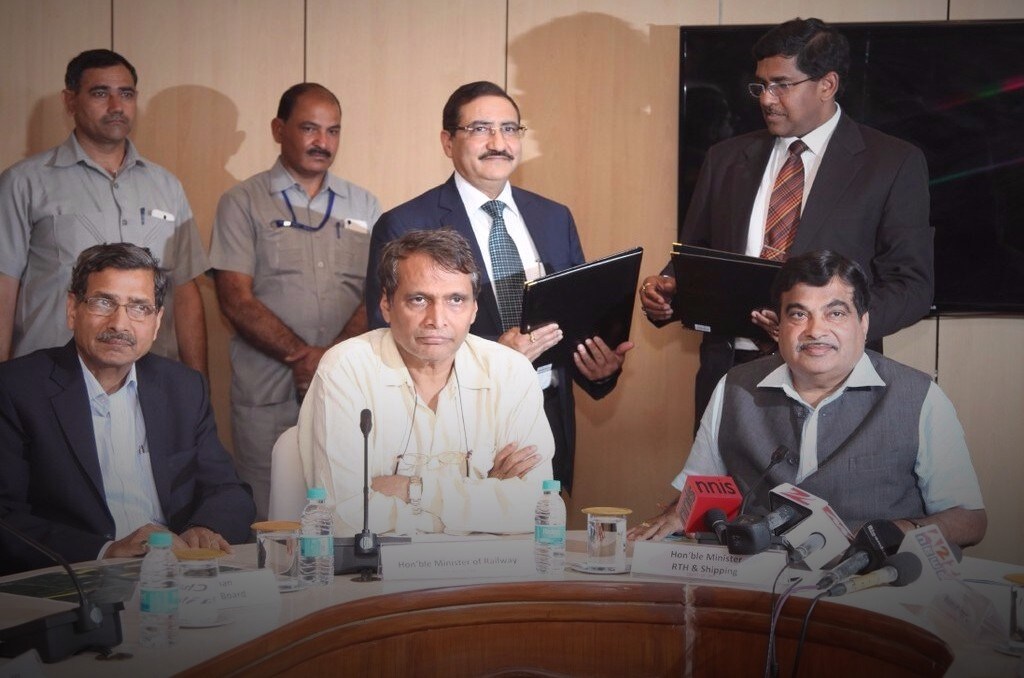
The Prime Minister should have accepted Railway Minister Suresh Prabhu's offer to resign after two train accidents over four days. Railway Board Chairman Ashok Mittal has been relieved of his job after the Kaifiyat Express derailed on Wednesday. For Saturday's Utkal Express accident Railway Board Member - Engineering Aditya Mittal was among the senior officials sent on leave. Top officials must feel the heat for the situation to improve.
In Ashwani Lohani, the Railways has a new reform-minded chairman with the desire and drive to reorganise it along commercial lines. But he needs political backing. Prabhu cannot provide it. He lacks heft. The Minister for Road Transport and Highways, Shipping, and Ports Nitin Gadkari has a lot more political clout and could give the cover the new Railway Board chairman needs from his minister.
Prabhu has made a lot of announcements. He has correctly identified under-investment as the reason for the Railways losing market share in freight. High-paying passengers have migrated to airlines which are quicker and sometimes even offer cheaper fares. A Rs 8.5 lakh crore investment plan has been made. Going beyond traditional sources of funding like the General Budget, the minister has tapped Life Insurance Corporation for a loan of Rs 1.5 lakh crore on attractive terms. Rs 1 lakh crore is to be invested in station development. Private partners are supposed to bring in the money against rights to advertise and put up malls, hotels, and offices. The contracts for development of Habibganj (Bhopal) and Gandhinagar (Gujarat) railway stations have been awarded. The minister's Officer on Special Duty, Hanish Yadav, says contracts for 23 more stations will be given soon.
There is a programme to cut fuel costs in half, with aggressive electrification. This year's electrification target is 4,000 km. The target for each of the following years is 6,000 km to achieve 90 percent electrification in the next few years.
The shift from cash-based to an accrual system of accounting will happen incrementally from next April, says Yadav. There is a plan to upgrade the Delhi-Mumbai and Delhi-Howrah routes for speeds of 160 kilometres per hour going up to 200 kilometres per hour. For this, the two corridors will have to be fenced, says Navin Kumar Shukla, Adviser, Mobility, who heads the cross-functional Mobility Directorate which was created in April last year.
All level crossings will have to be converted into underpasses or over-bridges on these two routes.
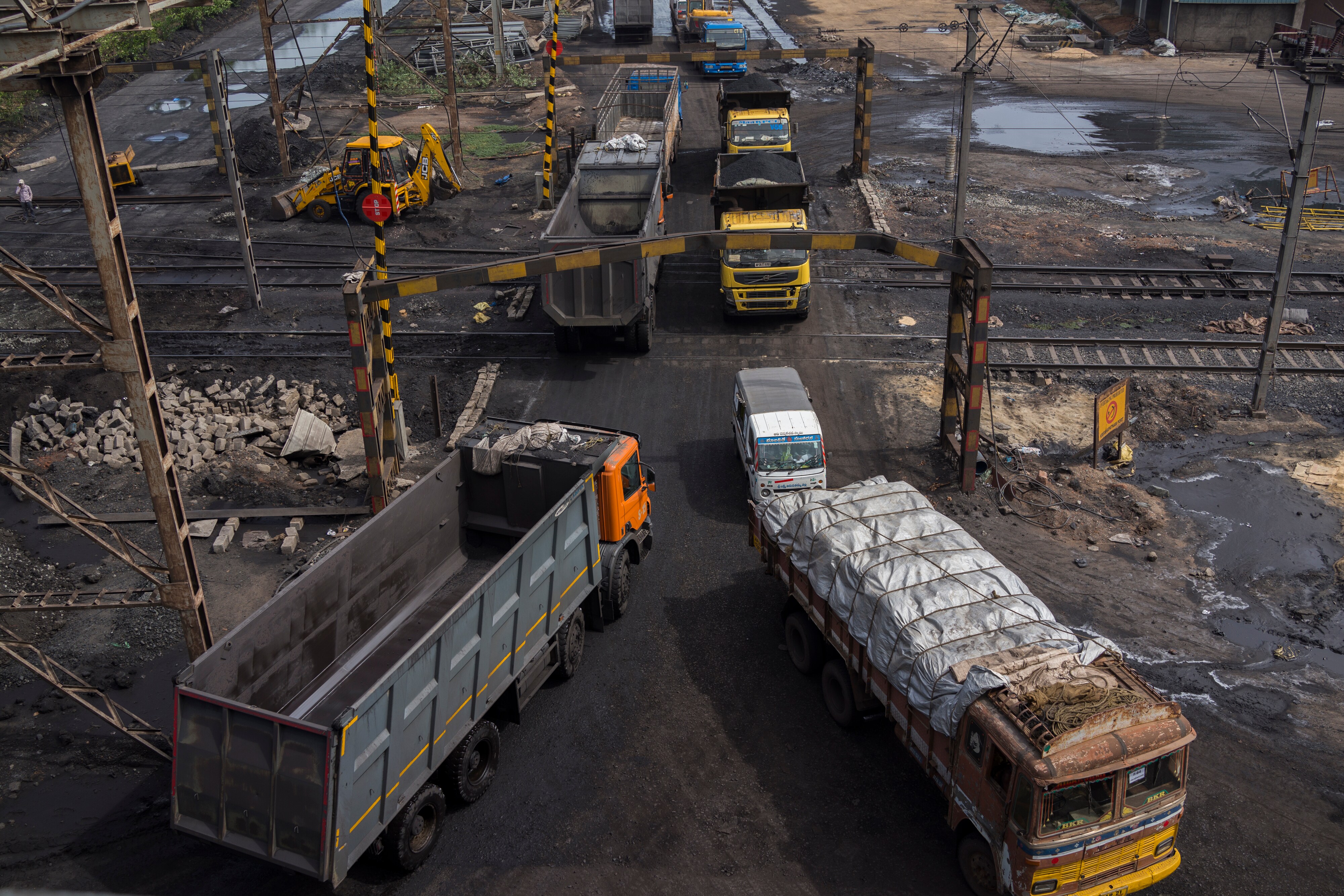
Drivers will have to be equipped to communicate with stations. The signalling and telecommunication equipment on these routes and on trains that run on them will have to be upgraded. When that happens, drivers will get messages about the speed they should maintain on different stretches; should they ignore the instructions, automatic brakes will be applied. Heavier tracks will have to be laid to allow higher speeds. Contacts will not be awarded piecemeal like now. One contractor will do all the jobs (like signalling and track laying) on a stretch. The investment of Rs 18,000 cr has been tied up, Shukla says.
Alongside, there is a move to increase average speeds on the quadrilateral connecting the four mega-metros and the two diagonals between them. This will mean deploying higher horsepower engines, reducing the weight of wagons, improving track geometry, eliminating stretches with permanent speed restrictions, installing diagnostic devices on tracks and trains to enable preventing maintenance, reducing downtime, installing twin pipe braking systems on good trains for quicker stops and starts, and making changes in operating practices.
These changes will be facilitated by the shift in a substantial share of the cargo now moving on the trunk routes to the Dedicated Freight Corridors which are expected to become operational from 2019.
Yadav, who was earlier with the management consultancy McKinsey & Co, says changes are not visible now; the results will show up from 2019 onwards.
But the CEO of a multinational company which supplies equipment to the Railways is sceptical.
‘Don't MAFIA,' he advises, which is a catchy way of saying one should not ‘Mistake Articulation For Intended Action'.
In the three years that Prabhu has been minister, the only big change that has happened, he says, is the award of contracts to GE and Alstom respectively for the diesel and electric locomotive factories at Marhaura and Madhepura (both in Bihar) respectively. These are the first (and only) two foreign direct investment projects in the Indian Railways. There was stiff opposition to them from the railway bureaucracy which deployed various stalling tactics. But all the spadework for them was done by the previous government.
Also Read: Air India CMD Ashwani Lohani Appointed Chairman Of Railway Board

Prabhu has also refrained from making grand announcements in his Budget speeches, the last of which he delivered in February 2016. Acting on a note prepared by NITI Aayog member Bibek Debroy he discontinued a 92-year tradition of presenting separate railway budgets. These were occasions for railway ministers to ingratiate themselves to their voters and other lawmakers by announcing trains and projects that were often not profitable.
He was thwarted in his efforts to appoint Sudhir Kumar, who was OSD to former Railway Minister Lalu Prasad, as his OSD. Kumar, an IAS officer, has intimate knowledge of the ways of the Railways bureaucracy and would have helped curb the rampant departmentalism that prevails.
Also Read: Suresh Prabhu Meets Modi, Takes ‘Moral Responsibility' For Rail Accidents
Prabhu carries a reputation for honesty. He has delegated authority but critics say he should be more hands-on. He is writing two doctoral theses. But the time for academic analysis is over. The Railways need a mover and shaker. Nitin Gadkari is the man.
Vivian Fernandes is the editor of www.smartindianagriculture.in and often contributes to BloombergQuint.
The views expressed here are those of the author's and do not necessarily represent the views of BloombergQuint or its editorial team.

-
Indians Are Travelling, But Not Every Journey Is A Holiday | The Week In Whys

Pilgrims, patients and working women are the real travellers, and the system hasn't quite caught up with them.
-
Getting To Work Costs Women More | The Reason Why
It is not just about women paying more than men. It is about women paying much more in cities than in villages.
-
AI Bias In Investing Cannot Be Eliminated, But It Can Be Governed
Framing is a particularly important example as identical financial information presented in terms of gains rather than losses can lead an LLM to reach a different assessment.
-
Joining The Dots | Dark Skies, Steady Diya: Why Hope Holds This Diwali
With war, a weak rupee and foreign outflows weighing on sentiment, policymakers at the NDTV World Summit and market veterans at NDTV Profit Ignite: Diwali Edition offered the same advice: stay invested and filter out the noise.
-
The Curious Case of Equitas Small Finance Bank And A CEO Who Quit For Stock
PN Vasudevan believes persistent investor concerns over a perceived conflict of interest had become a governance overhang on Equitas Small Finance Bank's stock, even as the lender improved profitability and asset quality.
-
Talking Points This Week: AI Cash Burn, A Tiger Comeback And An India That Still Finds Its Own Path
India is not immune to higher oil or tighter global liquidity, yet its earnings base is broader, its domestic policy levers are still available.
-
Foreign Investors Own Half Of HDFC Bank and ICICI Bank. An LTCG Cut Could Matter Most Here
Foreign portfolio investors have US$115 billion parked in HDFC Bank, ICICI Bank. If the government cuts long-term capital gains tax, Jefferies says returning foreign money could land here first.
-
'Never Seen This Level Of Negativity': Sandeep Tandon Says The Next Rally May Be Closer Than You Think
Veteran investor Sandeep Tandon says foreign selling is easing, large-caps are due a comeback and mid-caps are crowded, while he turns positive on gold, power and pharma this Diwali.
-
Indians Stay With Family, Not In Hotels | The Reason Why
India still lacks enough clean, reliable and affordable hotels for budget-conscious travellers.
-
The Economic Imperative: Analysing The Material Driving Force Behind India-Canada Strategic Reset
This economic complementarity is further reinforced by deep institutional investment ties and talent mobility, which form the bedrock of the bilateral framework.










