Wind’s Future Is Looking More Turbulent Than Ever
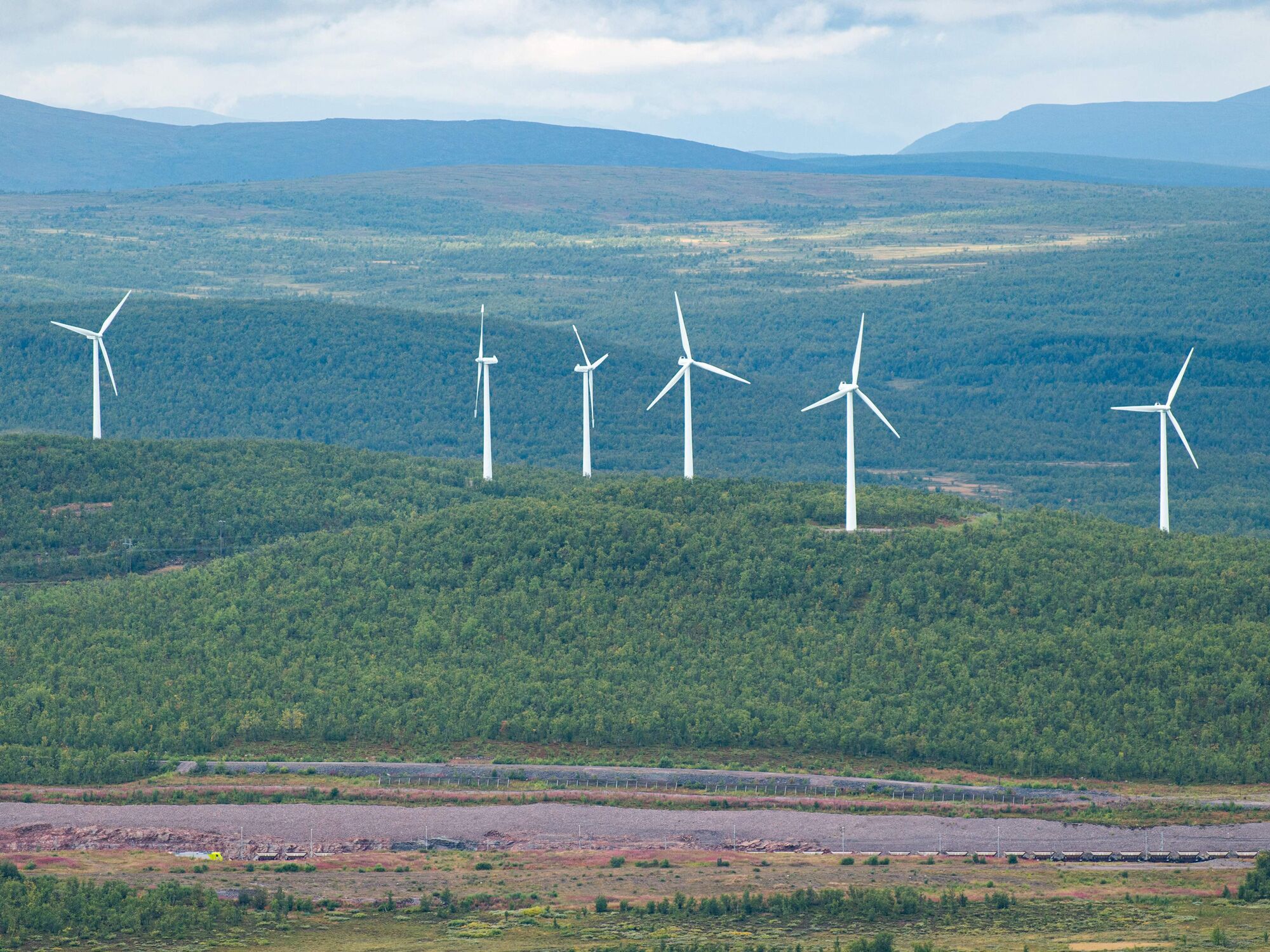
(Bloomberg Opinion) -- In the wind power industry, it is the best of times, and the worst of times.
Across major economies, accelerated energy transition plans are turbocharging the technology. In the US, wind generation will roughly double to duke it out with gas as America's top generation source by 2030, the Energy Information Administration wrote last month. The Biden administration wants to see 30 gigawatts of offshore wind by that date. Europe wants to have more than twice that level in the North Sea by then, too, while China may install three times the amount.
Pushed by climate change and the sharper energy security concerns following the invasion of Ukraine, the sector has been propelled “into an extraordinary new phase of ever faster growth,” the Global Wind Energy Council, or GWEC, a trade body, wrote in its annual review of the industry March 27.
At the same time, the challenges to wind power look as substantial as they have for a long time. New wind installations in the US tumbled 56% last year after a tax credit expired, according to S&P Global. The UK's major energy plan announced last week contained no firm plans to loosen planning restrictions that have choked development to the point where just two turbines were installed in England in 2022.

Danish offshore wind giant Ørsted AS backed out of a major offshore wind auction in Taiwan last year after concluding that the structure and regulation around the process meant it wouldn't be investable. Inflation and rising finance costs meant the UK's Hornsea 3 offshore wind project, one of the world's biggest, may not go ahead without government support, it said in March.
“The necessary investments in renewable energy are at risk of slowing down and cause a devastating loss of momentum for the green transformation,” Ørsted's Chief Executive Officer Mads Nipper said in annual results in February. The stock has fallen by nearly a third over the past year.
How can both things be true at once?
The trouble is that, even as the technological and financial situation for wind power has improved, the regulatory landscape remains stuck in the past. In some areas, things are even getting worse.
Take local-content requirements. Every country wants to establish itself as a powerhouse of wind manufacturing by requiring developers to source a share of their equipment domestically — but many places simply don't have the scale to do this competitively. In Taiwan, Ørsted had to sharply reduce its use of locally made offshore turbine foundations because of issues around quality control and capacity, according to BloombergNEF. It's not clear that the two foundation producers operating in Taiwan can churn out enough pieces to hit the government's offshore wind targets, wrote analyst Leo Wang.
Getting permission from local authorities and grid operators to actually build generators is a further problem. “Permitting and grid bottlenecks are limiting volumes to a crippling degree,” GWEC's chairman Morten Dyrholm wrote in the latest report. There's 80GW of wind projects tied up in permitting processes in Europe, according to the Council; in the US, there's more than 230GW in grid connection queues, based on government data. Combined, those turbines could generate sufficient electricity to power Japan, if they could only break ground.
Those issues are compounded by supply-chain bottlenecks. An industry seeing demand expanding as fast as the wind industry will always run into difficulties. Key components such as blades and generators are going to start running short in the second half of the decade, according to the Council.

All of that is putting pressure on project expenditure, as rising interest rates also force up finance costs. While the surge in fossil fuel prices in 2022 meant renewables looked more competitive than ever, that advantage is diminishing now with the falling value of coal and gas. The costs of new wind power projects in the US rose by a quarter in the two years through December last year, according to BloombergNEF, and by double-digit amounts in Australia, Brazil, India, Japan, and the UK. Only in China and France did they fall, among top markets.
This year will be the first in history when more than 100GW of wind was installed, according to the Council's latest report — but they said the same thing 12 months ago, about the disappointing year just passed. Installations of wind power fell more than 15GW last year relative to 2021, and ended up some 22% below GWEC's forecasts just nine months earlier.
It's easy to paint a rosy picture of the future of wind power based on the stated ambitions of political leaders and the world's evident demand for more clean energy. The problem is that the supply side of the picture remains choked with weeds. Unless those issues are cleared away, wind's growth may continue to disappoint.
More From Bloomberg Opinion:
- Your Local Solar Panel Plant May Be Holding Back Net Zero: David Fickling
- Bolivia's Big Bet on Lithium Is a Long Shot: Eduardo Porter
- The Anti-ESG Movement Is No Match for Climate Change: Mark Gongloff
This column does not necessarily reflect the opinion of the editorial board or Bloomberg LP and its owners.
David Fickling is a Bloomberg Opinion columnist covering energy and commodities. Previously, he worked for Bloomberg News, the Wall Street Journal and the Financial Times.
More stories like this are available on bloomberg.com/opinion
©2023 Bloomberg L.P.

-
The Economic Imperative: Analysing The Material Driving Force Behind India-Canada Strategic Reset

This economic complementarity is further reinforced by deep institutional investment ties and talent mobility, which form the bedrock of the bilateral framework.
-
Medicine Pricing: Where Must Profit Stop?
India must confront excessive margins, hidden incentives and regulatory gaps that threaten the integrity of medicine.
-
Why Amazon And Flipkart Are Struggling To Beat Meesho In India's Smaller Cities
With 274 million users and lowest-cost logistics, Meesho is defending its value commerce crown against giants like Amazon and Flipkart.
-
High US Salaries, No Green Card Certainty: The Financial Calculation Facing Indian H-1B Families
The suspension of PERM processing at eight technology employers does not cancel existing H-1B visas. What it does is force a question many Indian families have been avoiding: is the US salary worth tying your career and family plans to one employer?
-
Swiggy vs Eternal: Food Delivery's Two Rivals Are No Longer In The Same Race
Eternal is building a private AI assistant, dark.ai. Swiggy is still working out how to make Instamart pay, with an operating loss of Rs 895 crore in the July-September quarter while Blinkit stayed profitable.
-
Where You Live Shapes How You Get To Work | The Reason Why
Two-wheelers are the most popular way to get to work in India, accounting for nearly 43% of workplace commutes.
-
Unhedged Position: Can India See An Indonesia-Style Time Correction?
The Nifty is trading below levels it first clocked in 2024. Is there, then, as I have suggested in the headline, potential that the current time correction drags on painfully for the next three-five, even ten years?
-
Navigating Friction And Energy Realities: An Analysis Of Marco Rubio's October Visit To India
Occurring at a critical juncture marked by stalled trade negotiations and escalating geopolitical pressures over global energy supplies, the visit offers a profound window into modern US-India relations.
-
India Exports Capital. Why Not Export Trusteeship?
The big question, then, is whether India can build an institution that global borrowers, investors, banks, and lawyers can trust, even without an Indian connection.
-
France's Economy & Politics Are In Crisis | The Reason Why
Let's look at how the French economy and politics evolved under Nicolas Sarkozy, Franois Hollande and Emmanuel Macron.










