Will Trump End Globalisation? The Doubt Haunts Davos' Elite
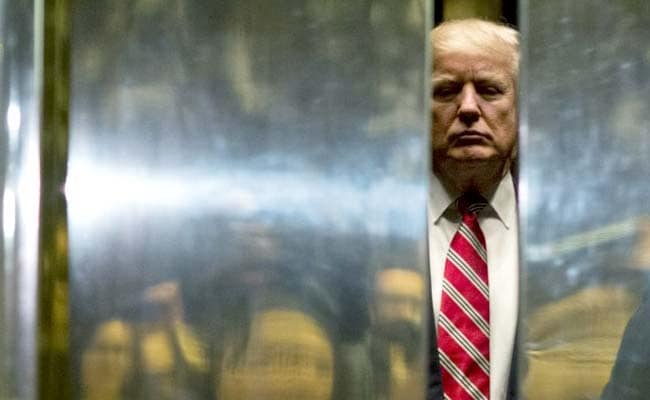
Davos: It's been impossible to escape the shadow of Donald Trump at this year's gathering of the business elites at the World Economic Forum in the Swiss ski resort of Davos.
Uncertainty over what Mr Trump will do once he takes office on Friday and whether his presidency will mark the end of globalisation dominated discussions all week at this event, which more than any has become synonymous with international business.
Sure, lofty ambitions were discussed, from fighting epidemics to dealing with inequalities across the world. But inevitably all talk turned to Mr Trump, who has promised to rewrite free trade deals and even slap tariffs on China, the world's second largest economy.
"Do I really think we're going back to protectionism? I don't really know yet and I can promise you I'm paying a lot of attention to it because trade matters to us," said David Cote, chairman and CEO of industrial conglomerate Honeywell. "It's a little too early to press the panic button; we ought to see what ends up happening here."
Roberto Azevedo, director-general of the World Trade Organization, the institution that oversees global trading rules, reminded delegates that in the 1930s, unilateral actions to raise tariffs led to a "domino effect" that wiped out two-thirds of global trade in three years.
"That would be a catastrophe of untold proportions," he said. "I think we should try not to talk ourselves into a trade war and I think we're seeing a lot of that."
The case against globalisation
Whether or not world trade goes into reverse, it's evident that globalisation - the commitment to lower barriers to doing business around the world - is under threat like no other time in decades.
The main allegations are that it has increased inequalities in wealth, eroded job security for the middle and lower-income families in developed countries, and kept a lid on wages as businesses seek low-cost workers in poorer countries. The breakneck pace of technological innovation is making jobs redundant, particularly in industries like manufacturing.
Anti-poverty charity Oxfam illustrated the issue of inequality starkly in a report this week in which it said that eight billionaires own as much wealth as half the world's population, or 3.6 billion people.
There's a perception among many middle- and lower-income households in developed economies like the US and Europe that globalisation hasn't worked for them and it's their anger that supported Trump's victory and Britain's vote to leave the European Union this year.
The case for it
Globalisation has helped lift hundreds of millions to escape poverty over the past decades. Populous countries like China and India have enjoyed phenomenal growth, improved standards of living, life expectancy, literacy and employment rates.
As though to underscore that value of that, China's leader visited the Davos forum this year for the first time ever.
In a historic address, Chinese President Xi Jinping cast his country as a champion of free trade and stability. Though China does in fact put big limits on foreign companies in the country, His message was clear: that China wants to take a bigger role on the global stage and keeping business flowing.
"We must remain committed to promoting free trade and investment through opening up, and say no to protectionism," Mr Xi said, without directly referencing Mr Trump. "Pursuing protectionism is like locking oneself in a dark room. While wind and rain may be kept outside, so are light and air... No one will emerge as a winner in a trade war."
Way ahead
The key will be what policies Mr Trump actually puts in motion, and whether other countries follow the temptation to throw up bigger barriers to business.
Britain will this year renegotiate its trade relations with the rest of the EU, the region it does most business with. And populist political movements have risen in countries like the Philippines and are increasingly prominent in developed economies like France, the Netherlands and Italy.
"We may be at a point where globalisation is ending," said Ray Dalio, founder of hedge fund Bridgewater Associates.
Beyond Mr Trump, Christine Lagarde, the managing director of the International Monetary Fund, said the broader international system must change.
Dealing with inequality will have to become a central concern for governments, she said, adding that could mean greater redistribution of wealth - a tough message to deliver to a crowd of millionaires and billionaires.
Theresa May, Britain's prime minister, sought to convince the Davos elite that Britain was not retreating from the global scene. But she did concede that policymakers from the mainstream have to support those for whom globalisation is not working.
"The forces of liberalism, free trade and globalisation that have had, and continue to have, such an overwhelmingly positive impact on our world... are somehow at risk of being undermined," she said.

-
AI Bias In Investing Cannot Be Eliminated, But It Can Be Governed

Framing is a particularly important example as identical financial information presented in terms of gains rather than losses can lead an LLM to reach a different assessment.
-
Joining The Dots | Dark Skies, Steady Diya: Why Hope Holds This Diwali
With war, a weak rupee and foreign outflows weighing on sentiment, policymakers at the NDTV World Summit and market veterans at NDTV Profit Ignite: Diwali Edition offered the same advice: stay invested and filter out the noise.
-
The Curious Case of Equitas Small Finance Bank And A CEO Who Quit For Stock
PN Vasudevan believes persistent investor concerns over a perceived conflict of interest had become a governance overhang on Equitas Small Finance Bank's stock, even as the lender improved profitability and asset quality.
-
Talking Points This Week: AI Cash Burn, A Tiger Comeback And An India That Still Finds Its Own Path
India is not immune to higher oil or tighter global liquidity, yet its earnings base is broader, its domestic policy levers are still available.
-
Foreign Investors Own Half Of HDFC Bank and ICICI Bank. An LTCG Cut Could Matter Most Here
Foreign portfolio investors have US$115 billion parked in HDFC Bank, ICICI Bank. If the government cuts long-term capital gains tax, Jefferies says returning foreign money could land here first.
-
'Never Seen This Level Of Negativity': Sandeep Tandon Says The Next Rally May Be Closer Than You Think
Veteran investor Sandeep Tandon says foreign selling is easing, large-caps are due a comeback and mid-caps are crowded, while he turns positive on gold, power and pharma this Diwali.
-
Indians Stay With Family, Not In Hotels | The Reason Why
India still lacks enough clean, reliable and affordable hotels for budget-conscious travellers.
-
The Economic Imperative: Analysing The Material Driving Force Behind India-Canada Strategic Reset
This economic complementarity is further reinforced by deep institutional investment ties and talent mobility, which form the bedrock of the bilateral framework.
-
Medicine Pricing: Where Must Profit Stop?
India must confront excessive margins, hidden incentives and regulatory gaps that threaten the integrity of medicine.
-
Why Amazon And Flipkart Are Struggling To Beat Meesho In India's Smaller Cities
With 274 million users and lowest-cost logistics, Meesho is defending its value commerce crown against giants like Amazon and Flipkart.










