Will RBI’s Public Credit Registry Disrupt India’s Successful Credit Bureaus?
India's retail bankers are in a comfortable spot today. Loan growth in this segment has been strong but delinquencies have remained in check. Ask them why and most will attribute the comfort in retail lending to the country's credit bureaus.
Risk in retail lending, particularly unsecured lending, has been substantially mitigated by credit bureaus, Arvind Kapil, group head of unsecured loans at HDFC Bank - the country's largest private lender by assets - told BloombergQuint in a recent interview. “Bureaus are not information providers. They have constructed a social construct of pressure and education that helps you pay on time,” Kapil explained.
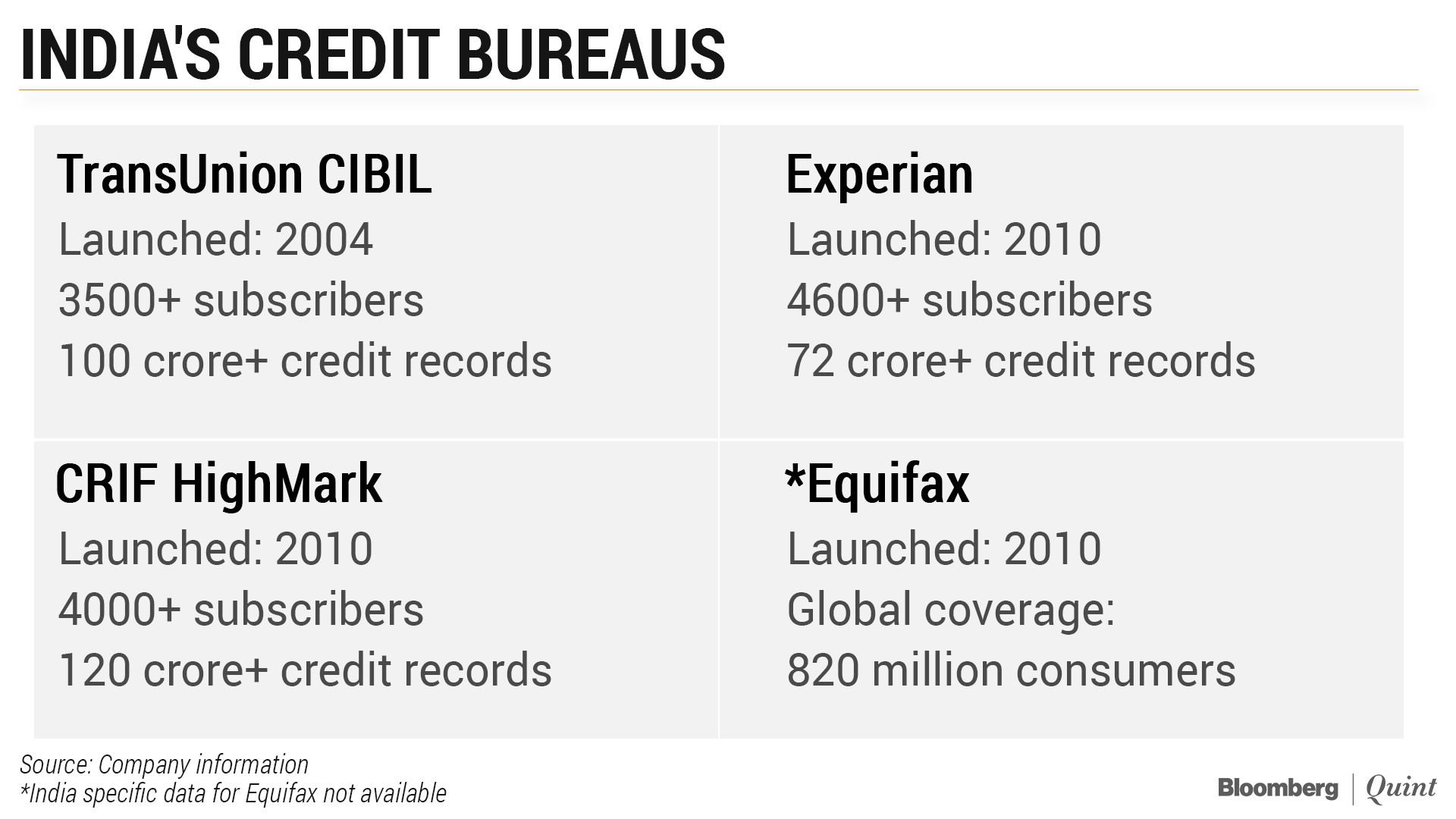
Credit bureaus, or credit information companies (CIC) as they are called in regulatory parlance, are a relatively recent addition to the Indian lending landscape. TransUnion CIBIL, the country's first largest CIC, was incorporated only in the year 2000 and commenced credit bureau services in 2004. Since then three others - Equifax, Experian and CRIF High Mark - have started operating.
Today, these bureaus are facing a collective challenge to their existence. The challenge comes from no less than the regulator itself and its plan to launch a public credit registry (PCR).
On June 6, the RBI said that it has decided to set up a PCR in a phased manner following recommendations of a committee headed by Y.M. Deosthalee. The decision has left the country's credit bureaus nervous, forcing the top management at some of these firms to reach out to the RBI for clarity.
What will be the role of the RBI-driven credit registry? Will it overlap with the business of the credit bureaus? And, most importantly, will it reduce the use credit bureaus and scores?
We understand the value and purpose of a PCR. We understand its relevance from an economic policy point of view as well. There is no question that alternate data is needed, especially in the context of new-to-credit customers. That should not make the usage of CICs optional. That's the only point we are making. We want to add to this, we don't want to subtract from this.Satish Pillai, CEO & MD, TransUnion CIBIL
The Idea Of A Public Credit Registry
The debate around the need for a public credit registry was brought up RBI deputy governor Viral Acharya in a speech in July 2017. A transparent and comprehensive public credit registry is the need of the hour in India, Acharya said. It will help improve credit assessment, lead to better risk-based pricing and allow for stronger supervision.
While noting that there are various sources of credit information in the country, including bureaus, Archarya argued in favor of a comprehensive credit registry, managed by the RBI or another government agency.
After Acharya's speech, things moved quickly. In October 2017, a task force was set up to look into the matter. The committee submitted its report in April. In June, the RBI put the report in public domain and said it “has considered the recommendations of the Task Force and decided to set up a PCR in a modular and phased manner.”
Key recommendations of the Deosthalee committee included:
- A PCR which is set up by the RBI and, in due course, transferred to a non-profit entity.
- The PCR should be the single point of mandatory reporting for all “material events” for each loan without any threshold in amount.
- The PCR should be backed by a suitable legal framework to achieve its objectives.
- Access to PCR data to all stakeholders must be on a need-to-know basis only.
- The borrowers may access their own credit history report from PCR.
- The PCR, however, may not provide any service which involves elements of judgment like credit scoring services.
Can The Public Credit Registry & Credit Bureaus Co-Exist?
The recommendations, if implemented, will mean that the unique access that CICs had to credit information would end. The same, and much more information, will eventually be available with the PCR and accessible to those who may need to use it.
Credit bureaus may still be able to provide scoring and other value-added services, but the access to data would, in some ways, be democratised.
There are overlaps between the PCR and the CICs, said Kalpana Pandey, MD & CEO of CRIF High Mark, while adding that the issue is being discussed between the industry and the regulator. Pandey is hopeful that a “co-operative model” model would emerge and the bureaus will co-exist with the PCR. But it's not clear that customers will need to go to bureaus should they be able to access the data from public registry.
The value-added services will only be offered by CICs. What remains to be seen is whether customers will have to go to two places to meet requirements or just one of the two. That's something we are waiting for clarity on.Kalpana Pandey, MD & CEO, CRIF High Mark
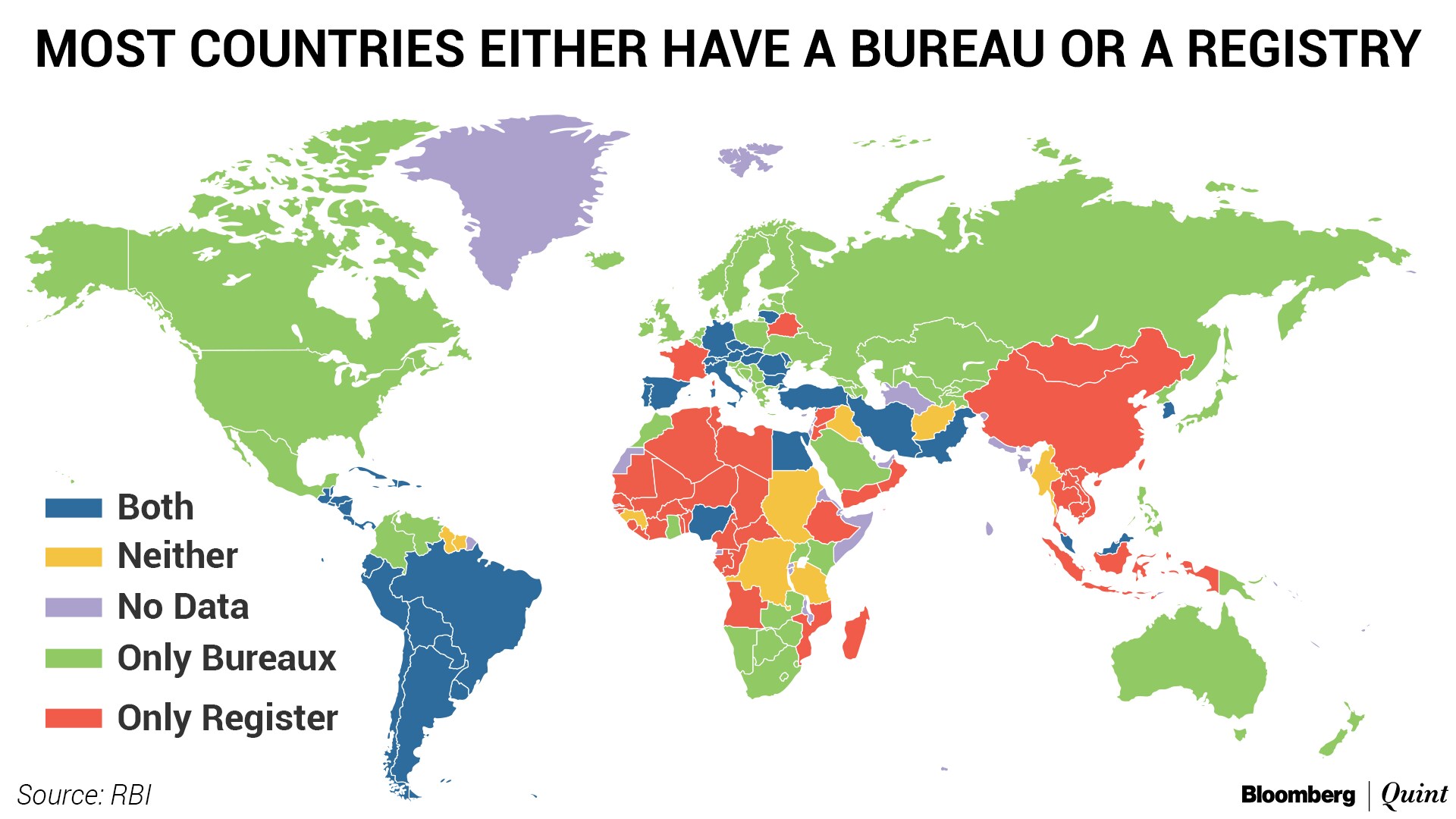
Global experience suggests that most countries either have credit bureaus or public registries, but there are economies where both exist.
We are still not very clear on the interplay between PCR and CICs, said Pillai of Transunion CIBIL. The co-existence of the two depends on a clear understanding of what each of them is doing, he added. “What we believe is that there is a legacy that we have built, repository that we built, that should not be diluted or made optional,” said Pillai.
PCR: A Better, Bigger Version Of Credit Bureaus?
Private credit bureaus may need to alter their business models once the PCR is in place. However, for the economy, this may mean expanded availability of data around consumers, small and large businesses. This data, in turn, would widen the access to credit.
It was felt that the information available with credit bureaus is not sufficient and some of it is not authenticated, said a person familiar with the thinking who spoke on condition of anonymity. The public credit registry would collect data from a number of sources including banks, non-banking finance companies and other sources like public utilities. All put together, the PCR would provide better and cleaner database, said this person.
Once the database is in place, the credit bureaus, like other stakeholders, can access it and use it for purposes like credit scoring.
“The credit history, score cards and other services are focused on consumer and microfinance lending and will continue to be a key source in that space,” said Anshul Swami, Head – Retail Inclusion & Rural Products, RBL Bank. “Incremental information on utilities, telecom and insurance through a central registry will help improve lending especially to individuals with no past credit history,” he added.
While Swami does not see the use of bureaus reducing, he sees the PCR as a useful addition. The PCR can enhance the availability of information, link it to a unique identifier and help improve efficiency of the credit markets, he said.
An email sent to the RBI seeking further clarity on the its plans for the PCR remained unanswered. Y.M. Deosthalee, the chairman of the committee which recommended the PCR, declined to comment further.

-
Indians Are Travelling, But Not Every Journey Is A Holiday | The Week In Whys

Pilgrims, patients and working women are the real travellers, and the system hasn't quite caught up with them.
-
Getting To Work Costs Women More | The Reason Why
It is not just about women paying more than men. It is about women paying much more in cities than in villages.
-
AI Bias In Investing Cannot Be Eliminated, But It Can Be Governed
Framing is a particularly important example as identical financial information presented in terms of gains rather than losses can lead an LLM to reach a different assessment.
-
Joining The Dots | Dark Skies, Steady Diya: Why Hope Holds This Diwali
With war, a weak rupee and foreign outflows weighing on sentiment, policymakers at the NDTV World Summit and market veterans at NDTV Profit Ignite: Diwali Edition offered the same advice: stay invested and filter out the noise.
-
The Curious Case of Equitas Small Finance Bank And A CEO Who Quit For Stock
PN Vasudevan believes persistent investor concerns over a perceived conflict of interest had become a governance overhang on Equitas Small Finance Bank's stock, even as the lender improved profitability and asset quality.
-
Talking Points This Week: AI Cash Burn, A Tiger Comeback And An India That Still Finds Its Own Path
India is not immune to higher oil or tighter global liquidity, yet its earnings base is broader, its domestic policy levers are still available.
-
Foreign Investors Own Half Of HDFC Bank and ICICI Bank. An LTCG Cut Could Matter Most Here
Foreign portfolio investors have US$115 billion parked in HDFC Bank, ICICI Bank. If the government cuts long-term capital gains tax, Jefferies says returning foreign money could land here first.
-
'Never Seen This Level Of Negativity': Sandeep Tandon Says The Next Rally May Be Closer Than You Think
Veteran investor Sandeep Tandon says foreign selling is easing, large-caps are due a comeback and mid-caps are crowded, while he turns positive on gold, power and pharma this Diwali.
-
Indians Stay With Family, Not In Hotels | The Reason Why
India still lacks enough clean, reliable and affordable hotels for budget-conscious travellers.
-
The Economic Imperative: Analysing The Material Driving Force Behind India-Canada Strategic Reset
This economic complementarity is further reinforced by deep institutional investment ties and talent mobility, which form the bedrock of the bilateral framework.










