Will Mukesh Ambani’s Telecom Playbook Work In Broadband?
Mukesh Ambani has found his next big disruption target in broadband and cable television services. The trouble is it's a stagnant market that requires additional infrastructure, and users are usually reluctant to switch.
That's unlike the telecom market that India's richest man upended with cheap data. It was growing when Ambani launched Reliance Jio Infocomm Ltd., partly leveraging existing tower infrastructure in the industry. And customers obliged.
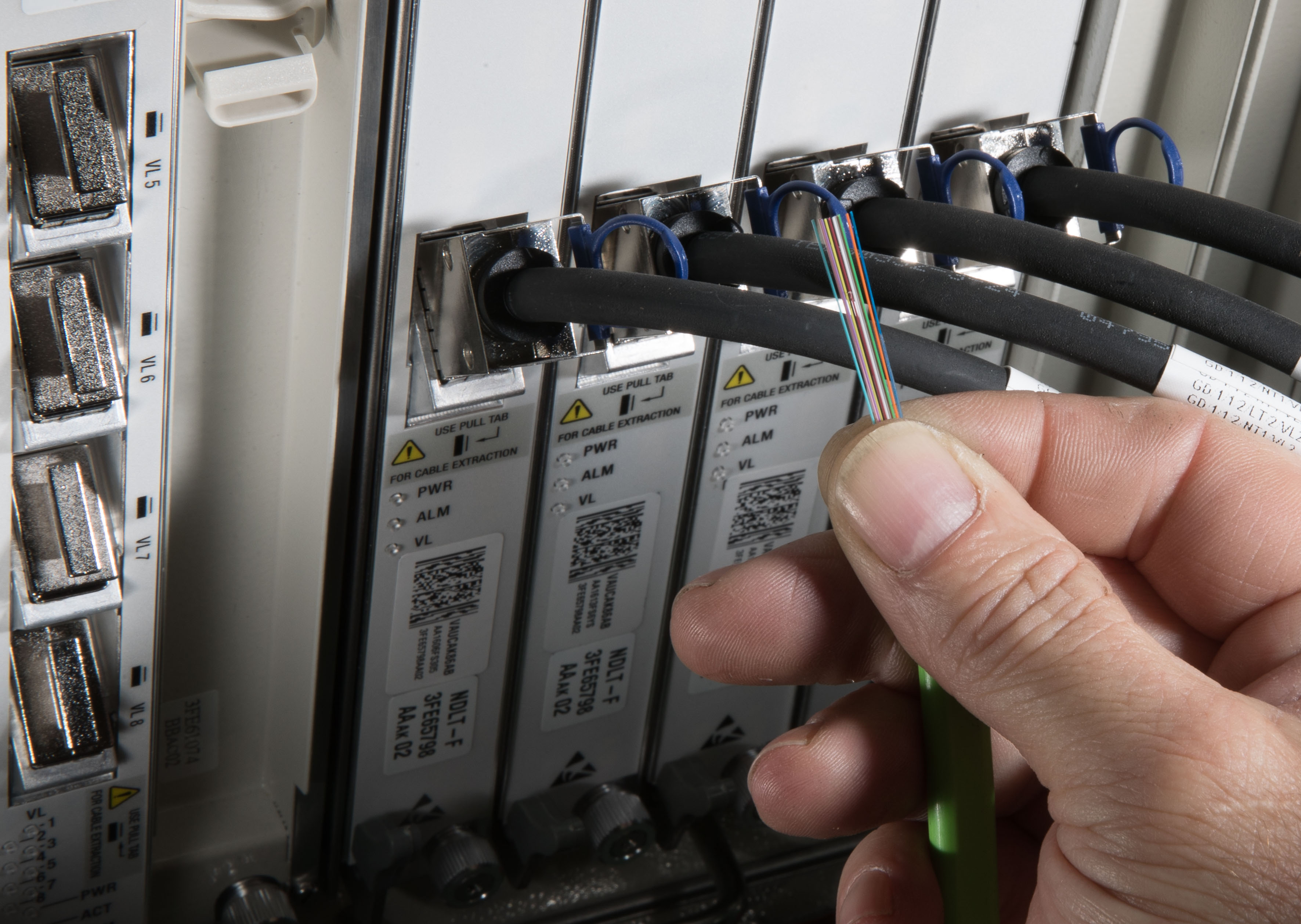
The chairman of Reliance Industries Ltd. announced plans to launch JioGigaFiber—a fibre broadband network targeted at homes and businesses across 1,100 cities. He invited registrations from Aug. 15, saying demand will help the company prioritise where to offer its services. JioGigaFiber will come with routers and a set-top box for television.
Ambani's telecom arm Reliance Jio Infocomm Ltd. is eyeing nearly five crore broadband subscribers—it didn't specify by when. What puts that into perspective is this: the sector has only 1.8 crore users, with a penetration level of 6 percent.
Stagnant Market
Aggressive pricing will be the key to Reliance Jio meeting the target. But there are factors that could work against the hydrocarbons-to-telecom giant, research firm Jefferies said.
Subscriber base in the fixed broadband space hasn't grown over 15 months to April 2018. Jefferies attributes this to expensive pricing and lack of focus and execution among incumbents. The market is dominated by two state-run firms and has five major players.
Unlike cable TV, growth for direct-to-home operators has seen steady. The cable industry is fragmented and is dominated by regional players. The DTH sector has five major service providers.
Costs
As Jio eyes not only broadband but cable users as well, its product pricing must be at a discount to that of incumbents, Jefferies said. On average, broadband services cost Rs 500-1,000 a month depending on speed; cable and DTH services cost Rs 200-300, varying with quality and the number of channels offered.

Sticky Customers
Jefferies said subscriber base and penetration levels for cable are low because:
- Incumbents are unable to scale up operations due to high capital intensity.
- Time consuming local issues complicate last-mile access.
- Customer stickiness acts as an entry barrier.
The challenges for Jio to garner five crore subscribers would only be last-mile access and willingness of customers as it's already incurred a major capital expenditure. The company laid intra-city fibers over three lakh kilometres in length.
The size of the broadband, cable distribution and DTH industry was close to Rs 52,000 crore in 2017. Independent research houses Media Partners Asia and EY expect it to grow to around Rs 66,000 crore by 2020.

-
The Economic Imperative: Analysing The Material Driving Force Behind India-Canada Strategic Reset

This economic complementarity is further reinforced by deep institutional investment ties and talent mobility, which form the bedrock of the bilateral framework.
-
Medicine Pricing: Where Must Profit Stop?
India must confront excessive margins, hidden incentives and regulatory gaps that threaten the integrity of medicine.
-
Why Amazon And Flipkart Are Struggling To Beat Meesho In India's Smaller Cities
With 274 million users and lowest-cost logistics, Meesho is defending its value commerce crown against giants like Amazon and Flipkart.
-
High US Salaries, No Green Card Certainty: The Financial Calculation Facing Indian H-1B Families
The suspension of PERM processing at eight technology employers does not cancel existing H-1B visas. What it does is force a question many Indian families have been avoiding: is the US salary worth tying your career and family plans to one employer?
-
Swiggy vs Eternal: Food Delivery's Two Rivals Are No Longer In The Same Race
Eternal is building a private AI assistant, dark.ai. Swiggy is still working out how to make Instamart pay, with an operating loss of Rs 895 crore in the July-September quarter while Blinkit stayed profitable.
-
Where You Live Shapes How You Get To Work | The Reason Why
Two-wheelers are the most popular way to get to work in India, accounting for nearly 43% of workplace commutes.
-
Unhedged Position: Can India See An Indonesia-Style Time Correction?
The Nifty is trading below levels it first clocked in 2024. Is there, then, as I have suggested in the headline, potential that the current time correction drags on painfully for the next three-five, even ten years?
-
Navigating Friction And Energy Realities: An Analysis Of Marco Rubio's October Visit To India
Occurring at a critical juncture marked by stalled trade negotiations and escalating geopolitical pressures over global energy supplies, the visit offers a profound window into modern US-India relations.
-
India Exports Capital. Why Not Export Trusteeship?
The big question, then, is whether India can build an institution that global borrowers, investors, banks, and lawyers can trust, even without an Indian connection.
-
France's Economy & Politics Are In Crisis | The Reason Why
Let's look at how the French economy and politics evolved under Nicolas Sarkozy, Franois Hollande and Emmanuel Macron.










