Will In-Flight WiFi In India Be A Nuisance?
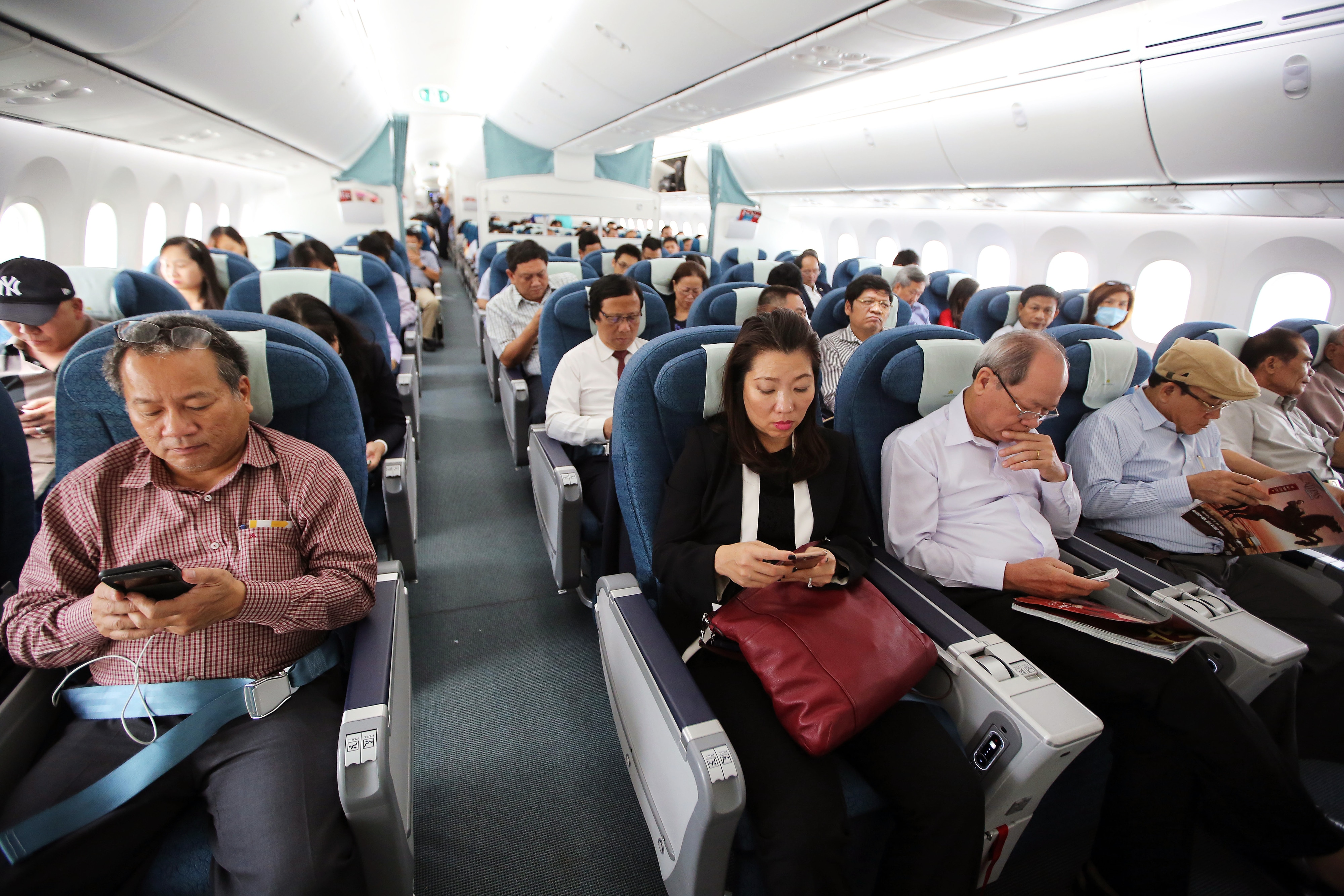
Airlines from Europe and the U.S. have been providing customers in-flight WiFi for years. Even Indian carriers offered it on some overseas routes. But when flying across the Indian airspace, they were compelled to switch off the service as local rules didn't allow it. The Telecom Commission's nod to a proposal for in-flight access to domestic and international airlines within the Indian airspace is set to change that.
But will passengers pay extra for it? And how much will it cost?
Globally, 77 percent passengers are open to paying for in-flight WiFi services, according to Global Eagle, a firm that specialises in in-flight content. Not only do most passengers expect airlines to offer WiFi on board, they are also willing to pay for it, if they get the right standard of network coverage, it said.
What It May Cost Passengers, Airlines
While it's still unclear how much airlines will charge for the service, passengers may not be averse to paying Rs 200-300 (about $3-4.5) for a two- to three-hour flight and it could be more for international flights, newswire PTI quoted Amber Dubey, partner and India head of aerospace and defence at global consultancy KPMG, as saying. “Premium and corporate passengers may get the service free.”
In one or two years, the WiFi service may become free, he said. While it may provide a new revenue opportunity for airlines, Dubey said airlines would find it onerous to ground the aircraft for retrofitting the necessary equipment.
Aviation researcher CAPA pegs the cost of retrofitting at $500,000 and line-fitting at the manufacturing stage at $700, 000. Associated operating costs could go up to $20,000 a month for every aircraft, and bandwidth on a single plane could cost nearly $5,000 a month, it said. Which means, airlines would have to pass on the costs to customers.
What Flyers Pay Overseas
Flights abroad often offer WiFi free for business and first-class passengers or frequent fliers. For the economy passengers, Emirates offers free WiFi for the first 20 megabytes of data, followed by up to $15.99 for 500 MB. Turkish Airlines offers economy passengers two plans: $9.99 for an hour or $14.99 for a 24-hour package.
Delta Airlines, one of the world's largest providers of in-flight WiFi, offers premium 2KU (up to 15 Mbps speeds) internet through North America-specific and Global Day Passes. It also has a ‘Free Pass' that allows customers to use WhatsApp, Facebook Messenger and iMessage while onboard.
Convenience or Nuisance?
Sudhakara Reddy, national president of the Air Passengers Association of India, said while data might be useful (and expensive) for Indian fliers, voice should not have been allowed by the Telecom Commission. “You know how all of us in this country are. The minute the flight lands and touches the aerobridge, everyone gets onto their phones and there is furore,” Reddy told BloombergQuint. “This doesn't happen internationally and so, we need discipline.”
Dhaval Mistry, who takes several red-eye flights a month, is concerned that in-flight WiFi might become a nuisance. “It was bad enough to have fellow passengers with noisy habits, chatting away, playing video games and loud music on night flights, but this just made it a lot worse,” he said. “It'll become like a fish market and it will be impossible to catch up on my sleep.”

-
The Economic Imperative: Analysing The Material Driving Force Behind India-Canada Strategic Reset

This economic complementarity is further reinforced by deep institutional investment ties and talent mobility, which form the bedrock of the bilateral framework.
-
Medicine Pricing: Where Must Profit Stop?
India must confront excessive margins, hidden incentives and regulatory gaps that threaten the integrity of medicine.
-
Why Amazon And Flipkart Are Struggling To Beat Meesho In India's Smaller Cities
With 274 million users and lowest-cost logistics, Meesho is defending its value commerce crown against giants like Amazon and Flipkart.
-
High US Salaries, No Green Card Certainty: The Financial Calculation Facing Indian H-1B Families
The suspension of PERM processing at eight technology employers does not cancel existing H-1B visas. What it does is force a question many Indian families have been avoiding: is the US salary worth tying your career and family plans to one employer?
-
Swiggy vs Eternal: Food Delivery's Two Rivals Are No Longer In The Same Race
Eternal is building a private AI assistant, dark.ai. Swiggy is still working out how to make Instamart pay, with an operating loss of Rs 895 crore in the July-September quarter while Blinkit stayed profitable.
-
Where You Live Shapes How You Get To Work | The Reason Why
Two-wheelers are the most popular way to get to work in India, accounting for nearly 43% of workplace commutes.
-
Unhedged Position: Can India See An Indonesia-Style Time Correction?
The Nifty is trading below levels it first clocked in 2024. Is there, then, as I have suggested in the headline, potential that the current time correction drags on painfully for the next three-five, even ten years?
-
Navigating Friction And Energy Realities: An Analysis Of Marco Rubio's October Visit To India
Occurring at a critical juncture marked by stalled trade negotiations and escalating geopolitical pressures over global energy supplies, the visit offers a profound window into modern US-India relations.
-
India Exports Capital. Why Not Export Trusteeship?
The big question, then, is whether India can build an institution that global borrowers, investors, banks, and lawyers can trust, even without an Indian connection.
-
France's Economy & Politics Are In Crisis | The Reason Why
Let's look at how the French economy and politics evolved under Nicolas Sarkozy, Franois Hollande and Emmanuel Macron.










