Will GST Make Or Break Your Business? Here's What Industry Says
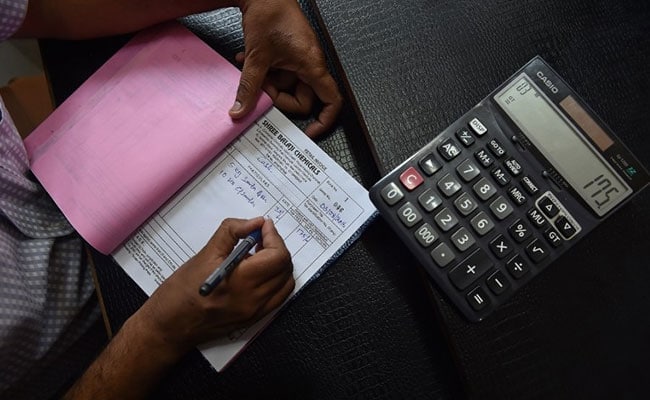
It's not all bad news when it comes to the Goods and Services Tax (GST). While micro, small and medium enterprises (MSMEs) may be drowning in hidden overheads, industries like auto manufacturers and fast moving consumer goods (FMCG) have reasons to be pleased with the hidden gifts GST has given them. NDTV looked into case studies and the numbers to find how each sector is handling the year-old tax regime.
Indikala, a four-year-old, one room business, was growing steadily, with a 260 per cent jump in turnover from the first year to the second. This year, Indikala grew a mere 8 per cent.
Owner Neil Gadihoke says his costs have gone up everywhere - from sourcing handicrafts from GST registered, and therefore more expensive, artisans, making Rs 82 or Rs 88 on every 100 earned instead of the Rs 95 he was getting earlier, to even paying more for necessities like the chartered accountant.
"My chartered accountant's fees have gone up three times," said Mr. Gadihoke. "He used to file returns once every quarter, now he files them 16 times, and then the additional headache of that website, compliances, I think he is justified."
The courier service is also charging him six per cent more, thanks to the GST. With profits flatlining, Mr. Gadihoke has started taking tuition classes, and is considering closing down the business if things don't change soon.
However, for auto manufacturers, the dog days are over. Auto accounts for a massive 50 per cent of manufacturing in India, and 7 per cent of GDP (gross domestic product). Taxes have actually gone up for this sector, but the GST has still pushed auto prices down.
"In a sector like auto manufacturing, we get parts from different states, and every time these parts would cross state borders, the taxes would get embedded in the price," said Sugato Sen, the deputy director general at the Society of Indian Automobile Manufacturers. "Now with the clean up thanks to GST, these have been removed, and we have been able to pass on those savings to customers."
And happy customers mean happy businesses. After hovering between 3.5-7 per cent from 2012 to 2017, domestic sales growth for the auto sector shot up to 14 per cent in 2017-18. While price cuts amounting to lakhs for luxury cars drew flak for passing GST benefits to the rich, the highest growth came in sales came for commercial vehicles, with a 25 per cent jump in sales for light commercial vehicles alone. In the passenger vehicles category, Maruti Suzuki (13.8 per cent), SkodaAuto (26.8 per cent) and Tata Motors (21.9 per cent) all showed a healthy growth in sales.
FMCG makes up one of the fastest growing sectors in the country. When the GST was first implemented, FMCG companies complained that it was above the effective rate in the pre-GST era, as it did not account for production in excise free zones. In November last year, however, the government revised GST on most FMCGs down from 28 per cent to 18 per cent. Companies say these benefits were immediately passed on to the consumers - making goods such as detergents and toothpastes cheaper.
But this, too, pushed up sales. Sales growth for FMCG giant Godrej went from 4 per cent in 2017 to a whopping 10 per cent in 2018. For Dabur, the uptick in sales was over 3 per cent.
While growth in sales cannot only be attributed to the GST alone, large companies admit that the new tax regime has definitely been a positive influence. As the GST network grows, and compliances and refunds become simpler, MSMEs hope they can draw on these benefits as well.

-
Getting To Work Costs Women More | The Reason Why

It is not just about women paying more than men. It is about women paying much more in cities than in villages.
-
AI Bias In Investing Cannot Be Eliminated, But It Can Be Governed
Framing is a particularly important example as identical financial information presented in terms of gains rather than losses can lead an LLM to reach a different assessment.
-
Joining The Dots | Dark Skies, Steady Diya: Why Hope Holds This Diwali
With war, a weak rupee and foreign outflows weighing on sentiment, policymakers at the NDTV World Summit and market veterans at NDTV Profit Ignite: Diwali Edition offered the same advice: stay invested and filter out the noise.
-
The Curious Case of Equitas Small Finance Bank And A CEO Who Quit For Stock
PN Vasudevan believes persistent investor concerns over a perceived conflict of interest had become a governance overhang on Equitas Small Finance Bank's stock, even as the lender improved profitability and asset quality.
-
Talking Points This Week: AI Cash Burn, A Tiger Comeback And An India That Still Finds Its Own Path
India is not immune to higher oil or tighter global liquidity, yet its earnings base is broader, its domestic policy levers are still available.
-
Foreign Investors Own Half Of HDFC Bank and ICICI Bank. An LTCG Cut Could Matter Most Here
Foreign portfolio investors have US$115 billion parked in HDFC Bank, ICICI Bank. If the government cuts long-term capital gains tax, Jefferies says returning foreign money could land here first.
-
'Never Seen This Level Of Negativity': Sandeep Tandon Says The Next Rally May Be Closer Than You Think
Veteran investor Sandeep Tandon says foreign selling is easing, large-caps are due a comeback and mid-caps are crowded, while he turns positive on gold, power and pharma this Diwali.
-
Indians Stay With Family, Not In Hotels | The Reason Why
India still lacks enough clean, reliable and affordable hotels for budget-conscious travellers.
-
The Economic Imperative: Analysing The Material Driving Force Behind India-Canada Strategic Reset
This economic complementarity is further reinforced by deep institutional investment ties and talent mobility, which form the bedrock of the bilateral framework.
-
Medicine Pricing: Where Must Profit Stop?
India must confront excessive margins, hidden incentives and regulatory gaps that threaten the integrity of medicine.










