Will A Near-Normal Monsoon Help Increase Food Inflation?
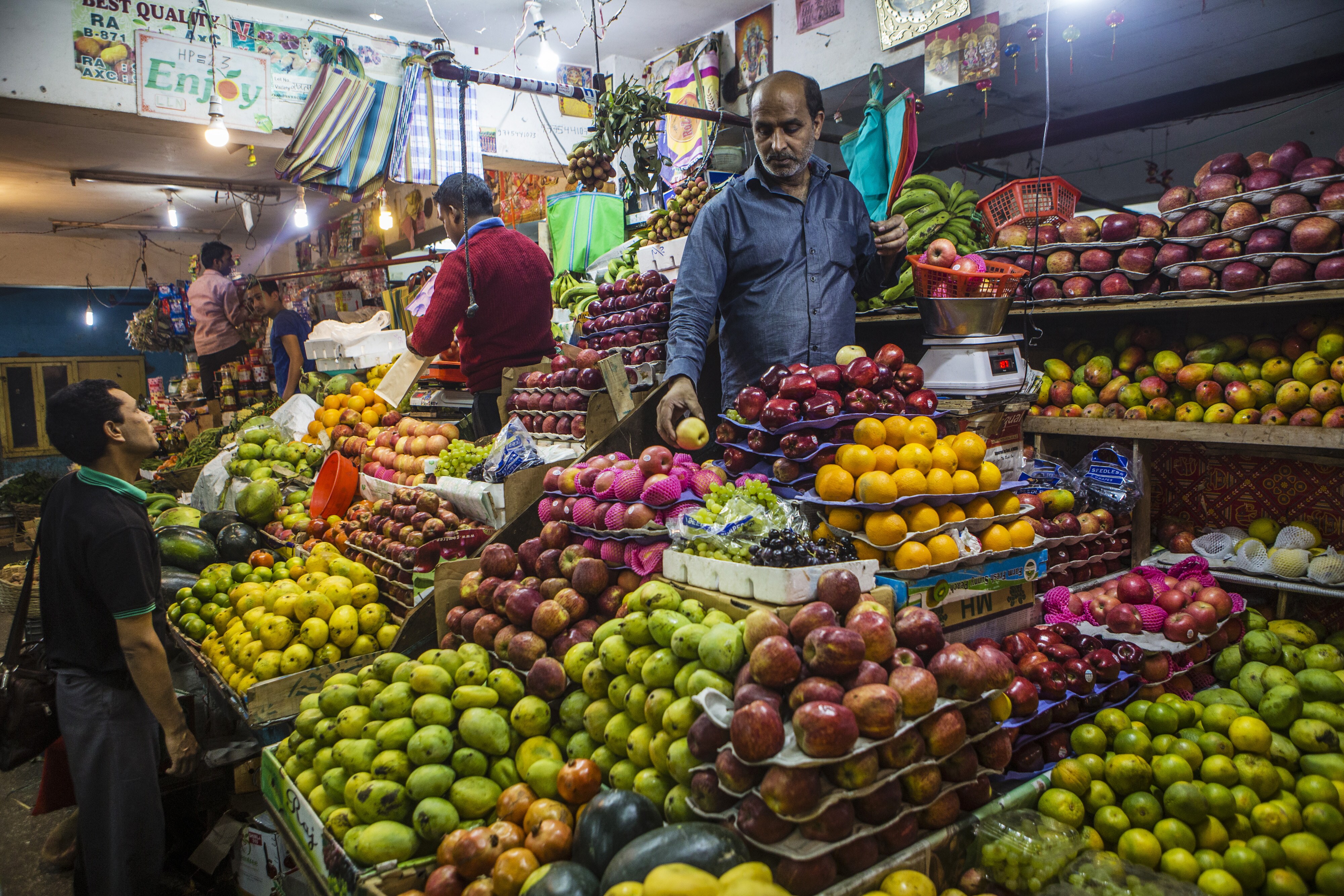
The official forecast of a “near-normal” monsoon this year has brought some relief amid concerns over a slowing economy. But will it push inflation higher?
Retail inflation rose for the second straight month in March, led by an increase in food prices. A lower-than-expected rainfall could push up food prices.
The India Meteorological Department predicted the southwest monsoon from June to September to be 96 percent of the long-period average. There's a 39 percent chance of a normal rainfall, the weather forecaster said in its first-stage predictions released on April 15. Rainfall ranging from 96-104 percent of the average is considered normal.

The projection is biased towards the lower side of the range, indicating a near-normal or below-normal rainfall, Sonal Varma, chief India economist at Nomura. Despite expectations of food inflation's mean reversion to pre-2016 levels of close to 5 percent, the forecast does not offer clarity on what it means for food inflation, she said. “Food productivity will depend on rainfall in July, when the correlation between monthly rainfall and food production is the highest of all months.”
Since 2016, normal southwest monsoon rains have helped lower food prices, reining in consumer inflation. But that also led to increased rural distress because of a supply glut and lower farm prices.
Kotak Economic Research, in a note, said it's premature to deduce the monsoon's effects on food prices and production—with risks skewed towards a subnormal monsoon. But a favorable mix of price increase and production level could alleviate the farm distress to some extent, it said.
Private weather forecaster Skymet has said that monsoon rains are more likely to be below normal this year. A better picture will emerge when the next forecasts are released.
The IMD will release its second-stage forecast in June, which includes intertemporal and spatial parameters. Rainfall, according to the IMD's end of season reports, was lower than its first-stage forecasts in three of the last five years.
“Interspatial distribution of rainfall along with when the monsoons begin and recede are far more critical factors,” Madan Sabnavis, chief economist at Care Ratings, said. “The monsoon forecasts have to be taken with a pinch of salt.”
Even assuming accurate forecasting, other parameters are critical in determining food inflation. In the absence of the government's procurement, market, demand and supply determine crop prices. Varma and Sabnavis cited historical instances of low food inflation even during a drought year as production was offset by the income effect.

-
We May Need Another Tukaram Mundhe To Fight Air Pollution | The Reason Why

Developers may install basic measures such as sprinklers and green nets, resume work, and continue violating rules when this equipment stops working.
-
Extracting Value From Battery Scrap Could Be Challenging For India | The Reason Why
A discarded lithium-ion battery still contains valuable materials such as lithium, nickel and cobalt. These can be recovered and reused. When such batteries are crushed and shredded, they produce a dark powder called black mass.
-
One El Nino, India Can Handle. Two Could Break The Granary
India's grain stocks can absorb one bad year, but a second El Nino could drain the buffer in two to three years, economists say.
-
India's Troika Of Good Luck | Joining The Dots
As Jensen Huang's exit drags Nvidia down, a cooling AI trade and resilient earnings have revived investor interest in India. A likely RBI rate hike looms.
-
Talking Points This Week: Leadership Shock At Nvidia, Earnings Strength, And The Fog Over Hormuz
The Anthropic IPO pricing and first trading day, Nvidia's upcoming earnings, and any fresh signals from Iran will set the tone for the following week.
-
Signature Play: The Classic Cocktail Is Dead. Or Is It?
Classic cocktails are disappearing from India's cocktail menus. But they're still being ordered, taught to bartenders and borrowed from. So, who's really having the last drink?
-
A New Samvat Wishlist: Inclusive Prosperity And Human Development
India has strengthened its economic foundations through infrastructure, digital access and enterprise. Its next growth chapter must deepen productivity, create better livelihoods and widen participation in prosperity.
-
Love, Sex Aur Dhokha: The Audacious Plot To Spy On Jensen Huang
A Taipei dinner, a Singapore chip buyer and a suspected Chinese asset: inside the alleged spy operation that got close to NVIDIA's Jensen Huang.
-
Ten Things I Learnt This Samvat
Patience can be a trap. Cheap stocks can stay cheap. Leverage can wipe you out. What did Samvat 2082 teach us? Niraj Shah writes on 10 lessons from the year gone by.
-
Talking Points This Week: Tech Nerves, FII Buying, And A Faraway Banking Shock
The global markets are not shining this Diwali. The exception in the large markets is, India.









