Why WTO Panel's Adverse Ruling On India's Tech Tariffs May Impact FTA Talks
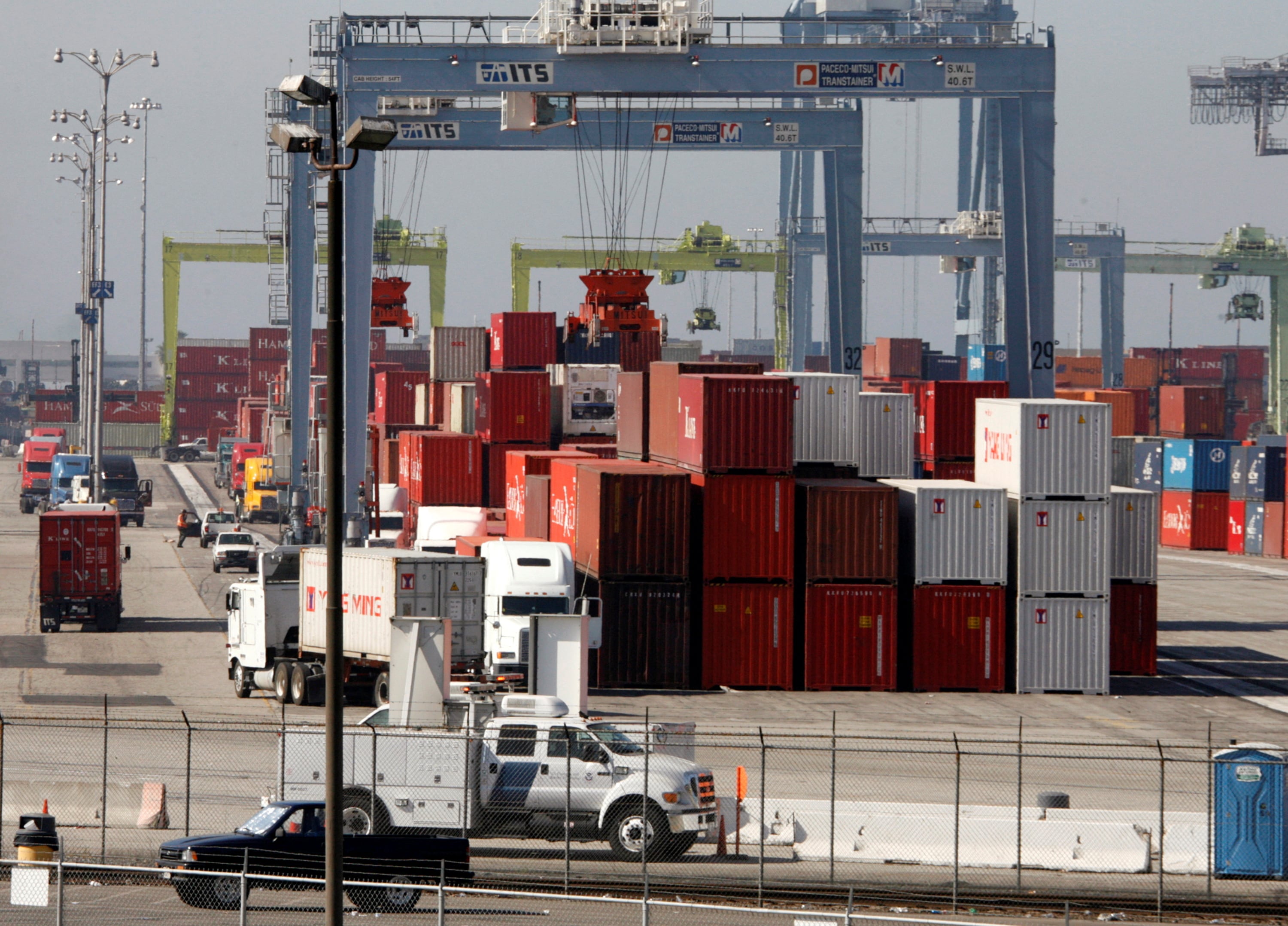
The ruling of a World Trade Organization's panel on Indian communication technology tariffs can serve as a new ground for negotiations as partners of free trade agreements are likely to eye for concessions.
India is also likely to pitch for a relook at globally determined trading norms, according to Sanjay Notani, partner at Economic Laws Practice.
In a report that was released on Monday, the dispute settlement panel upheld claims by the European Union, Japan and Taiwan that India's import duties on certain information and technology products are inconsistent with the global trade norms.
While the move is likely to spur counter appeal from India, the dispute contributes to the country's long-standing assertion to periodically revisit multilateral obligations in light of changing circumstances.
There is a 60-day window to appeal to the WTO appellate body. If no appeal is filed, the panel's decision will become the WTO's final decision on the subject.
However, India may continue to maintain its existing tariffs on these ICT products if the appeal stays pending as the appellate body is presently defunct.
Notani told BQ Prime that the panel's findings would be relevant in tariff negotiations for potential FTAs. He underscored that while the country is likely to continue imposing tariffs on these items pending appeal at the WTO, it is probable that FTA partners might demand concessions on these items.
"FTAs could also potentially provide a forum for India to engage with its trading partners on such issues," Notani said. "The mutual settlement of existing WTO disputes could also be on the cards for FTA negotiations."
Tariffs Changes
In a press release, the European Commission—the executive arm of the EU—said that since 2014, India introduced custom duties of up to 20% gradually on products like mobile phones, mobile phone components and accessories, line telephone handsets, base stations, static converters or electric wires and cables.
Japan and Taiwan also filed parallel cases on similar issues—tariffs on ICT products and almost the same products.
They considered Indian duties to be in "direct breach" of the country's WTO commitments to apply a zero-duty rate to such products.
"The amount of EU exports of such technology affected by India's violations is up to €600 million annually," the commission said. "While this is already significant, the real impact on European companies, which also export from other countries to India, is considerably higher."
Japan said the tariff rate on feature phones, smartphones, base stations for cellular mobile phones and digital microwave communication equipment were raised from 0% to 20%. The rates on printed circuit board assemblies were raised from 0% to 10%; and LCD modules for smartphones were raised from 0% to 15%.
"Japan expects India to agree to adopt the panel report and swiftly correct the measures in accordance with the findings and recommendations in the report," the Ministry of Economy, Trade and Industry said in a joint press release with the Ministry of Foreign Affairs on Tuesday.
I welcome the WTO panel's verdict and hope that India will act swiftly to remove all illegal tariffs. India is an important trading partner of the EU, although our trade and investment flows are still below their potential. Strict respect by India of its WTO commitments will send a clear and positive signal to European businesses that India provides an open, predictable and attractive business environment. This is even more relevant at a time when we are negotiating an ambitious trade deal with India.Valdis Dombrovskis, Executive Vice-President and European Commissioner for Trade
Road Ahead
Citing sources, PTI reported that India would appeal against the ruling. It added that the authorities don't expect an adverse impact on the domestic market and look to take up the matter with the WTO appellate body.
Notani said if India chooses to implement the ruling and not appeal, it might hit the domestic manufacturers and the government's efforts to promote domestic manufacturing on ICT products.
"India may, indeed, need to explore alternative means to boost domestic manufacturing that are in line with its WTO commitments," he said. "On the flip side, for users of these items, the elimination of tariffs may be welcomed as these goods will become cheaper."
The panel ruling also raises concerns whether tariffs as an instrument are practically and economically a viable form of protection for the domestic industry, according to Notani.
He said the elimination of tariffs might be leveraged in a manner so as to strengthen domestic users by promoting a manufacturing ecosystem within the country itself.
Notani underlined that schemes like the Production Linked Incentive have an important role to play to boost manufacturing.
India's merchandise import of electronic goods in the 2023 financial year was 10.82% of the country's total imports amounting to $77.26 billion. It ranks second in the top 10 commodities of merchandise imports. The country's export of electronic goods during the same period accounts for 5.27% share of total merchandise exports at $23.57 billion, making it the country's 5th biggest export item.

-
Signature Play: The Classic Cocktail Is Dead. Or Is It?

Classic cocktails are disappearing from India's cocktail menus. But they're still being ordered, taught to bartenders and borrowed from. So, who's really having the last drink?
-
A New Samvat Wishlist: Inclusive Prosperity And Human Development
India has strengthened its economic foundations through infrastructure, digital access and enterprise. Its next growth chapter must deepen productivity, create better livelihoods and widen participation in prosperity.
-
Love, Sex Aur Dhokha: The Audacious Plot To Spy On Jensen Huang
A Taipei dinner, a Singapore chip buyer and a suspected Chinese asset: inside the alleged spy operation that got close to NVIDIA's Jensen Huang.
-
Ten Things I Learnt This Samvat
Patience can be a trap. Cheap stocks can stay cheap. Leverage can wipe you out. What did Samvat 2082 teach us? Niraj Shah writes on 10 lessons from the year gone by.
-
Talking Points This Week: Tech Nerves, FII Buying, And A Faraway Banking Shock
The global markets are not shining this Diwali. The exception in the large markets is, India.
-
Midterm Rally Lasted A Day. The Hard Reality Of A Divided US May Last Two Years | Opinion
Between a contested AI boom, a debt ceiling that arrives in 2027 and a president with every incentive to act alone, the next two years may prove more volatile than the first day's rally suggests.
-
Blue Wave Will Derail the AI Trade but Won't Dismantle the AI Era | Unhedged Position
The Democrats' sweep of the US Congress will see politics collide with economic forces both over the long and short term.
-
It's Time To Take The GST Council's Bet On Trust Global
Payment records can prove India's services exports, and clear, proportionate rules can bring foreign digital sellers into the tax net.
-
Opinion | India at 38: From Innovation Overperformer to Innovation Powerhouse
India now has 453 VC-backed deep science startups, 18 of them late-stage, after 117 percent growth since 2020. Laurus Labs, at USD 9.3 billion, is the most valuable deep science company in any middle-income economy outside China.









