Why The Supreme Court Should Lift The Freeze On GM Mustard Trials
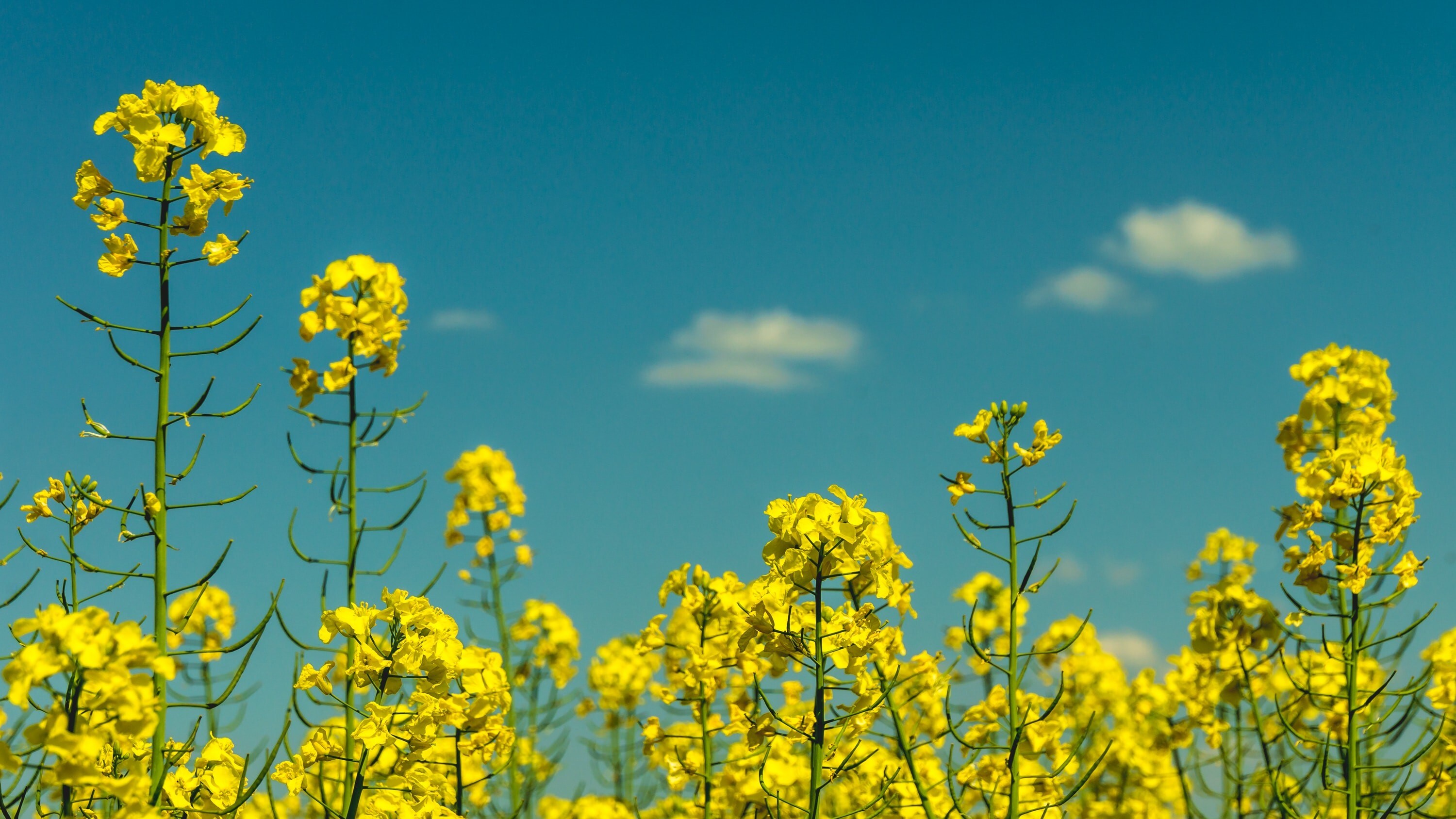
If the Supreme Court does not accede to the government's request made on Tuesday for a defreeze on field activity pertaining to genetically modified mustard, another year would be lost and the regulators would not be any wiser about its performance in various agro-climatic conditions and impact on honeybees and other pollinators.
According to news reports, the government sought leave from the court to withdraw its oral undertaking given on Nov. 3 last year that "no precipitate action" would be taken till the suit was disposed of. The court had ordered a freeze till Nov. 10 last year, but the hearings spilt over. Ten dates were fixed thereafter, on some of which there were no hearings.
Mustard is sown in early winter.
Before the court cried halt, the developers had planted GM mustard hybrid DMH-11 in their experimental fields at six locations in the mustard growing states: Rajasthan, Punjab, Haryana, Uttar Pradesh, Madhya Pradesh and Assam.
The regulator for GM organisms—the Genetic Engineering Appraisal Committee—had approved last October the "environmental" release of GM mustard on the condition that its impact on honeybees and other pollinators be undertaken after release to gather scientific evidence under Indian agro-climatic conditions and as a precautionary measure. Approval for commercial release was to follow if there were no red flags.
The data on the behaviour of honeybees and pollinators with GM rapeseed, which belongs to the same Brassica family as mustard, was not considered adequate. The developers had submitted to the GEAC that Canada, the United States and Australia had approved GM rapeseed in 1996, 2002 and 2003, respectively, without any conditions. There is a history of safe use, they said.
The GEAC had also allowed seed production preparatory to commercial release. Government research agencies conduct all-India coordinated research trials at multiple sites in the states where a crop is grown before they release any seed for commercial use. These trials are conducted by institutes of the Indian Council of Agricultural Research.
The developers of DMH-11 say they have produced enough seed for the trials from the crops that were planted before the court stay. But the agronomic and pollinator trials cannot happen without the Supreme Court giving its approval.
The anti-GM activists are objecting to the herbicide tolerance trait in the GM mustard hybrid. They say that herbicides are toxic. Already, they are being used in large quantities. If herbicide tolerant hybrid mustard is allowed for commercial use, the use of herbicides will increase manifold affecting biodiversity, they said.
The government's contention is that the herbicide tolerance trait is not intended for commercial use. DMH-11 plants do not die when sprayed with the herbicide—glufosinate—which goes by the popular brand name Basta. But, glufosinate has not been approved for use on mustard.
If that is the case, why is the herbicide tolerance trait needed? This is where it gets a little technical. Mustard is a self-pollinating crop, which means its flowers have both the male and the female sexual organs. To produce a plant with hybrid vigour, it has to be cross-pollinated. For this, a line has to be emasculated (or made male sterile) so it can be fertilised with the pollen of another line.
In DMH-11, the Indian mega variety called Varuna has been made male sterile with a barnase gene obtained from an agrobacterium. It also has a foreign bar gene which confers herbicide tolerance. To produce many plants of genetically modified male sterile Varuna, it has to be crossed with normal, non-genetically modified Varuna. The resultant progeny will segregate and half of it will be male sterile and half non-male sterile. When the herbicide is sprayed, only the sterile plants containing both the bar and barnase genes will survive.
This male sterile Varuna line is crossed with an East European line (Early Hira-2), which has the fertility restorer barstar gene, also obtained from an agrobacterium. It also has the bar gene for the same reasons as stated above. The government's contention is that herbicide tolerance is needed at the intermediate stage for the efficient production of mustard hybrids. Though it will be present in the seed that will be commercially sold, it will be marketed for higher yield and not herbicide tolerance.
In its submissions last year, the government also said that the petitioners can object only if the regulatory process as prescribed by law has been violated. They cannot decide whether GM crops should or should not be approved. That is the executive's prerogative.
"The issues raised by the petitioners fall within the domain of the executive aided by scientific and other technical experts," the government said. "The research, development and use of genetic engineering technologies is a highly technical matter guided by views that emerge from scientific consensus among subject experts."
"As such, it is most humbly submitted that the inquiry of this Hon'ble Court may be limited to whether there is an adequate regulatory mechanism in place governing this field and whether there has been material compliance with the same," it said.
The two writ petitions before the court were filed in 2004 and 2005. The developers of DMH-11—a team of Delhi University scientists—have worked on it for about two decades. The GEAC had recommended it for commercial release in May 2017. But the then Environment Minister Harsh Vardhan, who is the approving authority, did not accept the recommendation and sought further trials.
It took five years for the pro-science tendency within the government to gain the upper hand. India's overdependence on imported cooking oil and high and rising import bill seem to have forced a rethink.
Vivian Fernandes has more than 30 years of practice in journalism.
The views expressed here are those of the author and do not necessarily represent the views of BQ Prime or its editorial team.

-
One Battle After Another: India's Corporate Dynasties Battle For Control

2026 could go down as Corporate India's year of succession wars, governance battles and family fault lines.
-
Rs 50-Lakh Gold In Bank Locker, Rs 3 Lakh Of Protection: The Gap Most Families Don't Know About
The RBI ties a bank's liability to the annual locker rent and families who want to insure their jewellery face a separate question about how to prove what was inside.
-
The More Food Turns Into Fuel, The Harder It Is To Read Agricultural Markets | The Reason Why
A policy designed to reduce dependence on imported fuel can create new pressures elsewhere in the food economy.
-
Your iPhone Costs 12 Grams Of Gold, A Car About 100. What Does Your Life Weigh?
Measured in rupees, almost everything looks more expensive than it did a generation ago. Measured in grams of gold, a lot of it has become cheaper.
-
Gold Is Rs 22,000 Cheaper Than A Month Ago. Should You Buy Amid The Wedding Season?
Gold's potential slide to $3,500 could save around Rs 4,700 per 10 grams, but a soft inflation print could just as easily push prices back up. One way to split the risk is to buy in parts, some now and the rest after the Fed's Dec. 9 decision.
-
AI Agents Are Gaining Power. Who Governs Them?
Artificial intelligence agents promise to transform productivity by moving machines from assisting decisions to executing them. But as organisations delegate greater authority to these AI-agents, they must first establish who controls that authority and who remains accountable when things go wrong.
-
Why Swapping Your Old Gold Can Trigger A Rs 5 Lakh Tax Bill, And How You Can Avoid It Legally
Swapping old gold for new is taxed as a sale and a fresh purchase. Getting your own gold remade can cut most of that bill, though it has its own costs.
-
The AI Trade is Done. The Real Opportunity for Investors Starts in 2027 | Unhedged Position
As pureplay AI stocks plunge and circular, capex-led financing unwinds, 2027 is set to be a year of reckoning for AI companies. Yet the bust clears the way for a better opportunity for investors in 2027 -- shifting the spotlight from AI builders to the companies using AI.
-
Leadership As Mission: Why The Age Of AI Demands More Human Leadership
Debjani Ghosh examines how AI is changing leadership, arguing that its success must be measured by its impact on people and the accountability of those guiding its use.
-
We May Need Another Tukaram Mundhe To Fight Air Pollution | The Reason Why
Developers may install basic measures such as sprinklers and green nets, resume work, and continue violating rules when this equipment stops working.









