Why The National Green Tribunal’s Independence May Be Under Threat
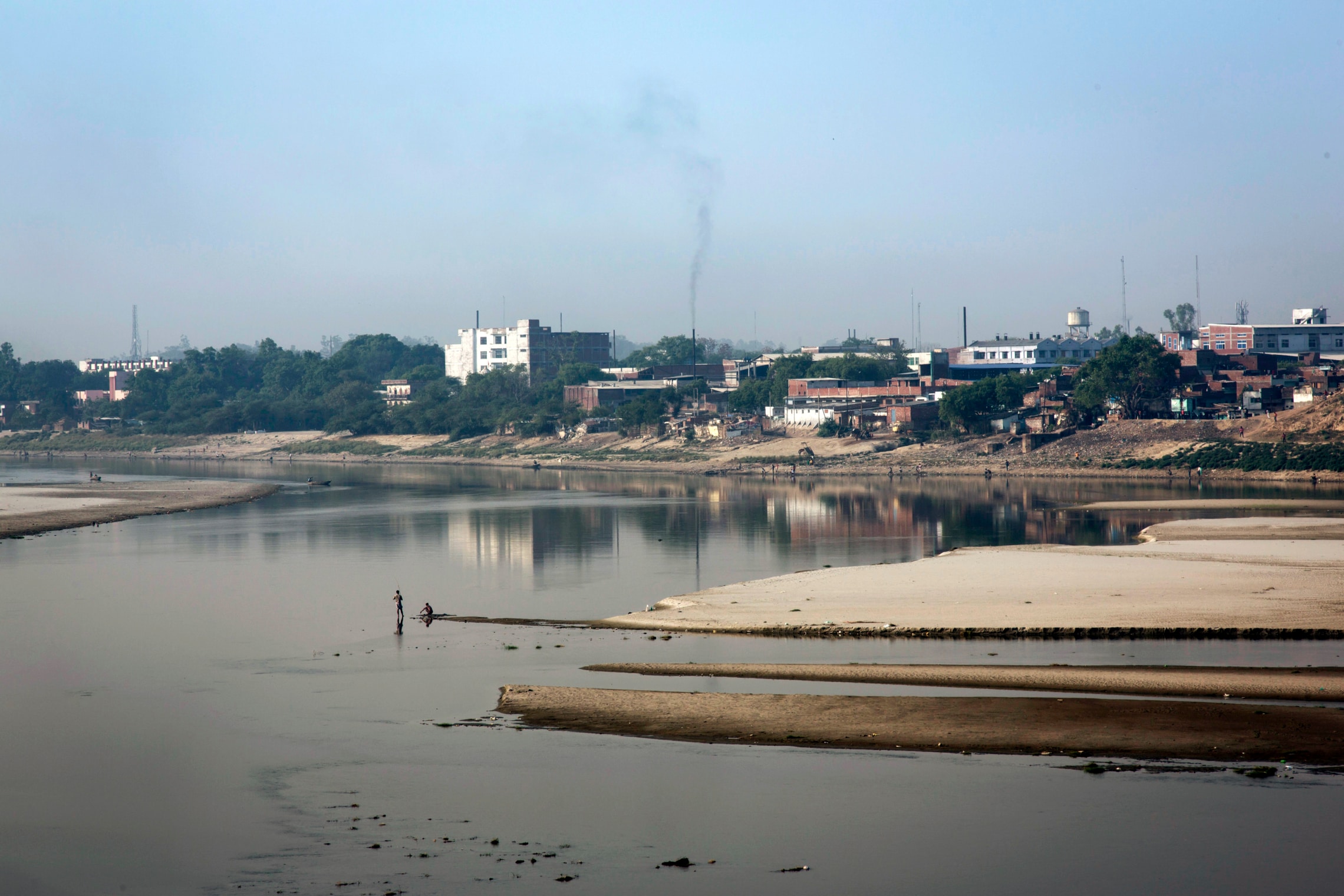
On July 13, 2017, a five-member bench of the National Green Tribunal (NGT) delivered a landmark judgment on the rejuvenation of the river Ganga. The judgment, running into 543 pages, provides for the first time, a comprehensive roadmap on dealing with river pollution at both the macro and micro level. The NGT's judgment was an outcome of detailed hearings on a day-to day-basis spanning many months.
The judicial and expert members of the NGT painstakingly studied the waste composition of almost each and every stream which discharges effluents into the Ganga and gave specific directions on how to deal with it. Such minute details, over such a large stretch of the river, has few parallels in India's environmental jurisprudence. This detailed judgment, however, would not have happened, had the Supreme Court in October 2014, not transferred the Ganga pollution case to the NGT. After hearing the case filed 30 years ago, the Supreme Court in 2014, in MC Mehta Versus Union of India, recorded its own limitation while dealing with the case.

Sadly, the ‘comfort' that the Judges of the Supreme Court have expressed at the setting up of the NGT may be short lived.
On March 31, 2017, the President of India gave assent to the Finance Bill, 2017 which relates to financial matters of the central government. However, as strange as it may sound, the Finance Act, 2017 will be the death knell for the NGT. The Act has gone beyond its stated objective and has amended the provisions of nineteen statues including the National Green Tribunal Act, 2010. The amendment impacts the functional autonomy, the independence and the very existence of the NGT as a judicial tribunal to deal with public grievances. It is imperative to understand how this has happened.
Under the provisions of the National Green Tribunal Act, 2010, the qualifications, terms of services and the broad conditions of services are prescribed in the statute itself, that is, by Parliament. However, under the Finance Act, 2017, the qualifications and the terms of service, as left to the executive, that is, the government to decide. On June 1, 2017, the finance ministry's Department of Revenue exercised this power and issued The Tribunal, Appellate Tribunals and Other Authorities (Qualifications, Experiences and other conditions of service of members) Rules, 2017.
These rules have prescribed the qualifications and the terms and conditions of services of the members of the National Green Tribunal.
These changes were made without discussion in either house of Parliament, without any public notice and without considering the rationale for setting up a specialised environmental court.
What is problematic, is the fact that the changes in the qualifications and service conditions are such that even a cursory glance will reveal that the sole objective is to immobilise the NGT and render it incapable of providing environmental justice.
The first major change is in terms of the qualification of the chairperson. One of the major reasons for the effectiveness of the NGT as an institution is the fact that it is to be headed by a person who is either a serving or retired judge of the Supreme Court or a chief justice of a high court. This ensures that the head of the NGT has sufficient experience at the highest level of adjudication. Under the new tribunal rules, however, any person who is qualified to be a judge of the Supreme Court can be appointed as the chairperson of the NGT. Under Article 124 of the Constitution, any lawyer who has practiced for 10 years before the high court is qualified to be a judge of the Supreme Court. In addition, even an expert member of the tribunal who has no legal training can be appointed as the chairperson of the tribunal. This is seriously problematic given the fact that judicial decisions will now be given by people not trained in law.
There are other problematic aspects of the new rules. Unlike the present system, where members of the NGT are selected by a committee headed by a sitting Supreme Court judge, after an open process of inviting application; under the new tribunal rules, it is a ‘search and selection committee' comprising essentially of secretaries to the Government of India who will select the members of the NGT. Thus, it is the officials of the ministries who will select the judges.
With respect to the removal of members, the existing rules state that this can be done only after an inquiry by a sitting judge of the Supreme Court.
Under the new tribunal rules, a member of the NGT can be removed by an inquiry by a committee constituted by the Ministry of Environment and Forests.
Hence, a government official will have the power to both appoint and remove judges. With respect to the grant of leave, the chairperson of the tribunal has to take approval from a secretary to the Government of India. The fact that tribunals will be treated as subordinate offices of the ministries is apparent from the fact that the members of the tribunal will now be given the rank and pay of Group A officers of the Government of India, unlike the existing rules which give them the rank and status of a sitting judge of the Supreme Court for the chairperson and a High Court judge for the members. Simply put, the Finance Act is on one hand the usurpation of the legislative function by the executive, and on the other, is the executive control over judicial functions and autonomy.
Also Read: The Man Who Fought To Save The Ganga
The Finance Act, 2017, and the tribunal rules are a reminder of the days of the British Raj – a judiciary under the control of the executive was one of the most powerful weapons used to control public dissent. Judges under the control of the government become agents to implement government policies and not uphold the rule of law and the Constitution. This is tragic in a democracy. Public faith in a judicial institution which is under the grip of the government is bound to be low. The amendment of an environmental justice legislation through the Finance Act reflects the new era in India, where ‘ease of doing business' has primacy over ‘ease of getting justice'.
Ritwick Dutta is an environmental lawyer.
The views expressed here are those of the author's and do not necessarily represent the views of BloombergQuint or its editorial team.

-
AI Bias In Investing Cannot Be Eliminated, But It Can Be Governed

Framing is a particularly important example as identical financial information presented in terms of gains rather than losses can lead an LLM to reach a different assessment.
-
Joining The Dots | Dark Skies, Steady Diya: Why Hope Holds This Diwali
With war, a weak rupee and foreign outflows weighing on sentiment, policymakers at the NDTV World Summit and market veterans at NDTV Profit Ignite: Diwali Edition offered the same advice: stay invested and filter out the noise.
-
The Curious Case of Equitas Small Finance Bank And A CEO Who Quit For Stock
PN Vasudevan believes persistent investor concerns over a perceived conflict of interest had become a governance overhang on Equitas Small Finance Bank's stock, even as the lender improved profitability and asset quality.
-
Talking Points This Week: AI Cash Burn, A Tiger Comeback And An India That Still Finds Its Own Path
India is not immune to higher oil or tighter global liquidity, yet its earnings base is broader, its domestic policy levers are still available.
-
Foreign Investors Own Half Of HDFC Bank and ICICI Bank. An LTCG Cut Could Matter Most Here
Foreign portfolio investors have US$115 billion parked in HDFC Bank, ICICI Bank. If the government cuts long-term capital gains tax, Jefferies says returning foreign money could land here first.
-
'Never Seen This Level Of Negativity': Sandeep Tandon Says The Next Rally May Be Closer Than You Think
Veteran investor Sandeep Tandon says foreign selling is easing, large-caps are due a comeback and mid-caps are crowded, while he turns positive on gold, power and pharma this Diwali.
-
Indians Stay With Family, Not In Hotels | The Reason Why
India still lacks enough clean, reliable and affordable hotels for budget-conscious travellers.
-
The Economic Imperative: Analysing The Material Driving Force Behind India-Canada Strategic Reset
This economic complementarity is further reinforced by deep institutional investment ties and talent mobility, which form the bedrock of the bilateral framework.
-
Medicine Pricing: Where Must Profit Stop?
India must confront excessive margins, hidden incentives and regulatory gaps that threaten the integrity of medicine.
-
Why Amazon And Flipkart Are Struggling To Beat Meesho In India's Smaller Cities
With 274 million users and lowest-cost logistics, Meesho is defending its value commerce crown against giants like Amazon and Flipkart.










