Why The Government’s Small Businesses Loan Scheme Saw Lukewarm Response
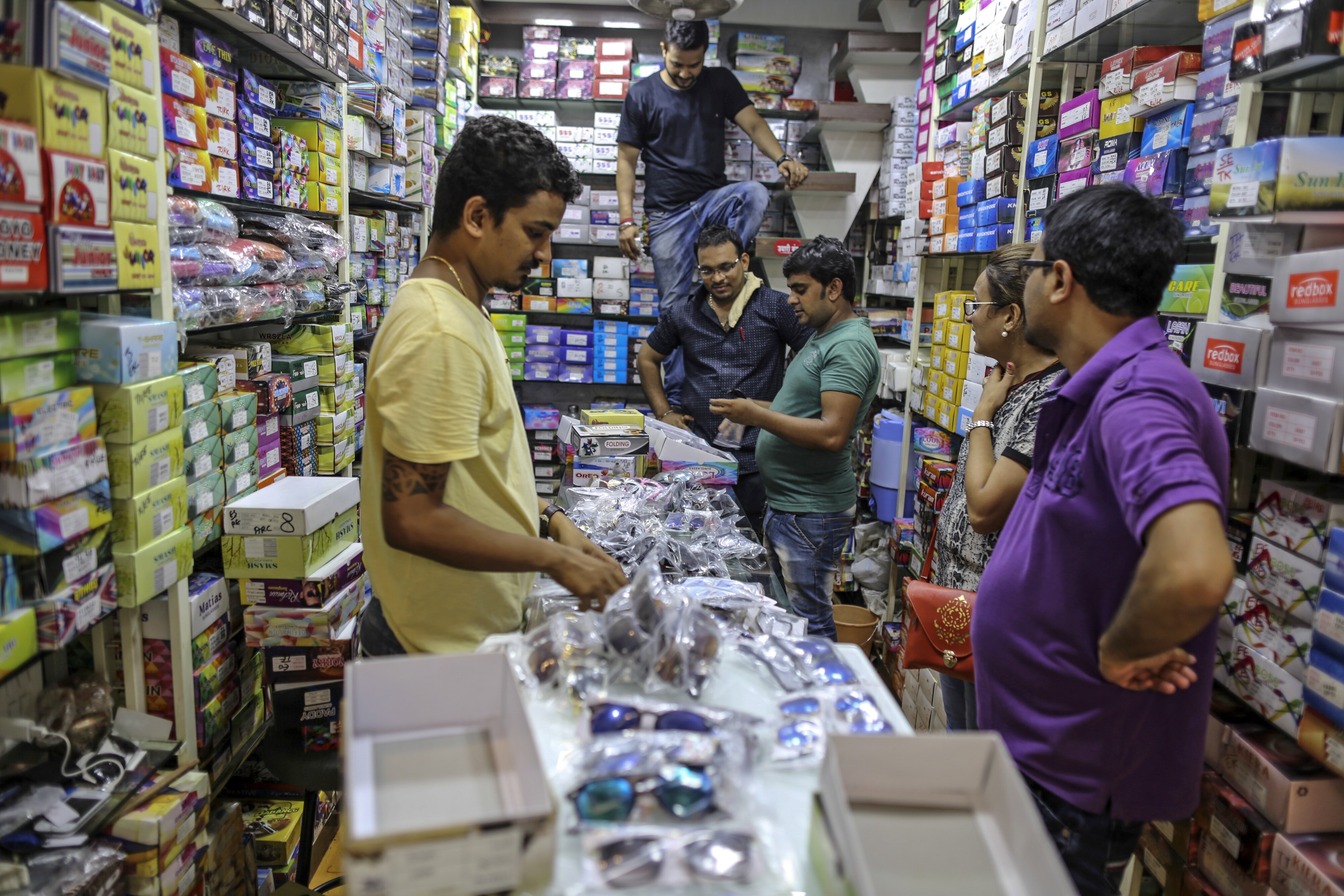
Four months after the government offered a Rs 3-lakh-crore emergency credit line for small businesses, only 42% of it has been disbursed.
The emergency credit line guarantee scheme was introduced in May as part of the government's Rs 20-lakh-crore economic package intended to counter the impact of the Covid-19 pandemic. Borrowers can avail loans under the scheme till Oct. 31. These loans are backed by a 100% guarantee by the National Credit Guarantee Trustee Company.
According to information put out by the finance minister on Twitter last week, of the Rs 3 lakh crore worth of loans available under ECLGS, banks have sanctioned loans Rs 1.77 lakh crore. A little over Rs 1.25 lakh crore in loans had been disbursed as of Sept. 21.
Banks have sanctioned loans to over 44.2 lakh accounts, including individual and non-individual borrowers, of which 25.24 lakh accounts have received the ECLGS loan, the ministry said. Private banks have sanctioned more loans under the scheme compared to government-owned banks, although they have disbursed less so far.
Who Is Getting Rejected
While there were teething troubles in the early days of the scheme, banks have continued to reject some applications due to the eligibility criteria and risk aversion, according to anecdotal feedback from individual borrowers and consultants who work with small businesses.
One borrower, who owns a proprietary firm, said that since they had availed loans previously in the name of an individual for business use, some private banks had rejected their application back in June. Since then, the scheme has been extended to include traders, hospitality companies and transport operators, which meant that firms like theirs are now eligible for credit under the scheme.
In August, the government extended the scheme for larger micro, small and medium enterprises and professionals for business purposes and increased the turnover limit from Rs 100 crore to Rs 250 crore. Under the ECLGS facility, interest rates on the loans are capped over the term of the loan and there is a 12-month moratorium on principal repayment from date of disbursement.
A second borrower said despite the National Credit Guarantee Trustee Company allowing individual borrowers to avail loans under the ECLGS, some government-owned banks are not extending credit to borrowers who had previously availed loans against property. Instead of the ECLGS facility, loan officers have requested that the borrower apply for a regular top-up on their existing LAP facility or take a personal loan since the process for approval of ECLGS loans is time-consuming, this person said.
A third borrower said that their loan application with a private bank has been languishing for months as there were delays in the paperwork and because loan officers asked for additional collateral over and above the collateral they had set aside for previous loans.
The government has increased efforts to make the scheme more successful and has expanded the eligibility criteria, but despite these changes there are many hurdles like excess paperwork, said Meghna Suryakumar, founder and chief executive officer, Crediwatch, a credit intelligence platform. “We found that only companies that had institutional credit were able to avail these loans. Since the scheme is meant to enhance the credit limits of SMEs that have existing loans it has not helped the wider SME universe, 85% of which are under-banked,” she said.
According to a Sept. 22 written reply by the MSME Ministry to a question in Parliament, companies involved in trading, services, textiles and food processing entities received 60% of the guarantees from the NCGTC against ECLGS loans.
Meeting The Target
In the initial months there was hardly any traction since the banks had to prepare board-level policies, create application portals for borrowers and also identify eligible borrowers from their existing system, which took a bit of time. The majority of loan sanctions took place in August and September, said Saikat Roy, director, Care Ratings.
“Banks now maybe getting choosy in terms of sanctioning ECLGS loans because of the macro-environment and low demand for the goods and services of some businesses,” Roy said.
A senior banker with a government-owned bank said that during the initial stages applications for the ECLGS facility were very high and, in his experience, only about 10% of applications were being rejected. But since August, applications for the scheme have declined by more than 50% compared to June as some borrowers have found other ways to avail credit or they realise they do not need this scheme, the banker said on the condition of anonymity.
The banker said that lenders may be able to sanction about Rs 2 lakh crore in loans under the scheme by the time it ends in October. It is unlikely that the scheme of Rs 3 lakh crore will be fully utilised.
“Two reasons why the sanctions under the scheme have been low is that the overall credit requirement from MSMEs has probably waned in the last few months as they are worried about repaying these loans, said RN Iyer, chief executive officer and founder, Vayana Network, a trade finance intermediary. Banks are obviously risk-averse in this environment so there are instances where loan officers are covering their tracks by reviewing the quality of the existing collateral and lengthening the time to sanction and disburse the loans, he said.
“If the scheme was streamlined there will be more applications and if it is extended to the end of this fiscal the overall target will be met,” Iyer added.
According to Finance Ministry data, of the Rs 65,552 crore ECLGS loans disbursed by government-owned banks, State Bank of India has disbursed the largest amount, followed by Punjab National Bank and Canara Bank. Data for private banks was not available.

-
'Never Seen This Level Of Negativity': Sandeep Tandon Says The Next Rally May Be Closer Than You Think

Veteran investor Sandeep Tandon says foreign selling is easing, large-caps are due a comeback and mid-caps are crowded, while he turns positive on gold, power and pharma this Diwali.
-
Indians Stay With Family, Not In Hotels | The Reason Why
India still lacks enough clean, reliable and affordable hotels for budget-conscious travellers.
-
The Economic Imperative: Analysing The Material Driving Force Behind India-Canada Strategic Reset
This economic complementarity is further reinforced by deep institutional investment ties and talent mobility, which form the bedrock of the bilateral framework.
-
Medicine Pricing: Where Must Profit Stop?
India must confront excessive margins, hidden incentives and regulatory gaps that threaten the integrity of medicine.
-
Why Amazon And Flipkart Are Struggling To Beat Meesho In India's Smaller Cities
With 274 million users and lowest-cost logistics, Meesho is defending its value commerce crown against giants like Amazon and Flipkart.
-
High US Salaries, No Green Card Certainty: The Financial Calculation Facing Indian H-1B Families
The suspension of PERM processing at eight technology employers does not cancel existing H-1B visas. What it does is force a question many Indian families have been avoiding: is the US salary worth tying your career and family plans to one employer?
-
Swiggy vs Eternal: Food Delivery's Two Rivals Are No Longer In The Same Race
Eternal is building a private AI assistant, dark.ai. Swiggy is still working out how to make Instamart pay, with an operating loss of Rs 895 crore in the July-September quarter while Blinkit stayed profitable.
-
Where You Live Shapes How You Get To Work | The Reason Why
Two-wheelers are the most popular way to get to work in India, accounting for nearly 43% of workplace commutes.
-
Unhedged Position: Can India See An Indonesia-Style Time Correction?
The Nifty is trading below levels it first clocked in 2024. Is there, then, as I have suggested in the headline, potential that the current time correction drags on painfully for the next three-five, even ten years?
-
Navigating Friction And Energy Realities: An Analysis Of Marco Rubio's October Visit To India
Occurring at a critical juncture marked by stalled trade negotiations and escalating geopolitical pressures over global energy supplies, the visit offers a profound window into modern US-India relations.










