Why The Government Thinks The RBI Has Rs 3.6 Lakh Crore In Excess Capital
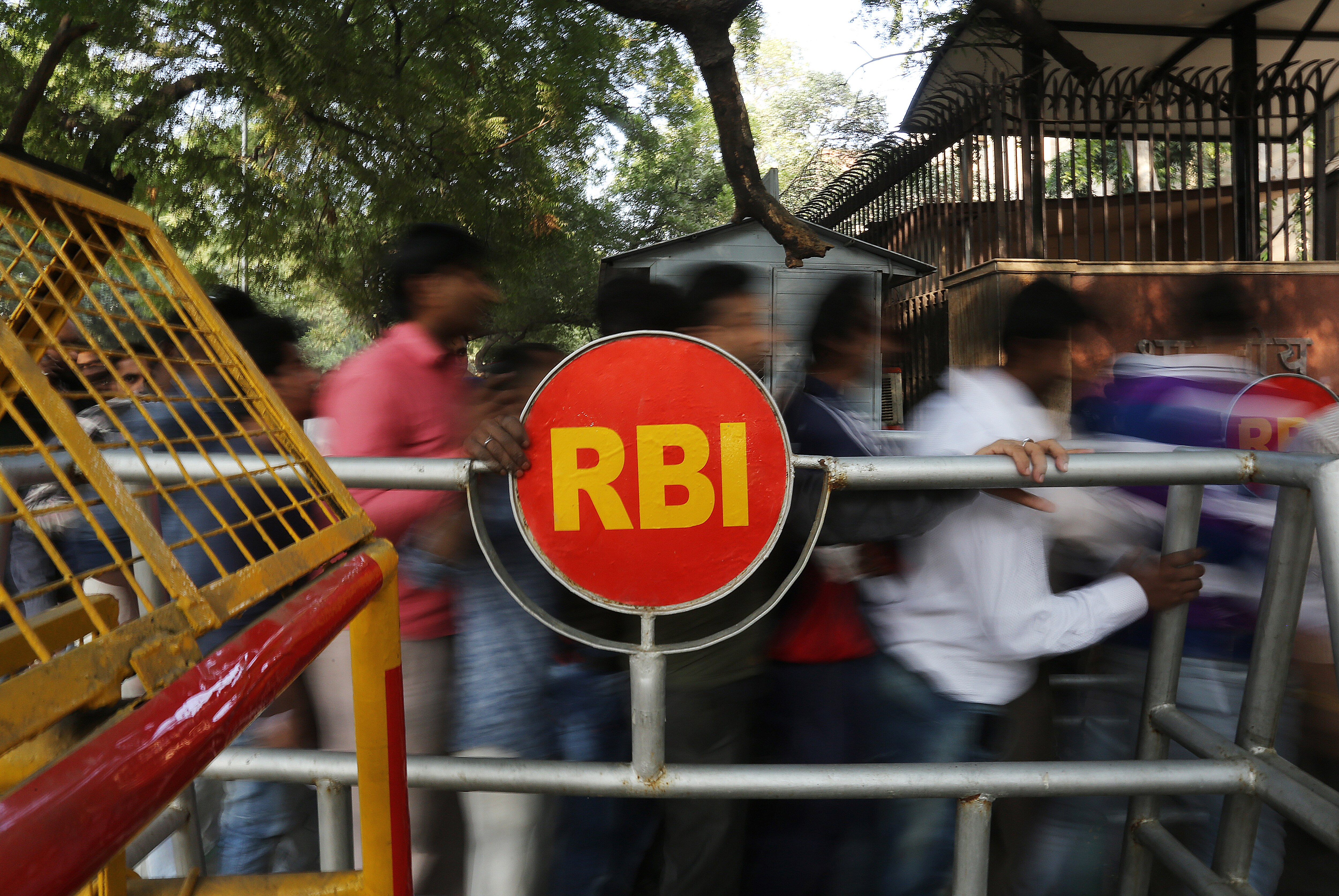
The stand-off between the government and the Reserve Bank of India is boiling down to one number – Rs 3.6 lakh crore. While the points of difference between the two are many, it is the issue of the central bank's balance sheet that has become most contentious.
In a demand conveyed earlier this year, the government suggested that the RBI is sitting on excess capital of Rs 3.6 lakh crore. The estimate, first reported by Cogencis news agency, was confirmed to BloombergQuint by a person familiar with the matter. The government wants the RBI to transfer this amount back to the government but the central bank has so far resisted.
The government thinks that the Reserve Bank of India has been very conservative in its assessment of capital buffers to meet unforeseen risks, said the person quoted above while explaining that an alternative method to assess the need for capital buffers suggests that the RBI could transfer Rs 3.6 lakh crore to the government.
The Math Behind The Number
At the core of the dispute is the RBI's ‘Economic Capital Framework'. In simple terms, one of the things the framework defines is the amount of the capital that the central bank should hold on its balance sheet in order to account for all possible risks that may emerge.
The RBI explained the broad approach of this framework in its annual report for 2015-16.
The general approach towards financial risk management in central banks is that while they do not actively manage risks arising from policy actions, they seek to ensure that their balance sheets have sufficient financial resilience to absorb these risks. Thus, they maintain sufficient economic capital, supplemented by risk-transfer/dividend-smoothening mechanisms.RBI Annual Report 2015-16
The formula used by the RBI to calculate capital needs under the economic capital framework is based on 'stressed value at risk' while most central banks use 'value at risk' valuation, said people aware of the development.
The concept of ‘stressed value at risk' was popularised after the global financial crisis, and assesses capital needs based on the experience of a longer periods of time, which incorporates actual periods of stress. In contrast, a simple value at risk is assessed based on the experience of a pre-determined number of days.
Further the central bank uses a formula (stressed value at risk at 99.99 percent confidence level) which requires it to maintain an equity-to-assets ratio of 27 percent. Some other central banks calculate their capital needs based on a less stringent formula (value at risk at 99 percent confidence level),which requires the equity-to-assets ratio to be maintained at 14 percent, the people quoted above explained.
The RBI's equity to asset ratio was 24 percent as on June 2018. If it were to bring it down 14 percent, it will free up capital around Rs 3.6 lakh crore, the people explained.
Only central banks of Norway, Russia and Malaysia maintain this ratio at over 24 percent, the people explained.
The RBI View
While not detailing its rationale for following a certain methodology to assess capital needs, the RBI has argued that holding enough capital is essential for the central bank.
In his speech on independence of the central bank, RBI deputy governor Viral Acharya highlighted the government's attempt to withdraw capital and reserves from the RBI's balance sheet. Citing research from various academics and writings from former RBI Deputy Governor Rakesh Mohan, Acharya noted that having adequate reserves and capital is important for maintaining confidence in the central bank.
Acharya cited Mohan's research to say that “raiding the RBI's capital creates no new government revenue on a net basis over time, and only provides an illusion of free money in the short term.” Mohan, in his articles in the Business Standard, had also said that such a transfer (of capital) would erode whatever confidence that exists in the government's intention to practice fiscal prudence.
Commenting on the argument made by former Chief Economic Adviser Arvind Subramanian that the RBI holds too much capital, Mohan said the central bank's assets are equal to 20 percent GDP for some time now. This is not very different from the balance sheet of the U.S. Federal Reserve at present, or the European Central Bank, the Bank of England and the Bank of Japan.
“It is a little surprising to see arguments that the RBI needs to transfer the capital to the government,” Mohan told BloombergQuint in a recent conversation.
An email sent to RBI for clarification did not elicit a response.

-
The Economic Imperative: Analysing The Material Driving Force Behind India-Canada Strategic Reset

This economic complementarity is further reinforced by deep institutional investment ties and talent mobility, which form the bedrock of the bilateral framework.
-
Medicine Pricing: Where Must Profit Stop?
India must confront excessive margins, hidden incentives and regulatory gaps that threaten the integrity of medicine.
-
Why Amazon And Flipkart Are Struggling To Beat Meesho In India's Smaller Cities
With 274 million users and lowest-cost logistics, Meesho is defending its value commerce crown against giants like Amazon and Flipkart.
-
High US Salaries, No Green Card Certainty: The Financial Calculation Facing Indian H-1B Families
The suspension of PERM processing at eight technology employers does not cancel existing H-1B visas. What it does is force a question many Indian families have been avoiding: is the US salary worth tying your career and family plans to one employer?
-
Swiggy vs Eternal: Food Delivery's Two Rivals Are No Longer In The Same Race
Eternal is building a private AI assistant, dark.ai. Swiggy is still working out how to make Instamart pay, with an operating loss of Rs 895 crore in the July-September quarter while Blinkit stayed profitable.
-
Where You Live Shapes How You Get To Work | The Reason Why
Two-wheelers are the most popular way to get to work in India, accounting for nearly 43% of workplace commutes.
-
Unhedged Position: Can India See An Indonesia-Style Time Correction?
The Nifty is trading below levels it first clocked in 2024. Is there, then, as I have suggested in the headline, potential that the current time correction drags on painfully for the next three-five, even ten years?
-
Navigating Friction And Energy Realities: An Analysis Of Marco Rubio's October Visit To India
Occurring at a critical juncture marked by stalled trade negotiations and escalating geopolitical pressures over global energy supplies, the visit offers a profound window into modern US-India relations.
-
India Exports Capital. Why Not Export Trusteeship?
The big question, then, is whether India can build an institution that global borrowers, investors, banks, and lawyers can trust, even without an Indian connection.
-
France's Economy & Politics Are In Crisis | The Reason Why
Let's look at how the French economy and politics evolved under Nicolas Sarkozy, Franois Hollande and Emmanuel Macron.










