Why Amazon Is Feuding With A Partner And Billionaire Mukesh Ambani
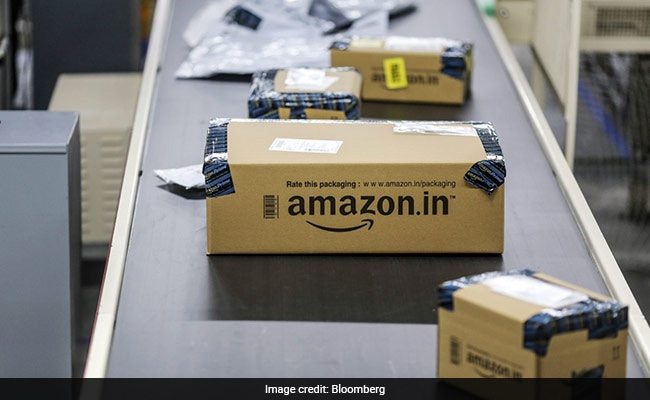
A legal spat between Amazon.com Inc. and its Indian partner that started before an arbitrator in Singapore just got fiercer in a court in New Delhi. The U.S. e-commerce giant and Future Group, whose assets billionaire Mukesh Ambani's Reliance Industries recently agreed to buy for $3.4 billion, are locked in a dispute over that deal. Amazon says Future violated a contract with the sale to its rival and wants to halt it, while the indebted Mumbai-based firm says it would collapse if the transaction were to fail.
The Jeff Bezos-led e-tailer has accused Future and its founder Kishore Biyani of flouting disclosure rules, according to court filings seen by Bloomberg. Future's disclosures were "made as per the applicable requirements," the company said in an email, refuting the allegations. Amazon has also written to the Competition Commission of India asking it not to approve the takeover until arbitration proceedings are complete.

While Amazon, Future and Reliance await a verdict, the legal wrangling is threatening to unravel India's biggest retail acquisition. But why is the world's largest e-commerce company seeking to derail a deal that's essentially bailing out a beleaguered retailer, whose market valuation is barely 2 per cent of its own? Here's what we know so far:
1. What led to the feud?
Amazon, in early October, accused its partner Future Group of breaching terms of a mutual agreement by announcing an asset sale deal with Reliance, the conglomerate helmed by Asia's richest man.
Amazon had bought 49 per cent in one of Future's unlisted firms last year, with the right to buy into the listed flagship Future Retail Ltd. after a few years. But the retailer ran into a severe cash crunch when India went into a lockdown in March to curb the coronavirus outbreak.
In May, Amazon was considering increasing its stake in Future Retail, people familiar with the matter said at the time. But no such transaction materialized quickly and Future cut a deal with Reliance, infuriating Amazon. The U.S. firm claims that its contract with the unlisted Future unit barred a transaction with a number of persons and companies, including Mr Ambani and Reliance.
2. What's the fight really about?
The fight is essentially for the dominance of India's estimated $1 trillion consumer retail market. Future Group is caught in the middle of this tussle between companies helmed by two of the world's richest men.
Reliance is already the country's biggest brick-and-mortar retailer. Acquiring Future's retail, wholesale, logistics and warehousing units would almost double its footprint and give it unparalleled edge over rivals -- an advantage Amazon is not willing to cede. Blocking Reliance is crucial for Amazon if it wants to hold sway over the only billion-people plus consumer market still open to foreign firms. It has pledged to invest $6.5 billion, a sign of its commitment to the Indian market.
3. What did the Singapore arbitration court say?
After accusing Future of breaching its contract, Amazon secured emergency relief from an arbitration court in Singapore on Oct. 25 that temporarily restrained Future Group from going ahead with the asset sale.

Future and Reliance maintain that the Singapore court's interim ruling is not binding, but Amazon wrote to local regulators flagging it as a binding order. Reliance has said it intends to buy Future's assets "without any delay." Future Group said the matter "will have to be tested" under Indian laws.
Future Retail has now petitioned the Delhi High Court urging it to bar Amazon from meddling in its asset sale by writing to local antitrust and market regulators. Amazon's lawyer told the court that Future's petition is not legally tenable. Reliance's retail units are supporting Future and have their lawyers in the court hearings.
4. What are the arguments by the two sides?
Future's lawyers said that Future Retail -- the entity selling the assets -- was not part of the contract between Amazon and the unlisted group firm in which the U.S. e-tailer acquired a stake. Amazon's counsel argued that both the Future firms were controlled by the same owners.
Future Group's lawyers have argued that its existence hinges on the sale to Reliance, and an aborted deal would result in the loss of tens of thousands of jobs. They are casting Future as an Indian retailer that's being driven to bankruptcy by a global giant.
Amazon has hinted that this spat is about India's willingness to enforce business contracts. If Future is allowed to renege on a contract, it'll mean business contracts are not sacrosanct and investments in India are risky -- an inconvenient image as the nation looks to lure foreign investment.
5. Who is representing the parties?
A battery of India's highly-paid top legal brains are arguing for the two sides, showing the high stakes involved in the case. More than 50 lawyers represented the companies, Mr Biyani and his family in the Indian court in the first two days of the hearing -- some of them video conferencing from their London homes or farm houses on the outskirts of New Delhi.
Some of the legal hot shots include India's former Attorney General Mukul Rohatgi, two former solicitor generals Harish Salve and Gopal Subramanium as well as former additional solicitor general and politician, Abhishek Manu Singhvi.
6. Who's hanging by the thread awaiting a verdict?
Future Retail and the group at large, since their survival depends on it. The group defaulted on obligations earlier this year. Future Retail has posted massive losses for two straight quarters and its shares have plunged 80 per cent this year. The retailer is reporting its latest quarterly earnings on Friday.
The firm will run into financial trouble if the deal fails, its lawyer Salve told the court. Amazon is willing to "sink the ship" but doesn't want Reliance to acquire Future's assets, he said.
(This story has not been edited by NDTV staff and is auto-generated from a syndicated feed.)

-
Extracting Value From Battery Scrap Could Be Challenging For India | The Reason Why

A discarded lithium-ion battery still contains valuable materials such as lithium, nickel and cobalt. These can be recovered and reused. When such batteries are crushed and shredded, they produce a dark powder called black mass.
-
One El Nino, India Can Handle. Two Could Break The Granary
India's grain stocks can absorb one bad year, but a second El Nino could drain the buffer in two to three years, economists say.
-
India's Troika Of Good Luck | Joining The Dots
As Jensen Huang's exit drags Nvidia down, a cooling AI trade and resilient earnings have revived investor interest in India. A likely RBI rate hike looms.
-
Talking Points This Week: Leadership Shock At Nvidia, Earnings Strength, And The Fog Over Hormuz
The Anthropic IPO pricing and first trading day, Nvidia's upcoming earnings, and any fresh signals from Iran will set the tone for the following week.
-
Signature Play: The Classic Cocktail Is Dead. Or Is It?
Classic cocktails are disappearing from India's cocktail menus. But they're still being ordered, taught to bartenders and borrowed from. So, who's really having the last drink?
-
A New Samvat Wishlist: Inclusive Prosperity And Human Development
India has strengthened its economic foundations through infrastructure, digital access and enterprise. Its next growth chapter must deepen productivity, create better livelihoods and widen participation in prosperity.
-
Love, Sex Aur Dhokha: The Audacious Plot To Spy On Jensen Huang
A Taipei dinner, a Singapore chip buyer and a suspected Chinese asset: inside the alleged spy operation that got close to NVIDIA's Jensen Huang.
-
Ten Things I Learnt This Samvat
Patience can be a trap. Cheap stocks can stay cheap. Leverage can wipe you out. What did Samvat 2082 teach us? Niraj Shah writes on 10 lessons from the year gone by.
-
Talking Points This Week: Tech Nerves, FII Buying, And A Faraway Banking Shock
The global markets are not shining this Diwali. The exception in the large markets is, India.
-
Midterm Rally Lasted A Day. The Hard Reality Of A Divided US May Last Two Years | Opinion
Between a contested AI boom, a debt ceiling that arrives in 2027 and a president with every incentive to act alone, the next two years may prove more volatile than the first day's rally suggests.









