Why It Was Easy For Chitra Ramkrishna To Manufacture A Godman
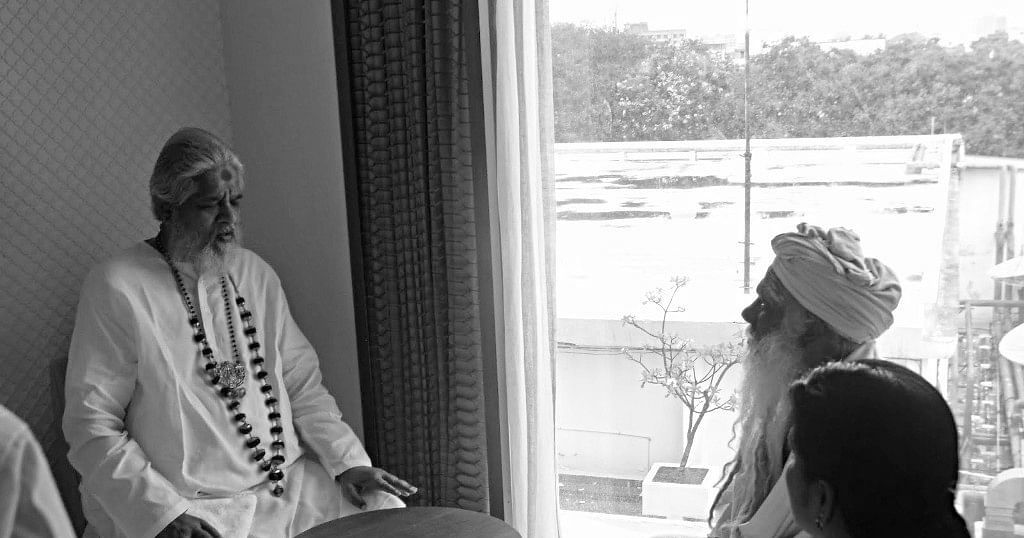
Investigators appear to have concluded that the mysterious ‘Himalayan yogi' who influenced key decisions of former National Stock Exchange head Chitra Ramkrishna via email—such as hiring, then promoting the under-qualified Anand Subramanian as group operating officer and giving him “frequent, arbitrary and disproportionate” salary hikes—was Subramanian himself.
It now seems clear the duo's corporate greed was at least partly inspired by our legacy of rich and powerful Indians who have been putty in the hands of the godmen and gurus they followed.

“Why did they need this fictitious identity of a Himalayan yogi with no character or form? Why did they need to have written proof provided by the emails? It goes more to the manufacturing of this persona,” says Priyanka Pathak-Narain, author of Godman To Tycoon: The Untold Story of Baba Ramdev. “It exploits the idea that if a yogi is giving you advice, you can ignore the principles of corporate governance.”
“The authority of a yogi is greater than any law made by man. It gives you a veneer to bypass the rules when you believe your decision has been validated by a higher power,” she says, adding that gurus have advised us on how to negotiate tricky situations in our lives from the time King Dashrath listened carefully to his head priest Vashisth in the Ramayana and Chanakya coached Chandragupta.
Former Prime Minister Indira Gandhi consulted many spiritual gurus but her biggest blind spot was yoga instructor Dhirendra Brahmachari, a strapping six-footer who wore minimal muslin and ran a gun factory in Jammu. In their book India's First Dictatorship, Christophe Jaffrelot and Pratinav Anil attempt to decode the appeal of Brahmachari, who was routinely tasked with cabinet appointments and dismissals in the 1970s and who tried to smuggle an aircraft he had bought from an American firm to his ashram without paying customs duty.
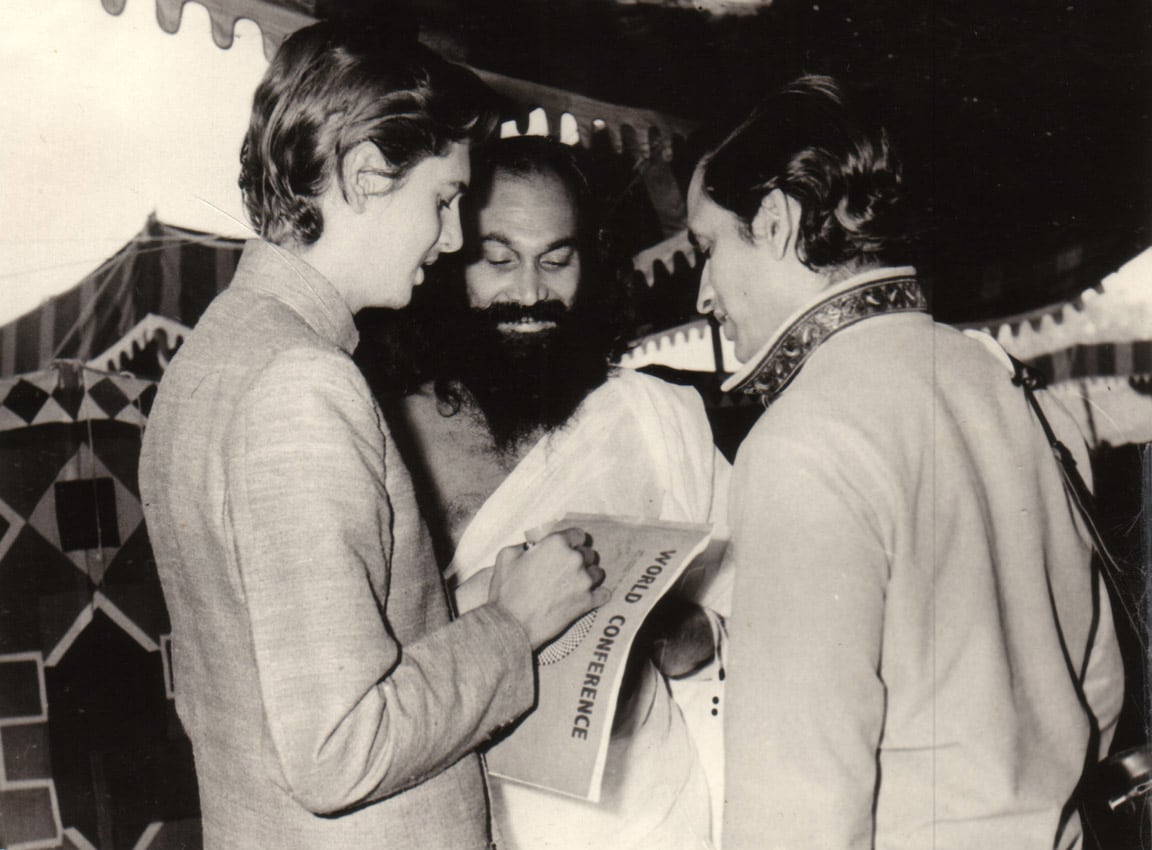
Dhirendra Brahmachari (centre), and other organisers of a yoga conference, in New Delhi, on Dec. 21, 1970. (Photograph: John Hills / Christopher Hills Foundation)
When I visited Jaggi Vasudev's ashram in 2017 and met him, I understood the pull of the amateur alchemist hot-takes guru with a snake fetish, who is always clad in meters of impeccably hand-spun tailored fabric, and who counsels warring corporate siblings with: “If you want to fight, fight strong. Don't bicker and sabotage, either cooperate or go to war. Then you will understand it will be destruction for both of you.”
Reality doesn't stand a chance in Sadhguru's world, I wrote in my piece for a magazine then.
Apart from the detox vibe of a no-alcohol, perfectly satvik vegetarian diet served on banana leaves, yoga, cold water baths with cinnamon soap—all this on a sprawling, verdant ashram in the foothills of the Velliangiri mountains, their lushness pressing against the Nilgiri Biosphere Reserve near Coimbatore city—there are other spiritual playground experiences. Like the opportunity to take a dip in one of two ‘theerthakunds' to up your spiritual receptivity.
Who needs a chaotic, polluted holy river when you have a hygienic, ladies-only subterranean pool where everyone must shower before they enter?

A section of Jaggi Vasudev's ashram. (Photograph: Priya Ramani)
Journalist Bhavdeep Kang tracks the rise and fall of nine famous gurus in her book Gurus: Stories of India's Leading Babas. In the chapter titled ‘Shaman-Shyster Chandraswami', about the godman who enjoyed two decades of global fame before his crimes caught up with him, and one who influenced international heads of state such as Margaret Thatcher and the Sultan of Brunei among several others, Kang writes how his unmasking hurt the image of gurus irrevocably.
“The word ‘godman' would forever take on dubious meaning, as newspapers across the world lifted the veil on his caliginous world of sex, arms, drugs, money, and power-broking,” says Kang. “For an entire generation, he came to symbolise the seamy side of spiritualism.”
Many more horrific stories of godmen have tumbled out in the years after Chandraswami. In the last decade, we've watched three biggies, Nithyananda, Asaram Bapu, and Gurmeet Ram Rahim crash and burn.

Gurmeet Ram Rahim being flown from Panchkula to Rohtak, on Aug. 25, 2017. (Photograph: PTI)
“The greatest outrage by such ‘gurus' has invariably been for their alleged sexual crimes,” writes Urmi Chanda-Vaz. “It's invariably the vow of abstinence from sex that seems to give the Hindu ascetic an unbeatable ‘moral edge', so when charges of sexual assault and depravity come to light, it becomes the worst kind of breach of trust.”
In a nation with a history of obeisance to flawed or fake spirituality, it was easy for NSE's Chitra Ramkrishna to cover her tracks: she didn't even need a flesh-and-blood guru to execute her plan, just a spiritual shadow with an email address.
“If she had a mortal mentor, she would have had to name him,” says Pathak-Narain. “Instead they were able to concoct this formless baba who was supposedly wandering the Himalayas whose spiritual mentoring gave them license to ignore rules and regulations.” How's that for out-of-the-box thinking from India's corporate leaders?
Priya Ramani is a Bengaluru-based journalist and is on the editorial board of Article-14.com.
The views expressed here are those of the author, and do not necessarily represent the views of BloombergQuint or its editorial team.

-
Signature Play: The Classic Cocktail Is Dead. Or Is It?

Classic cocktails are disappearing from India's cocktail menus. But they're still being ordered, taught to bartenders and borrowed from. So, who's really having the last drink?
-
A New Samvat Wishlist: Inclusive Prosperity And Human Development
India has strengthened its economic foundations through infrastructure, digital access and enterprise. Its next growth chapter must deepen productivity, create better livelihoods and widen participation in prosperity.
-
Love, Sex Aur Dhokha: The Audacious Plot To Spy On Jensen Huang
A Taipei dinner, a Singapore chip buyer and a suspected Chinese asset: inside the alleged spy operation that got close to NVIDIA's Jensen Huang.
-
Ten Things I Learnt This Samvat
Patience can be a trap. Cheap stocks can stay cheap. Leverage can wipe you out. What did Samvat 2082 teach us? Niraj Shah writes on 10 lessons from the year gone by.
-
Talking Points This Week: Tech Nerves, FII Buying, And A Faraway Banking Shock
The global markets are not shining this Diwali. The exception in the large markets is, India.
-
Midterm Rally Lasted A Day. The Hard Reality Of A Divided US May Last Two Years | Opinion
Between a contested AI boom, a debt ceiling that arrives in 2027 and a president with every incentive to act alone, the next two years may prove more volatile than the first day's rally suggests.
-
Blue Wave Will Derail the AI Trade but Won't Dismantle the AI Era | Unhedged Position
The Democrats' sweep of the US Congress will see politics collide with economic forces both over the long and short term.
-
It's Time To Take The GST Council's Bet On Trust Global
Payment records can prove India's services exports, and clear, proportionate rules can bring foreign digital sellers into the tax net.
-
Opinion | India at 38: From Innovation Overperformer to Innovation Powerhouse
India now has 453 VC-backed deep science startups, 18 of them late-stage, after 117 percent growth since 2020. Laurus Labs, at USD 9.3 billion, is the most valuable deep science company in any middle-income economy outside China.









