Why Green Finance Must Move Beyond Slogans And Tick-Boxes
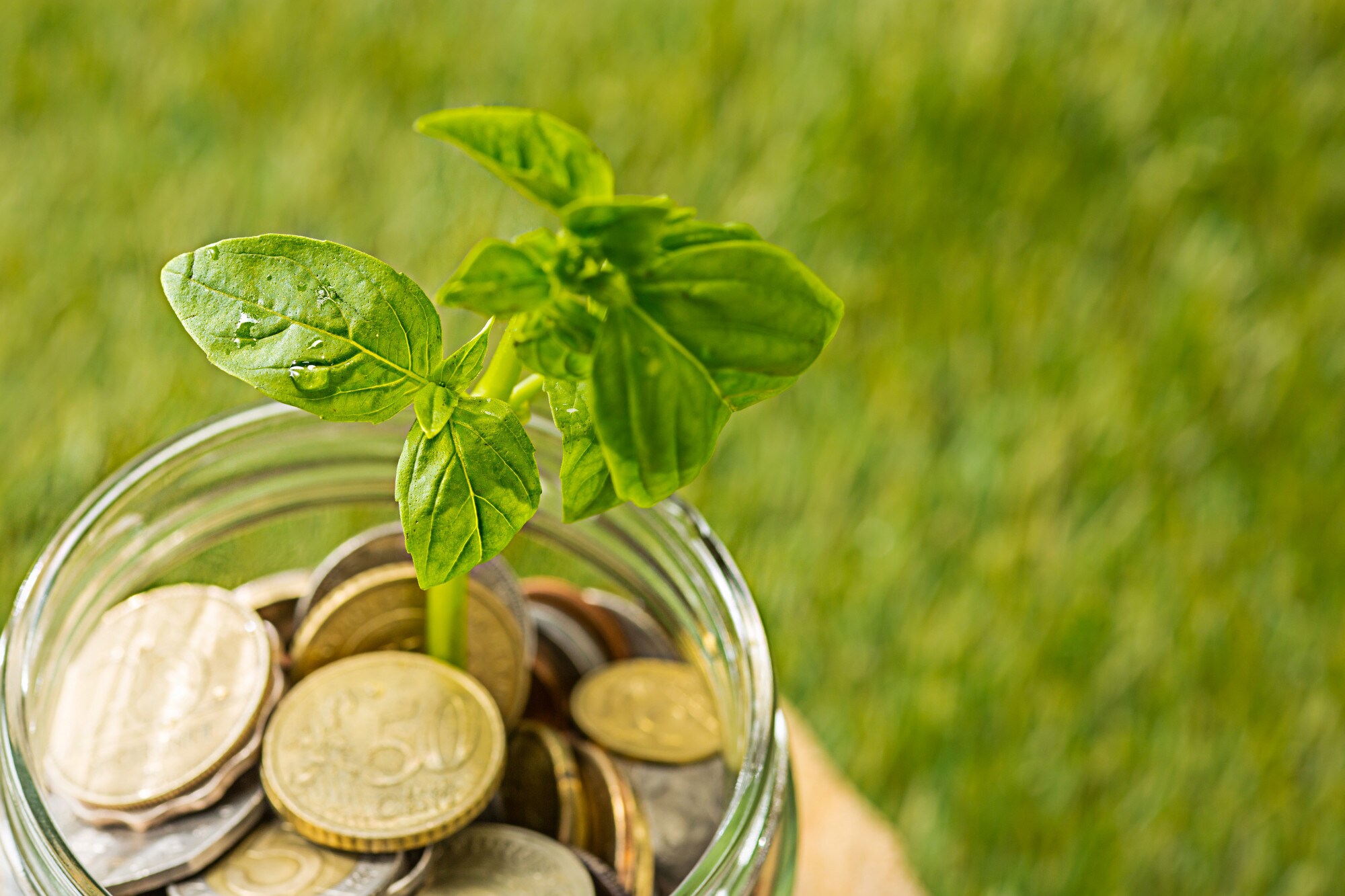
Green finance, for all its promise, is at a crossroads. Much like a greenwashed wall that peels when touched, the rhetoric often fails to match the reality. The concept has become both a rallying cry and a quagmire of contradictions. We extol the virtues of a net-zero world, but can we really wager our last treasury coin on achieving it? The uncomfortable truth is that sustainable finance risks becoming an oxymoron, caught between regulatory compulsion, green exuberance, and outright greenwashing.
Green finance, despite its growing prominence, remains a shallow construct in India, hampered by limited regulatory progress and insufficient alignment between rhetoric and reality. With an estimated $10.1 trillion needed for India's climate transition by 2070, and a $3.5 trillion funding gap persisting despite conventional financing, it is clear that the current approach is inadequate.
What exactly makes a project “green”? The answer should be simple, yet it's anything but. A wind farm? Undoubtedly green. A dairy farm practising “sustainable” methods? Perhaps. A bank funding a brown industry's transition to cleaner operations? Now we're in murky waters. The EU taxonomy—designed to define what counts as sustainable investment—has demonstrated the limits of rigidity. Forcing banks to calculate green ratios sounds productive, but what does it truly achieve if it offers no insight into how industries are evolving?
The allure of taxonomy lies in its promise of clarity. But clarity should not come at the cost of nuance. Green finance is not a binary equation of green versus not-green. Proportionality is essential, particularly for small businesses. An artisan using solar-powered kilns should not be held to the same standards as a multinational revamping its fossil fuel-heavy operations. Simplicity in regulation is a necessity for inclusivity. This is a lesson for India as it moves towards delivering its first formal taxonomy.
For example, despite India issuing its first green bonds in 2023, these efforts contribute minimally to its vast climate financing needs. Banks are not only grappling with accusations of greenwashing, where sustainability targets often become mere branding exercises, but also struggling to raise green deposits—a critical component of funding climate initiatives. This indicates that public confidence in green financial instruments remains weak, and financial institutions are yet to develop robust mechanisms to effectively channel these funds into impactful, transparent green projects.
Sustainable lending targets are now the fashion accessory of the financial sector, but they risk becoming exercises in branding. Stretchy definitions allow everything from wind farms to dubious projects to qualify, fuelling greenwashing accusations. Investors, quite rightly, are demanding proof that these initiatives go beyond mere promotion. The essence of true green finance is not to cheerlead the greenest technologies, but to invest in the greening of grey—and yes, even brown—sectors. The greatest gains often come not from backing what's already green, but from shepherding industries through their metamorphosis.
As the financial sector grapples with high inflation, this transition focus could offer some of the most resilient investment opportunities. A brown industry turning green is, arguably, a safer bet than a shiny green start-up that may falter under cost pressures. Yet, these investments require patience and courage—qualities in short supply when quarterly earnings dominate the narrative.
Meanwhile, policymakers love to brandish the term “net zero” as though it were a magic wand. Global summits are replete with grand declarations and pledges that often crumble under scrutiny. Ukraine's invasion has thrown energy security into sharp focus, forcing governments to rethink their priorities. This reappraisal may inadvertently inject much-needed realism into green finance. Energy transition is suddenly a geopolitical urgency.
The Ukraine war exposed a stark reality: global rhetoric often masks self-interest. Nations publicly condemned Russia and championed sanctions, energy security frequently trumped solidarity. Germany, for instance, initially pledged to reduce its dependence on Russian energy, but quietly continued importing Russian gas via pipeline loopholes. India, too, faced criticism for increasing its purchases of discounted Russian oil, but defended its actions as a necessity for its economic stability. Even the United States, which led the sanctions drive, allowed certain allies to keep sourcing Russian energy to avoid market disruptions. Meanwhile, Turkey positioned itself as a mediator in the conflict, but also increased its trade with Russia, exploiting grey areas in the sanctions regime. These examples underscore the uncomfortable truth: when the lights flicker and factories falter, moral posturing often gives way to pragmatic deal-making.
The ideology of green financing, with its lofty promises of sustainability and altruistic soundbites, often clashes with the hard pragmatism of self-sufficiency and domestic realities. Governments, driven by socio-economic and political compulsions, must prioritise immediate stability over long-term ideals. For instance, developing nations like India and Indonesia, rich in coal reserves, face the paradox of transitioning to renewable energy, while ensuring affordable power for burgeoning populations.
Meanwhile, wealthy nations champion green policies abroad, but fiercely protect domestic industries when jobs or energy security are at stake. Germany's recent pivot back to coal amid energy shortages, despite being a green energy leader, is a stark example. This pragmatism highlights a critical challenge: green finance, though ideologically sound, risks becoming a luxury that only the most stable nations can afford. For the rest, the journey towards sustainability must navigate a labyrinth of competing interests, often forcing compromises that dilute its purity.
And therein lies the hope. The renewed focus on energy security could finally align policymaking with economic reality. If regulators learn from missteps like the EU taxonomy, there's a chance to design frameworks that encourage true sustainability. Green finance must move beyond slogans and tick-boxes. It must be about enabling long-term transitions, fostering innovation, and holding institutions accountable. But with pragmatic regulation, patient capital, and a dose of honesty, the dream is still within reach. After all, the colour of the future is not green—it's every shade in between.
Dr. Srinath Sridharan is a policy researcher and corporate advisor.
Disclaimer: The views expressed here are those of the author, and do not necessarily represent the views of NDTV Profit or its editorial team.

-
We May Need Another Tukaram Mundhe To Fight Air Pollution | The Reason Why

Developers may install basic measures such as sprinklers and green nets, resume work, and continue violating rules when this equipment stops working.
-
Extracting Value From Battery Scrap Could Be Challenging For India | The Reason Why
A discarded lithium-ion battery still contains valuable materials such as lithium, nickel and cobalt. These can be recovered and reused. When such batteries are crushed and shredded, they produce a dark powder called black mass.
-
One El Nino, India Can Handle. Two Could Break The Granary
India's grain stocks can absorb one bad year, but a second El Nino could drain the buffer in two to three years, economists say.
-
India's Troika Of Good Luck | Joining The Dots
As Jensen Huang's exit drags Nvidia down, a cooling AI trade and resilient earnings have revived investor interest in India. A likely RBI rate hike looms.
-
Talking Points This Week: Leadership Shock At Nvidia, Earnings Strength, And The Fog Over Hormuz
The Anthropic IPO pricing and first trading day, Nvidia's upcoming earnings, and any fresh signals from Iran will set the tone for the following week.
-
Signature Play: The Classic Cocktail Is Dead. Or Is It?
Classic cocktails are disappearing from India's cocktail menus. But they're still being ordered, taught to bartenders and borrowed from. So, who's really having the last drink?
-
A New Samvat Wishlist: Inclusive Prosperity And Human Development
India has strengthened its economic foundations through infrastructure, digital access and enterprise. Its next growth chapter must deepen productivity, create better livelihoods and widen participation in prosperity.
-
Love, Sex Aur Dhokha: The Audacious Plot To Spy On Jensen Huang
A Taipei dinner, a Singapore chip buyer and a suspected Chinese asset: inside the alleged spy operation that got close to NVIDIA's Jensen Huang.
-
Ten Things I Learnt This Samvat
Patience can be a trap. Cheap stocks can stay cheap. Leverage can wipe you out. What did Samvat 2082 teach us? Niraj Shah writes on 10 lessons from the year gone by.
-
Talking Points This Week: Tech Nerves, FII Buying, And A Faraway Banking Shock
The global markets are not shining this Diwali. The exception in the large markets is, India.









