Why Former Infosys CFOs Want Rs 11,200 Crore Buyback
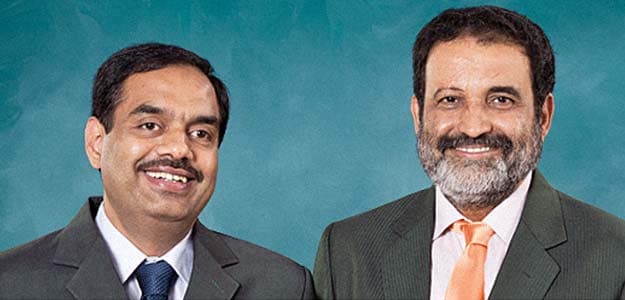
Two former Infosys CFOs and another former senior VP wrote to the company on June 29, urging the management to buy back shares worth Rs. 11,200 crore. Former officers V. Balakrishnan, T.V. Mohandas Pai and D.N Prahlad are seeking Rs 3,850 per share, which is a 52-week high for Infosys.
The demand comes at a time when Infosys is in the middle of the biggest leadership transition in its history. On August 1, former SAP AG executive Vishal Sikka took charge as the first non-founder CEO at the company. (Read the full story here)
Here's why the trio want Infosys to buy back shares:
1) Buyback will boost Infosys shares: Infosys has not only lagged behind its peers, but also the broader Sensex over the last three years. According to BSE data, Infosys shares are up just 22 per cent between June 28, 2011 and August 5, 2014. In contrast, TCS has jumped 120 per cent, while HCL Tech has surged 215 per cent during the same period. The Sensex has gained 40 per cent in the last three years.
Infosys believed in increasing shareholders' wealth but in the past three years, its stock has heavily underperformed and has resulted in wealth destruction, the trio said in the letter.
2) Buyback will restore confidence: Infosys has grown at a much slower pace than its peers. Its FY15 growth outlook of 9 per cent is well below the industry outlook 13-15 per cent sales growth. The company's strategy to focus on high margin consulting and system integration (part of Infosys 3.0) has backfired forcing it to refocus on winning large "bread and butter" IT outsourcing deals. Last year was particularly turbulent for the outsourcer with a number of senior executives exiting the company. Infosys currently has the highest attrition level in the industry, with one in five employees leaving the firm.
The trio say the buyback will help check the asymmetry of information between management and investors. It will show confidence in the management and the business model.
3) Buyback will lead to effective use of cash: In India, Infosys' cash and cash equivalents of Rs 25,000 crore (as of June 30, 2014) is perhaps second only to Reliance Industries cash and bank balance of Rs 38,000 crore (on March 31, 2014). Globally, companies use cash to either grow organically or by acquisitions. Else, they return cash to shareholders in the form of dividends or by buying back shares and boosting return on equity (RoE). However, Infosys has been conservative with respect to acquisitions. All its peers, especially Cognizant have used acquisitions as a very effective tool in their growth strategy, say Sagar Rastogi and Utsav Mehta of Ambit.
In the letter to the board, the investors said the company has not articulated its strategy for use of its cash effectively. Given this massive net cash position and robust net income generation, Infosys is perhaps the most over-capitalized company in the Indian corporate history, from our perspective, they said.
What will a buyback achieve? A buyback reduces the equity capital of a company and improves earnings per share or EPS. Several other companies in the world resort to buyback to support their share prices and restore investor confidence in the company.
Ambit analysts say Infosys is the guiltiest among its peers for stock-piling cash and depressing shareholder returns. Infosys has been spending the most on capex despite lowest revenue growth. As a result, its RoE is now the worst among the top-6 companies, the analysts said.
A buyback also helps in increasing the promoter's holding, which in the case of Infosys stood at around 16 per cent as of June 30, 2014.
(Also read: Infosys shares jump on buyback demand)
Will the company go for a buyback? Infosys has never gone for a buyback since going public in 1993. In response to the letter, the company said, "Should there be any development that will impact our shareholders, we will immediately inform the regulatory bodies and shareholders on priority."
(With inputs from PTI and Reuters)

-
Getting To Work Costs Women More | The Reason Why

It is not just about women paying more than men. It is about women paying much more in cities than in villages.
-
AI Bias In Investing Cannot Be Eliminated, But It Can Be Governed
Framing is a particularly important example as identical financial information presented in terms of gains rather than losses can lead an LLM to reach a different assessment.
-
Joining The Dots | Dark Skies, Steady Diya: Why Hope Holds This Diwali
With war, a weak rupee and foreign outflows weighing on sentiment, policymakers at the NDTV World Summit and market veterans at NDTV Profit Ignite: Diwali Edition offered the same advice: stay invested and filter out the noise.
-
The Curious Case of Equitas Small Finance Bank And A CEO Who Quit For Stock
PN Vasudevan believes persistent investor concerns over a perceived conflict of interest had become a governance overhang on Equitas Small Finance Bank's stock, even as the lender improved profitability and asset quality.
-
Talking Points This Week: AI Cash Burn, A Tiger Comeback And An India That Still Finds Its Own Path
India is not immune to higher oil or tighter global liquidity, yet its earnings base is broader, its domestic policy levers are still available.
-
Foreign Investors Own Half Of HDFC Bank and ICICI Bank. An LTCG Cut Could Matter Most Here
Foreign portfolio investors have US$115 billion parked in HDFC Bank, ICICI Bank. If the government cuts long-term capital gains tax, Jefferies says returning foreign money could land here first.
-
'Never Seen This Level Of Negativity': Sandeep Tandon Says The Next Rally May Be Closer Than You Think
Veteran investor Sandeep Tandon says foreign selling is easing, large-caps are due a comeback and mid-caps are crowded, while he turns positive on gold, power and pharma this Diwali.
-
Indians Stay With Family, Not In Hotels | The Reason Why
India still lacks enough clean, reliable and affordable hotels for budget-conscious travellers.
-
The Economic Imperative: Analysing The Material Driving Force Behind India-Canada Strategic Reset
This economic complementarity is further reinforced by deep institutional investment ties and talent mobility, which form the bedrock of the bilateral framework.
-
Medicine Pricing: Where Must Profit Stop?
India must confront excessive margins, hidden incentives and regulatory gaps that threaten the integrity of medicine.










