No Reason For Secrecy On Bank Defaulters, Observes Supreme Court
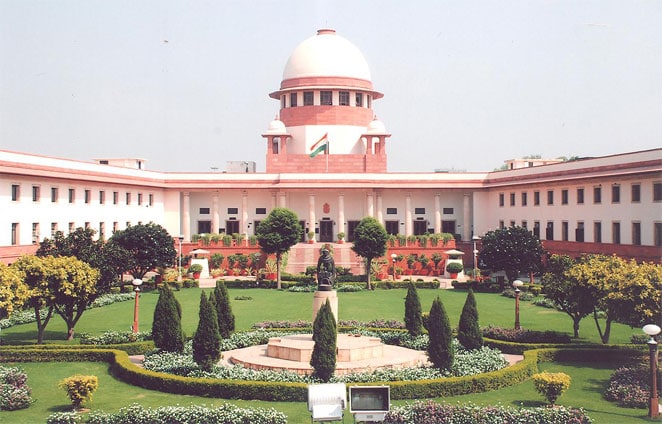
The Supreme Court has once again asked the Reserve Bank of India why the list of defaulters with more than Rs 500 crore in dues should not be made public, while observing that it sees no reason for the secrecy.
The RBI had submitted the list of defaulters with more than Rs 500 crore in dues to the apex court in April but had requested the court to keep the list confidential. The RBI had argued that disclosing such details irrespective of the reasons for delay in repayment could have a "cascading effect" on the economy. It has also argued that under the Parliament's Secrecy Act, names cannot be made public.
The apex court, however, appears unconvinced. On Monday, the court once again asked why the list of defaulters should not be made public.
“Even if we disclose the names, it does not mean that all defaulters are wilfull defaulters. We see no reason that the names need to be kept secret,” observed the Chief Justice.
While referring to the information by RBI in sealed covers, the Chief Justice of India led bench observed that the list of 57 defaulters submitted by the RBI owe more than Rs 85,000 crore to the banking system.
The bench also expressed concerns over the lack of concrete action to tackle the menace of bad loans. The government, however, highlighted that a six-member committee headed by the executive director of the RBI has been set up to look into issues of defaults. The committee has met all stakeholders and six meetings have been held so far, stated Solicitor General Ranjit Kumar in court.
The committee will submit its report by October-end to the Ministry of Finance who will decide on the further course of action, added the affidavit.
The Supreme Court is hearing a petition filed by NGO Centre for Public Interest Litigation (CPIL) in 2003, which had originally raised the issue of loans given to some companies by state-owned Housing and Urban Development Corporation (HUDCO).
The PIL had claimed that over Rs 40,000 crore of corporate debt was written off in 2015. The apex court had taken note of a report on rising bad loans in a national daily (Indian Express) and questioned the RBI.
Advocate Prashant Bhushan argued on behalf of the petitioners that banks are still advancing loans to defaulters and questioned the credibility of the six member committee formed by the government.
"The committee cannot have people and banks who are at the heart of the problem. RBI has been restructuring loans for defaulters. The actual loans default amount is over Rs 10 lakh crore," claimed Bhushan.
The apex court will now hear the matter on October 28.
Bad loans in the banking sector have risen to over Rs 6 lakh crore after the RBI conducted an asset quality review of the sector last year. The review pushed banks to recognize visibly stressed assets as bad loans and provide for them.

-
Signature Play: The Classic Cocktail Is Dead. Or Is It?

Classic cocktails are disappearing from India's cocktail menus. But they're still being ordered, taught to bartenders and borrowed from. So, who's really having the last drink?
-
A New Samvat Wishlist: Inclusive Prosperity And Human Development
India has strengthened its economic foundations through infrastructure, digital access and enterprise. Its next growth chapter must deepen productivity, create better livelihoods and widen participation in prosperity.
-
Love, Sex Aur Dhokha: The Audacious Plot To Spy On Jensen Huang
A Taipei dinner, a Singapore chip buyer and a suspected Chinese asset: inside the alleged spy operation that got close to NVIDIA's Jensen Huang.
-
Ten Things I Learnt This Samvat
Patience can be a trap. Cheap stocks can stay cheap. Leverage can wipe you out. What did Samvat 2082 teach us? Niraj Shah writes on 10 lessons from the year gone by.
-
Talking Points This Week: Tech Nerves, FII Buying, And A Faraway Banking Shock
The global markets are not shining this Diwali. The exception in the large markets is, India.
-
Midterm Rally Lasted A Day. The Hard Reality Of A Divided US May Last Two Years | Opinion
Between a contested AI boom, a debt ceiling that arrives in 2027 and a president with every incentive to act alone, the next two years may prove more volatile than the first day's rally suggests.
-
Blue Wave Will Derail the AI Trade but Won't Dismantle the AI Era | Unhedged Position
The Democrats' sweep of the US Congress will see politics collide with economic forces both over the long and short term.
-
It's Time To Take The GST Council's Bet On Trust Global
Payment records can prove India's services exports, and clear, proportionate rules can bring foreign digital sellers into the tax net.
-
Opinion | India at 38: From Innovation Overperformer to Innovation Powerhouse
India now has 453 VC-backed deep science startups, 18 of them late-stage, after 117 percent growth since 2020. Laurus Labs, at USD 9.3 billion, is the most valuable deep science company in any middle-income economy outside China.









