Why CPPIB Is Not Keen On India’s Residential Real Estate
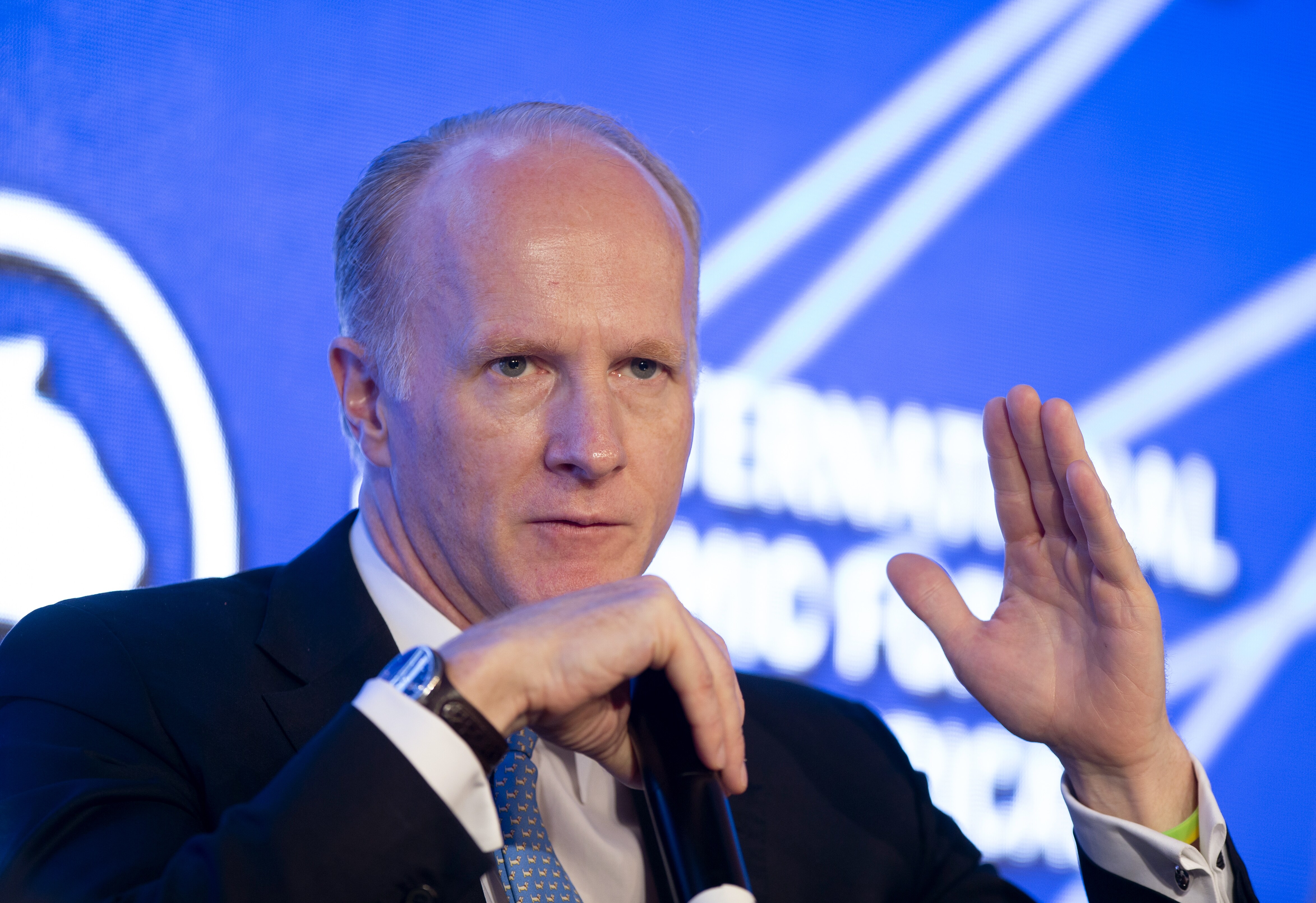
Canada's biggest pension manager is keen on increasing its exposure to India but won't be focusing on residential real estate.
The Canada Pension Plan Investment Board, which manages assets worth $308.2 billion, has an investment horizon of at least 20 years for infrastructure assets, a minimum of 15 years for core real estate, and around seven years for opportunity real estate segment and over six years for funds and secondary and public market investments, according to Mark Machin, president and chief executive officer at the fund. And that's why it wants to shun the residential real estate sector, which according to Machin, is like manufacturing business, he said in a roundtable with the media in Mumbai. “You only develop and sell,” he said. “We're trying to build long-term returns.”
The CPPIB has invested around $8 billion in India till date and its investments in China are four times more.
From Jan. 1, Canada decided to increase contribution to pension plans to maintain standard of living for future retirees. This would mean that the fund now expects its assets under management to touch $410 billion by 2025 and $1 trillion by 2030 and $1.5 trillion by 2040, said Machin.
It aims to invest one-third of its assets in emerging markets—primarily China, India and Brazil, Machin said, without giving a timeline.
“Our India investments have yielded gains of 10 percent in the past 10 years and 10.5 percent returns in the past five years,” Machin said.
The CPPIB invested in companies having exposure to Andhra Pradesh renewable power projects, where the government tried to cut clean energy tariffs by half in August. Machin said the fund factors in such risks like - regulatory, taxation policies while making investments.
Emerging markets have their challenges and risks, which are factored in at the time of investment, Machin said. “All legal protection can be put but it's about the right partner. It's the right partner when things go bad that matters.”
Investments In Infrastructure
The pension manager isn't keen on investing in the NIIF. “We normally do direct investment in infrastructure assets,” he said. “It will be a special exception if that (investing in funds) were to happen.”
The pension fund's India exposure comprises:
- 20 percent investments through private equity directly or through partner funds of KKR & Co. and Barings LLC.
- 20 percent exposure to commercial real estate and infrastructure.
- 60 percent through public markets. Its largest investment is Kotak Mahindra Bank Ltd.
The Canadian fund acquired nine toll-road assets through its investment infrastructure trust in the previous financial year. In commercial real estate, it has invested Rs 938 crore for 49 percent stake in mall developer Phoenix Mills Co. Ltd. and $115 million in logistics company Delhivery Pvt. Ltd.
The fund isn't looking to be the first-mover in the consumption and digital space as it isn't scouting for seed investing. We take time for our deals, said Suyi Kim, senior managing director and head of Asia Pacific at CPP Investment Board, adding it has investments through KKR and Barings in Bharti Infratel Ltd., Byju's and Hexaware Technologies Ltd.

-
The Economic Imperative: Analysing The Material Driving Force Behind India-Canada Strategic Reset

This economic complementarity is further reinforced by deep institutional investment ties and talent mobility, which form the bedrock of the bilateral framework.
-
Medicine Pricing: Where Must Profit Stop?
India must confront excessive margins, hidden incentives and regulatory gaps that threaten the integrity of medicine.
-
Why Amazon And Flipkart Are Struggling To Beat Meesho In India's Smaller Cities
With 274 million users and lowest-cost logistics, Meesho is defending its value commerce crown against giants like Amazon and Flipkart.
-
High US Salaries, No Green Card Certainty: The Financial Calculation Facing Indian H-1B Families
The suspension of PERM processing at eight technology employers does not cancel existing H-1B visas. What it does is force a question many Indian families have been avoiding: is the US salary worth tying your career and family plans to one employer?
-
Swiggy vs Eternal: Food Delivery's Two Rivals Are No Longer In The Same Race
Eternal is building a private AI assistant, dark.ai. Swiggy is still working out how to make Instamart pay, with an operating loss of Rs 895 crore in the July-September quarter while Blinkit stayed profitable.
-
Where You Live Shapes How You Get To Work | The Reason Why
Two-wheelers are the most popular way to get to work in India, accounting for nearly 43% of workplace commutes.
-
Unhedged Position: Can India See An Indonesia-Style Time Correction?
The Nifty is trading below levels it first clocked in 2024. Is there, then, as I have suggested in the headline, potential that the current time correction drags on painfully for the next three-five, even ten years?
-
Navigating Friction And Energy Realities: An Analysis Of Marco Rubio's October Visit To India
Occurring at a critical juncture marked by stalled trade negotiations and escalating geopolitical pressures over global energy supplies, the visit offers a profound window into modern US-India relations.
-
India Exports Capital. Why Not Export Trusteeship?
The big question, then, is whether India can build an institution that global borrowers, investors, banks, and lawyers can trust, even without an Indian connection.
-
France's Economy & Politics Are In Crisis | The Reason Why
Let's look at how the French economy and politics evolved under Nicolas Sarkozy, Franois Hollande and Emmanuel Macron.










