Why Banks Are Exiting Trade And Commodity Finance
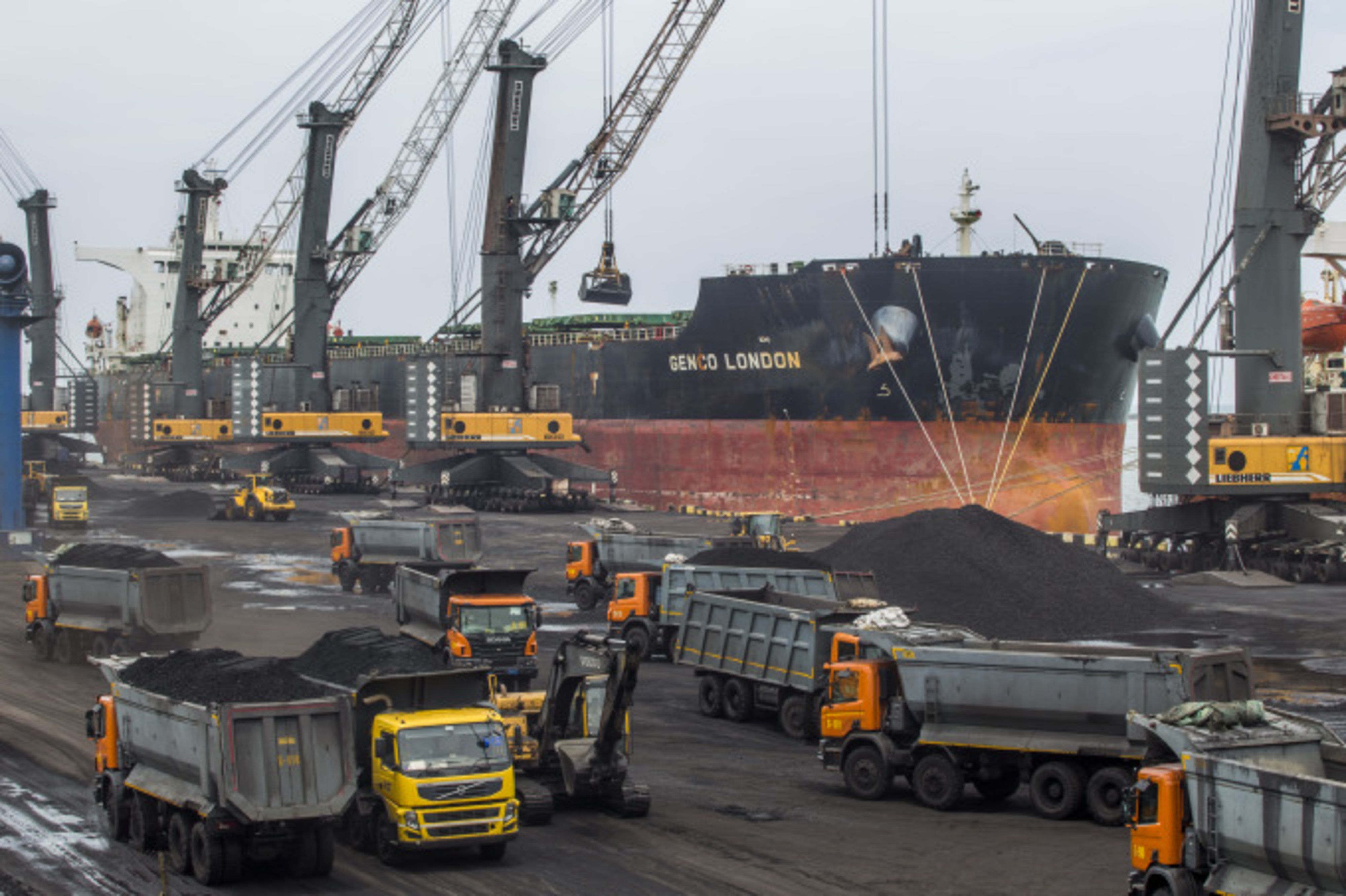
Last week ABN Amro announced its decision to exit the trade and commodity finance business. It joined a host of other banks like BNP Paribas, Société Générale, Natixis, ANZ to name a few, that have either exited or halted fresh financing in trade and commodities. Many banks are shedding jobs, restructuring or reducing their commodities business to cut risk. Banks have suffered losses to the tune of $9 billion from the $18 trillion commerce finance enterprise.
The gap left by ABN Amro is likely to be the tune of $21 billion and the big banks that remain in the business may not be able to fill this, resulting in a potential liquidity freeze for commodity traders. Banks' revenue from commodities trade finance slid 40% year-on-year to $700 million in the second quarter of 2020 according to consultancy firm Coalition.
Commodity traders have been feeling the heat in the recent past on account of volatility in commodity prices compounded by reduced trade due to Covid-19. The global agricultural merchant and trading giant Louis Drefyus saw net income fall 38% to $228 million in 2019. Its American-headquartered peer Bunge reported a loss of $1.28 billion for 2019 against a profit of $267 million in 2018. The British multinational Glencore posted an H1CY20 loss of $2.6 billion. Louis Dreyfus' owner had to pledge her majority stake in the holding company LDHBV to raise a $1 billion loan from Credit Suisse.
Loss Of Trust
This decision by banks can be attributed to a certain set of micro and macro factors. “Key micro factors stems from the recent sizeable defaults by commodity traders in hubs such as Singapore, Dubai, and Switzerland, leading to a general collapse in confidence,” says Eric Chen, an ex-banker and Director at vCargo Cloud Pte Ltd, a digital services provider in the trade and logistics space.
Several frauds have been unearthed in the last few months – Hin Leong, Phoenix Commodities, GP Global, Agritrade, and ZenRock to name a few. Hin Leong, a marine fuel trader, has confessed to hiding about $800 million in losses. 23 banks have exposure aggregating up to $ 3.5 billion to Hin Leong.
Just weeks before Hin Leong's failure, Agritrade, whose businesses consist of palm oil and coal mining, collapsed amid allegations of fraud. The case of Hin Leong shows that even a highly developed legal environment like Singapore is now considered difficult for banks to recover their dues.
How The Business Has Changed
Commodity trade finance was considered as among the safest businesses for banks at one point in time.
“Trades were mostly on a pre-sold basis, backed by letters of credit, thus with limited credit risk. These then increasingly moved to open account terms, exposing them and financing banks to price and credit risks,” says Srinivasan Govindan, a senior banker and formerly the chief representative of Natixis in India.
Many banks with no experience in the commodity finance business have entered the space lately and offered unsecured and cash-flow based medium- to long-term lending facilities. As many of these traders are global in size, they have been the darlings of not only big global banks but also local banks.
Govindan adds “Over the years, the usually tightly controlled and monitored, commodity trade financing lines were increasingly replaced with corporate lines in the form of syndicated loans, revolvers, etc., diluting the rigorous structures earlier employed. Low equity base, high leverage, and volatile price movements only compounded this situation.”
Double financing is a very big issue in trade and commodity finance. In fraudulent cases, it has been observed that borrowers have pledged the same collateral or inventory to multiple banks at the same time. The absence of a centralised database of collateral or securities registry nationally as well as globally adds to the problem of lenders.
60 letters of credit amounting to $1.5 billion were used by Hin Leong to finance cargo that both didn't exist or was pledged to a number of patrons, as per the investigation by PwC, the court-appointed managers.
Eric Chen further says, “developments in the Basel framework stand to reduce the capital relief on commodity trade finance, making it less attractive on a risk-weighted profitability basis.”
Trading companies operate on very thin margins of 0-2% and some have a very opaque business model, which potentially makes it easy to conceal losses in derivative assets, inventory, receivables etc. One wrong call about price movements can erode their margins for the entire year according to the head of risk of an MNC bank in India, who spoke on condition of anonymity.
Regulatory changes mean that banks have to now charge more per transaction to clear their internal risk-adjusted return on capital employed thresholds. These changes have also tightened the high global recovery rates or low loss-given defaults being ascribed to many structured trade transactions like pre-payments, pre-export finance, thus making deals not lucrative at the current margins.
The changing environment amid the pandemic has led to a decline in global trade. Global trade is forecasted to decline between 13% and 32% in 2020, as per the U.S. Congressional Research Service depending on the depth and extent of economic downturn. This will impact the free movement of commodities around the globe.
Impact On India
India is more of an origination and destination market and less of a trading hub. Banks in India largely take a corporate type or balance sheet approach to financing whether it is a commodity trader or a producer and such defaults are few and far between.
However, many large traders have their subsidiaries in India, and banking limits to these are provided on the back of a corporate guarantee or letter of comfort from the parent. Many traders have global limits and sub-limits are carved out of these for their Indian operations. Such limits enjoyed by these subsidiaries from MNC banks in India could get impacted, more so in case of a global review of limits to these groups.
Over the years, some subsidiaries of large traders in India have, in turn, started to provide financing support to small producers here. The exit or reduction of big banks from the trade and commodity finance business could impact such small producers and result in temporary supply chain disruptions.
The subsidiaries of global traders operating out of India and tier-2-and-3 producers which import commodities into the country could see an increase in financing costs in the short to medium term.
To sum up, the trade and commodity finance business could see a major overhaul globally in the post-Covid scenario, with increased import and export financing costs, supply chain disruptions, higher risks, and consolidation of players.
Amitabh Tiwari is a former corporate banker, and currently a political strategist and consultant.
The views expressed here are those of the author and do not necessarily represent the views of BloombergQuint or its editorial team.

-
Getting To Work Costs Women More | The Reason Why

It is not just about women paying more than men. It is about women paying much more in cities than in villages.
-
AI Bias In Investing Cannot Be Eliminated, But It Can Be Governed
Framing is a particularly important example as identical financial information presented in terms of gains rather than losses can lead an LLM to reach a different assessment.
-
Joining The Dots | Dark Skies, Steady Diya: Why Hope Holds This Diwali
With war, a weak rupee and foreign outflows weighing on sentiment, policymakers at the NDTV World Summit and market veterans at NDTV Profit Ignite: Diwali Edition offered the same advice: stay invested and filter out the noise.
-
The Curious Case of Equitas Small Finance Bank And A CEO Who Quit For Stock
PN Vasudevan believes persistent investor concerns over a perceived conflict of interest had become a governance overhang on Equitas Small Finance Bank's stock, even as the lender improved profitability and asset quality.
-
Talking Points This Week: AI Cash Burn, A Tiger Comeback And An India That Still Finds Its Own Path
India is not immune to higher oil or tighter global liquidity, yet its earnings base is broader, its domestic policy levers are still available.
-
Foreign Investors Own Half Of HDFC Bank and ICICI Bank. An LTCG Cut Could Matter Most Here
Foreign portfolio investors have US$115 billion parked in HDFC Bank, ICICI Bank. If the government cuts long-term capital gains tax, Jefferies says returning foreign money could land here first.
-
'Never Seen This Level Of Negativity': Sandeep Tandon Says The Next Rally May Be Closer Than You Think
Veteran investor Sandeep Tandon says foreign selling is easing, large-caps are due a comeback and mid-caps are crowded, while he turns positive on gold, power and pharma this Diwali.
-
Indians Stay With Family, Not In Hotels | The Reason Why
India still lacks enough clean, reliable and affordable hotels for budget-conscious travellers.
-
The Economic Imperative: Analysing The Material Driving Force Behind India-Canada Strategic Reset
This economic complementarity is further reinforced by deep institutional investment ties and talent mobility, which form the bedrock of the bilateral framework.
-
Medicine Pricing: Where Must Profit Stop?
India must confront excessive margins, hidden incentives and regulatory gaps that threaten the integrity of medicine.










