Who Signs On Rupee One Note? Which Was Highest Value Note Printed In India?
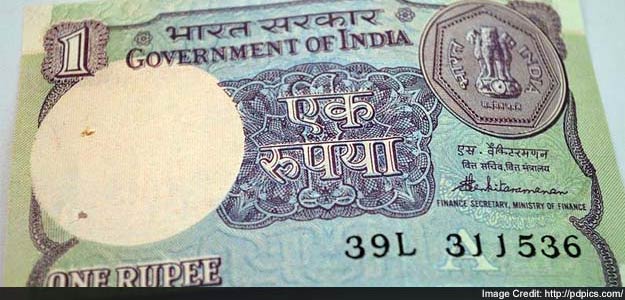
We all deal with currency notes on a daily basis and take them by face value, as we believe that we will get the worth of amount which a particular note promises. But how much do we actually know about our Indian currency? Or for that matter, how aware are we about the information which is mentioned on currency notes.
Let's begin with the smallest denomination note of Indian currency – the rupee one note.
Do you know that this is the only currency note which is not signed by the Governor of Reserve Bank of India (RBI), but by the Finance Secretary to the Government of India?
The RBI was established in 1935 and was nationalised in 1949. While prior to 1949, all currency notes were issued on behalf of the Ministry of Finance, post RBI's nationalisation, the apex bank was delegated the responsibility of issuing the currency.
While all denominations of currency notes are signed by the RBI Governor, only as a matter of convention the one rupee note continued to be signed by the Finance Secretary.
The one rupee note however went out of circulation after 1994 and was treated as token currency note.
Do you know that the highest denomination note ever printed by the RBI was the Rs 10,000 note in 1938, which was demonetised in January 1946. The Rs 10,000 note was again introduced in 1954. These notes were demonetised in 1978.
An interesting fact about the Indian currency notes is that the paper currently being used for printing of banknotes is made by using 100% cotton.
What is the meaning of the statement mentioned on each currency note signed by the RBI Governor, assuring to pay the said value of the note to the bearer?
The statement by the RBI Governor on the currency note is a kind of a promissory note which gives an assurance to the bearer that the currency being held by the holder is legal tender which is applicable for use in the country.
The person or party accepting the Indian currency is in a way honouring that assurance.
The promissory note is a kind of a promise by the RBI to the people that it is bound to pay them the amount of which that note is worth.
If any currency note does not carry the promissory note then any foreign national or institution will not accept it.

-
AI Bias In Investing Cannot Be Eliminated, But It Can Be Governed

Framing is a particularly important example as identical financial information presented in terms of gains rather than losses can lead an LLM to reach a different assessment.
-
Joining The Dots | Dark Skies, Steady Diya: Why Hope Holds This Diwali
With war, a weak rupee and foreign outflows weighing on sentiment, policymakers at the NDTV World Summit and market veterans at NDTV Profit Ignite: Diwali Edition offered the same advice: stay invested and filter out the noise.
-
The Curious Case of Equitas Small Finance Bank And A CEO Who Quit For Stock
PN Vasudevan believes persistent investor concerns over a perceived conflict of interest had become a governance overhang on Equitas Small Finance Bank's stock, even as the lender improved profitability and asset quality.
-
Talking Points This Week: AI Cash Burn, A Tiger Comeback And An India That Still Finds Its Own Path
India is not immune to higher oil or tighter global liquidity, yet its earnings base is broader, its domestic policy levers are still available.
-
Foreign Investors Own Half Of HDFC Bank and ICICI Bank. An LTCG Cut Could Matter Most Here
Foreign portfolio investors have US$115 billion parked in HDFC Bank, ICICI Bank. If the government cuts long-term capital gains tax, Jefferies says returning foreign money could land here first.
-
'Never Seen This Level Of Negativity': Sandeep Tandon Says The Next Rally May Be Closer Than You Think
Veteran investor Sandeep Tandon says foreign selling is easing, large-caps are due a comeback and mid-caps are crowded, while he turns positive on gold, power and pharma this Diwali.
-
Indians Stay With Family, Not In Hotels | The Reason Why
India still lacks enough clean, reliable and affordable hotels for budget-conscious travellers.
-
The Economic Imperative: Analysing The Material Driving Force Behind India-Canada Strategic Reset
This economic complementarity is further reinforced by deep institutional investment ties and talent mobility, which form the bedrock of the bilateral framework.
-
Medicine Pricing: Where Must Profit Stop?
India must confront excessive margins, hidden incentives and regulatory gaps that threaten the integrity of medicine.
-
Why Amazon And Flipkart Are Struggling To Beat Meesho In India's Smaller Cities
With 274 million users and lowest-cost logistics, Meesho is defending its value commerce crown against giants like Amazon and Flipkart.










