When Your Friend Is Dilip Kumar
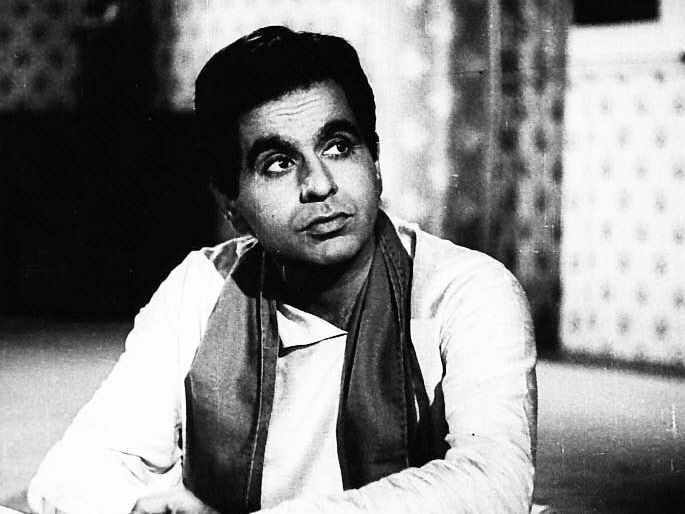
Many of us have a friend who is decades older than us with whom we connect instantly. That friend can often be part mentor, part parental figure but most of all, they are someone with whom we share a deep and impactful relationship. Now, what if that friend is one of post-independence India's most recognised, most loved faces?

Faisal Farooqui first met Dilip Kumar through his elder brother Asif when he was 10 years old. It was just three years after the sudden death of their father. In the decades that followed, Kumar played an important role in Farooqui's life. The story of their delightful friendship is the subject of Farooqui's new book Dilip Kumar: In the Shadow of a Legend, released one year after India's most famous actor passed away.
The book is a treasure trove of their frequent interactions on the terrace of Kumar's mother-in-law's home in Pali Hill, on drives or over tea at Taj Land's End and, best of all, during their after-hours walks in Bandra's Jogger's Park.

(Image: Priya Ramani)
Kumar had helped sports coach Oliver Andrade realise his dream of turning a garbage dump into a park and that's why, whenever the actor requested the park be kept open for him beyond 9 pm, they obliged. Many key moments in the book occur here, from the time Kumar reveals he has been asked to make a bid for Indian President to his re-enactment of the scene when Devdas learns of his father's demise.
Most people were drawn to Kumar, or India's tragedy king as he was known, precisely because of the sadness that emanated from him in so many cult films.
My introduction to Kumar was through one of my father's favourite bleak soundtracks—the 1951 film Deedar. But the Kumar in Farooqui's book is a gentle, sorted, curious soul with a sense of humour.

A still from Nitin Bose's Deedar. (Image: NFAI/Twitter)
Dilip Kumar fans might already have read about how he was once advised by a therapist to stop making sad movies to cure his depression or the story of his first meeting with Devika Rani, the pioneering film studio owner of Bombay Talkies or how his father discovered he was an actor (he saw a poster of his son's first movie). But they may or may not have heard this story from his first day of shooting for the film Jwar Bhata.
The upset heroine was supposed to run to a well with the intention of jumping in it. Kumar had to run behind her and save her. The cameras started rolling and the female lead ran. Kumar ran too. Cut, the director yelled. You have to run behind her, not ahead of her. Kumar replied that she was running so slowly he was catching up in no time.
Farooqui often accompanied Kumar to the home of music composer Naushad Ali for tea. Mostly, Kumar and Ali would sit in silence, though sometimes the conversation would turn to Mughal-E-Azam, the long-running movie project on which both men worked. Director K. Asif knew financier Shapoorji Pallonji was a fan of Emperor Akbar and he would always ask for more money after inviting him to watch scenes depicting Akbar. The film took more than 10 years to make and at one point an exasperated Pallonji asked, ‘Tameh picture banao chhe, ya mara makbaro banao chhe?' (Are you making a movie or are you making my tomb?)

A still from K Asif's Mughal-e-Azam. (Image: NFAI/Twitter)
But more than Kumar's legendary film career, his troubled relationship with Madhubala or his rock-solid marriage with Saira Bano, it is the relationship between the star and the Farooqui that is the real draw of this book.
There's something incredibly endearing about Dilip Kumar helping a younger man understand Plato and Socrates; disapprovingly tugging his friend's goatee—a fad inspired by Dil Chahta Hai—and demanding he shave; or seeking help to order his books wish list on Amazon, a magical bookstore he has just heard of.
In fact, over the years Farooqui, a tech entrepreneur, became Kumar's go-to gizmo guru. ‘What is exactly is the internet?' Kumar asked Farooqui in 2000. It was because of his younger friend that Kumar joined Twitter in 2011, on his 89th birthday. Farooqui set up his account and tweeted on his behalf. He also introduced Dilip Kumar to the iPhone.

Faisal Farooqui with Dilip Kumar. (Image: @FAISALmouthshut/Twitter)
When Farooqui got his hands on an iPhone in 2007, he was hooked. Now, often during his meetings with Kumar, he would be distracted by his new toy. Finally, Kumar expressed exasperation at this device that was coming in the way of conversation. It resulted in an impromptu demonstration of YouTube and the rest of the evening was spent playing Dilip Kumar's requests for song videos from his films. Kumar hummed along, all the while grinning ear-to-ear at the device he called jaadu (magic).
Farooqui ends the book with an account of the time Asif and he travelled with Dilip Kumar's entourage to Medina and Mecca for the umrah pilgrimage in 2013. Kumar was then 90. The fans were everywhere and in Mecca they repeatedly stopped him to shake his hands and meet him even as he performed the ritual of going around the Kaaba seven times. When Farooqui told them to back off, an old Afghan man said: ‘Son, don't stop anyone from meeting Dilip Kumar. Who knows, maybe their wish is being granted today?'
Thanks to Farooqui's book, Dilip Kumar fans now have a chance to ‘meet' their favourite actor once more.
Priya Ramani is a Bengaluru-based journalist and is on the editorial board of Article-14.com.
The views expressed here are those of the author, and do not necessarily represent the views of BQ Prime or its editorial team.

-
We May Need Another Tukaram Mundhe To Fight Air Pollution | The Reason Why

Developers may install basic measures such as sprinklers and green nets, resume work, and continue violating rules when this equipment stops working.
-
Extracting Value From Battery Scrap Could Be Challenging For India | The Reason Why
A discarded lithium-ion battery still contains valuable materials such as lithium, nickel and cobalt. These can be recovered and reused. When such batteries are crushed and shredded, they produce a dark powder called black mass.
-
One El Nino, India Can Handle. Two Could Break The Granary
India's grain stocks can absorb one bad year, but a second El Nino could drain the buffer in two to three years, economists say.
-
India's Troika Of Good Luck | Joining The Dots
As Jensen Huang's exit drags Nvidia down, a cooling AI trade and resilient earnings have revived investor interest in India. A likely RBI rate hike looms.
-
Talking Points This Week: Leadership Shock At Nvidia, Earnings Strength, And The Fog Over Hormuz
The Anthropic IPO pricing and first trading day, Nvidia's upcoming earnings, and any fresh signals from Iran will set the tone for the following week.
-
Signature Play: The Classic Cocktail Is Dead. Or Is It?
Classic cocktails are disappearing from India's cocktail menus. But they're still being ordered, taught to bartenders and borrowed from. So, who's really having the last drink?
-
A New Samvat Wishlist: Inclusive Prosperity And Human Development
India has strengthened its economic foundations through infrastructure, digital access and enterprise. Its next growth chapter must deepen productivity, create better livelihoods and widen participation in prosperity.
-
Love, Sex Aur Dhokha: The Audacious Plot To Spy On Jensen Huang
A Taipei dinner, a Singapore chip buyer and a suspected Chinese asset: inside the alleged spy operation that got close to NVIDIA's Jensen Huang.
-
Ten Things I Learnt This Samvat
Patience can be a trap. Cheap stocks can stay cheap. Leverage can wipe you out. What did Samvat 2082 teach us? Niraj Shah writes on 10 lessons from the year gone by.
-
Talking Points This Week: Tech Nerves, FII Buying, And A Faraway Banking Shock
The global markets are not shining this Diwali. The exception in the large markets is, India.









