What’s The Most Dangerous Profession In An Autocracy?
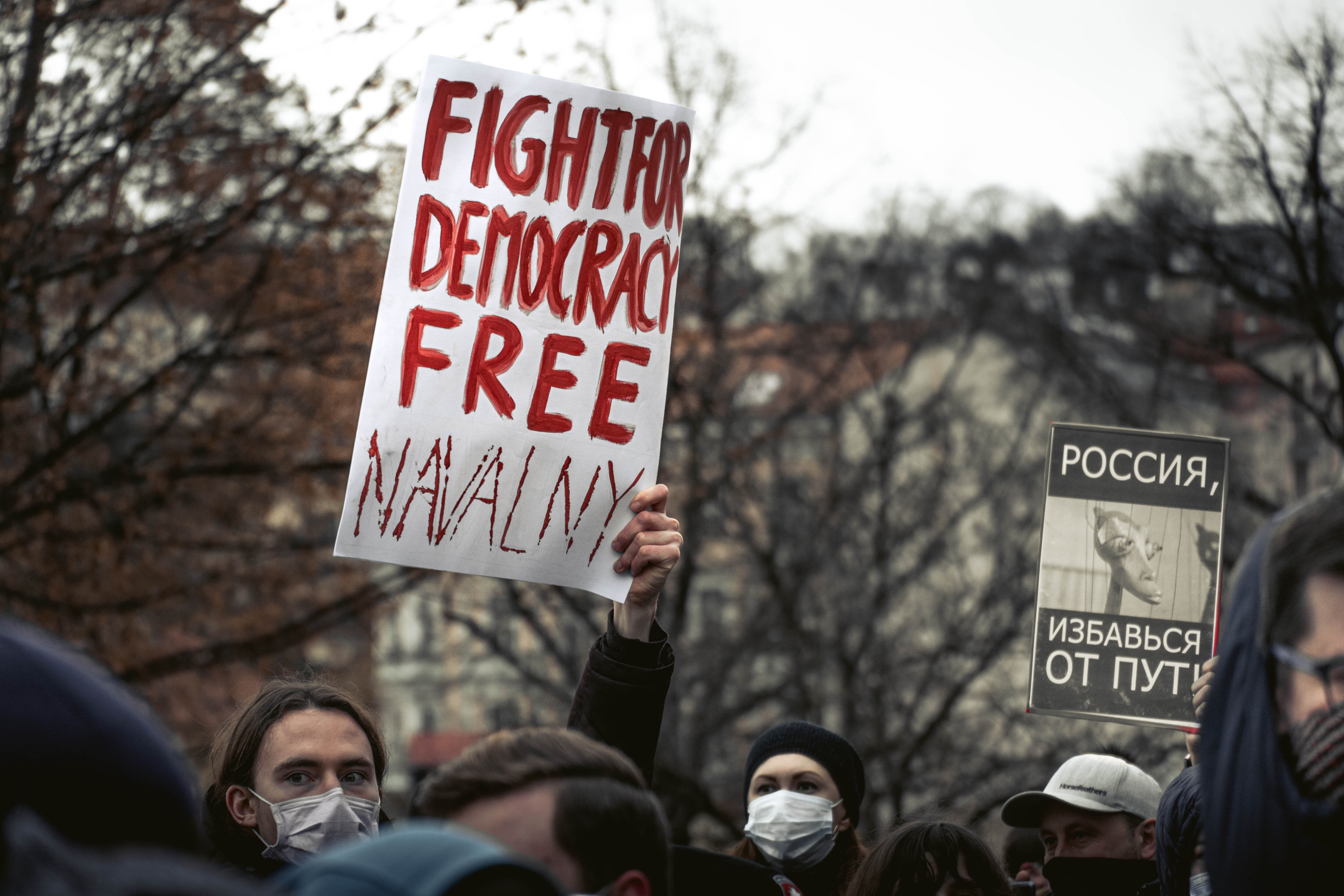
In a world ruled by autocrats, journalism is increasingly the world's most dangerous profession, it is often argued. A journalist has died once every four days in the past decade, Unesco said in 2021. Every year since 2016, more journalists have been killed outside of conflict zones than within them. In 2022, 67 of us were killed across the world, according to the Committee to Protect Journalists, mostly for just doing our job.
Of course deaths in many other jobs across the world are much higher than journalism. Sewer workers, construction workers, lumberjacks, oil-field workers are all much more dangerous jobs. The first of these is a deeply inhuman ‘job' that, though outlawed, continues to kill hundreds in India every year.
But as the world, for the first time in more than two decades, records more closed autocracies than liberal democracies (Source: V-Dem Institute's Democracy Report 2023), I'm looking at people whose profession, in theory at least, compels them to speak truth to power. Those who are in danger because of their governments.
My profession has some safeguards. We have press bodies we can count on and, if we are lucky, a local community that will stand with us. We have an index that faithfully monitors press freedom in our countries. We confront autocracy by telling the stories of other people. We can hide behind the protective cover of facts, though that cover too has become increasingly tenuous in a world where any criticism of government is seen as traitorous. In a way we are safeguarded by the fact that we are increasingly powerless, especially in countries where the press is divided. It's easy to de-platform even the most prominent of us.
Most importantly, our life and death have no electoral impact. Nobody will vote out an autocrat because a journalist was murdered. But, as history has shown, a country's mood can change dramatically if a politician is assassinated. The most dangerous profession in the world today, I believe, is unquestionably that of an opposition leader.
The most impactful political dissenters are opposition leaders and that makes them the most dangerous one too. Autocrats understand this and our recent history is littered with the consequences of this understanding.
Russian opposition leaders, for example, have been imprisoned without trial, exiled, poisoned, and shot dead. Alexei Navalny, a fierce Putin critic with six million YouTube followers, who was poisoned with a nerve gas and imprisoned, cemented his Western world cult status when a documentary about him won a prestigious award recently. “My husband is in prison just for telling the truth…for defending democracy,” wife Yulia Navalny said while accepting the Oscar for Navalny. “Alexei, I am dreaming of the day when you will be free and our country will be free.”
A recreation of his cell is on display in the Netherlands, part of an exhibit titled ‘Silenced' about political prisoners through the centuries. Navalny may be a household name but there are many other opposition leaders who have faced the wrath of Putin unflinchingly. Like Ilya Yashin, sentenced in December 2022 to eight-and-a-half years in prison for loudly opposing Russia's war against Ukraine.
He was branded a “foreign agent” and a Russian court said he had “expressed hatred” and created a “real threat to the formation of a negative attitude towards the armed forces of the Russian Federation". To understand the extent of Putin's abuse of power, also look up the heart-stopping stories of opposition politicians such as Vladimir Kara-Murza, Sergei Furgal, Boris Nemtsov and Dmitry Gudkov. Or see how under Recep Tayyip Erdogan, a Turkish court sentenced a political rival for 2 years, 7 months and 15 days for use of the word ‘fools' and banned him from politics during this time.
In Russia, Yashin had his day in court. “Where does the Justice Ministry get the gall to label someone who is sitting in prison and literally paying with his personal freedom for the right to live and work in Russia a foreign agent?…Remember this: being a patriot means being honest to your own country and people. I speak the truth. And for this truth I've been put in prison,” he said. His full speech is worth reading here.
Don't worry about me, Yashin told the Russian people when the court granted the defendant a “final word”. "I promise I'll endure all the trials, I won't complain, and I'll take this journey with dignity. But please, you have to promise to maintain your optimism and not forget how to smile,” he said. “Because the minute we lose our ability to rejoice in life, they win.”
The arrest-an-opponent playbook has been followed by strongmen (or "spin dictators") across the world. A Belarus court recently sentenced the country's main opposition leader, who fled the country in 2020, to 15 years in prison. Her husband, a presidential candidate, was jailed for 18 years in 2021. Countries such as Tunisia, Turkey, Nicaragua, Venezuela, Iran, Zimbabwe, Uganda, Cambodia, Peru have all gone down this route.
“Democratic institutions suffered from abuses by powerful incumbents in 2022,” the V-Dem report said. “After assuming office through elections, these leaders rejected the established democratic process and sought to rewrite the rules of the game to maintain their grip on power.” In the coming months and years, there will be many more examples to illustrate why I'm saying that opposition leader is the most dangerous job in the world.
Priya Ramani is a Bengaluru-based journalist and is on the editorial board of Article-14.com.
The views expressed here are those of the author, and do not necessarily represent the views of BQ Prime or its editorial team.

-
The Economic Imperative: Analysing The Material Driving Force Behind India-Canada Strategic Reset

This economic complementarity is further reinforced by deep institutional investment ties and talent mobility, which form the bedrock of the bilateral framework.
-
Medicine Pricing: Where Must Profit Stop?
India must confront excessive margins, hidden incentives and regulatory gaps that threaten the integrity of medicine.
-
Why Amazon And Flipkart Are Struggling To Beat Meesho In India's Smaller Cities
With 274 million users and lowest-cost logistics, Meesho is defending its value commerce crown against giants like Amazon and Flipkart.
-
High US Salaries, No Green Card Certainty: The Financial Calculation Facing Indian H-1B Families
The suspension of PERM processing at eight technology employers does not cancel existing H-1B visas. What it does is force a question many Indian families have been avoiding: is the US salary worth tying your career and family plans to one employer?
-
Swiggy vs Eternal: Food Delivery's Two Rivals Are No Longer In The Same Race
Eternal is building a private AI assistant, dark.ai. Swiggy is still working out how to make Instamart pay, with an operating loss of Rs 895 crore in the July-September quarter while Blinkit stayed profitable.
-
Where You Live Shapes How You Get To Work | The Reason Why
Two-wheelers are the most popular way to get to work in India, accounting for nearly 43% of workplace commutes.
-
Unhedged Position: Can India See An Indonesia-Style Time Correction?
The Nifty is trading below levels it first clocked in 2024. Is there, then, as I have suggested in the headline, potential that the current time correction drags on painfully for the next three-five, even ten years?
-
Navigating Friction And Energy Realities: An Analysis Of Marco Rubio's October Visit To India
Occurring at a critical juncture marked by stalled trade negotiations and escalating geopolitical pressures over global energy supplies, the visit offers a profound window into modern US-India relations.
-
India Exports Capital. Why Not Export Trusteeship?
The big question, then, is whether India can build an institution that global borrowers, investors, banks, and lawyers can trust, even without an Indian connection.
-
France's Economy & Politics Are In Crisis | The Reason Why
Let's look at how the French economy and politics evolved under Nicolas Sarkozy, Franois Hollande and Emmanuel Macron.










