What Millennials Do When They Shop Online

Millennials (those between the age of 18-34) engage more in domestic online transactions than cross-border transactions, a recent report by Ipsos on behalf of American online payments firm PayPal says. The research conducted from September to October 2015 on 23,000 individuals in India and abroad, reveals that 61 percent of millennials shop from domestic portals while the remaining 39 percent who engage in both cross-border and domestic transaction.
Of all millennials surveyed, 82 percent shopped online in the past 12 months, and 86 percent chose PayPal to make their transactions, revealed the report.
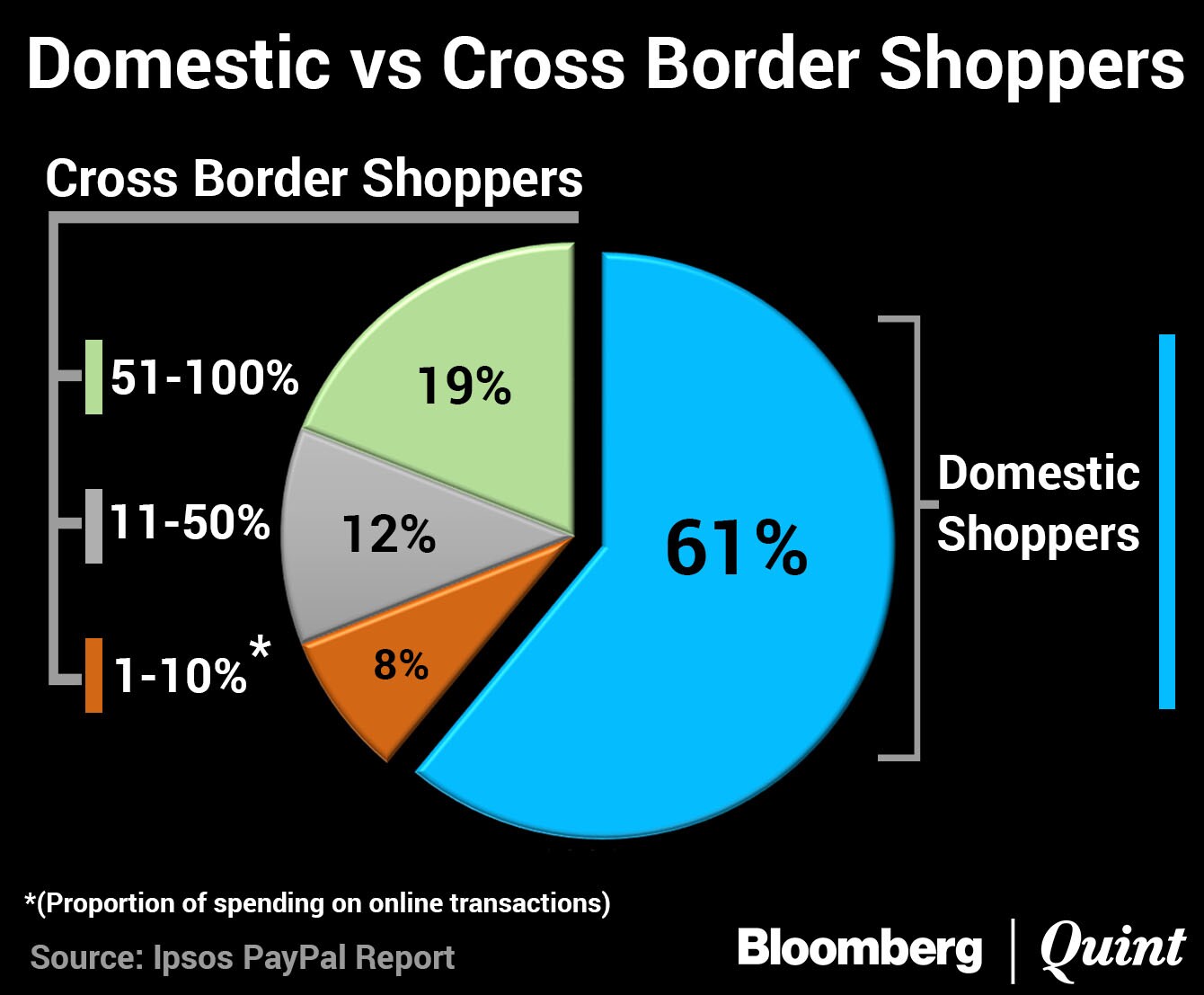
Calling millennials “bold” and “tech savvy”, Anupam Pahuja, Managing Director and General Manager of PayPal Asia Pacific told BloombergQuint in an interview that the proportion of millennials spending on cross-border transactions is expected to rise in the coming years with more payment gateways opening up.
The same was echoed by Anil Talreja, Partner at Deloitte, who follows the e-commerce sector closely. He said that the primary reason for increasing cross-border transactions among millennials is that they find comfort in the online payment mechanism.
One of the very critical elements that comes into play isthe payment mechanism. You only have an option of using specific payment methods.That's where millennials come in, they have sorted out ways on payment. Theyare ready to take the risk of online payment. Some payments may require aninternational credit card. That is something the millennials will do easilythan slightly older counterparts.Anil Talreja, Partner, Deloitte
Retail Therapy
Here are other key highlights of the Ipsos-PayPal study:
- United States is the most popular destination for online shoppers which constitutes 27 percent, followed by China (11 percent) and United Kingdom (10 percent). Singapore is also popular for online shopping. New markets such as Germany and Canada have also showed up in the study.
- The biggest categories for cross-border online shopping are clothing/apparel, footwear and accessories. Fifty-nine percent of millennials buy products from these categories from abroad, while only 53 percent of those surveyed among the general buyers said that they purchased these products from foreign websites.
- The next big category is consumer electronics for which the millennials shop more than the others. Even in the watches and jewellery segment, millennials do more cross-border purchases.
- Millennials are more likely to buy events tickets online.
- Cross-border shopping is gaining popularity among millennials because they feel foreign products are of better quality.
- Many millennials chose domestic transaction over cross- border transactions because of additional shipping costs involved.
- Among devices, shopping via smartphones has gained traction. Almost a third of both domestic and cross-border transactions are made on smartphones. However, a majority of shoppers still uses desktops and laptops to shop online.

-
The Curious Case of Equitas Small Finance Bank And A CEO Who Quit For Stock

PN Vasudevan believes persistent investor concerns over a perceived conflict of interest had become a governance overhang on Equitas Small Finance Bank's stock, even as the lender improved profitability and asset quality.
-
Talking Points This Week: AI Cash Burn, A Tiger Comeback And An India That Still Finds Its Own Path
India is not immune to higher oil or tighter global liquidity, yet its earnings base is broader, its domestic policy levers are still available.
-
Foreign Investors Own Half Of HDFC Bank and ICICI Bank. An LTCG Cut Could Matter Most Here
Foreign portfolio investors have US$115 billion parked in HDFC Bank, ICICI Bank. If the government cuts long-term capital gains tax, Jefferies says returning foreign money could land here first.
-
'Never Seen This Level Of Negativity': Sandeep Tandon Says The Next Rally May Be Closer Than You Think
Veteran investor Sandeep Tandon says foreign selling is easing, large-caps are due a comeback and mid-caps are crowded, while he turns positive on gold, power and pharma this Diwali.
-
Indians Stay With Family, Not In Hotels | The Reason Why
India still lacks enough clean, reliable and affordable hotels for budget-conscious travellers.
-
The Economic Imperative: Analysing The Material Driving Force Behind India-Canada Strategic Reset
This economic complementarity is further reinforced by deep institutional investment ties and talent mobility, which form the bedrock of the bilateral framework.
-
Medicine Pricing: Where Must Profit Stop?
India must confront excessive margins, hidden incentives and regulatory gaps that threaten the integrity of medicine.
-
Why Amazon And Flipkart Are Struggling To Beat Meesho In India's Smaller Cities
With 274 million users and lowest-cost logistics, Meesho is defending its value commerce crown against giants like Amazon and Flipkart.
-
High US Salaries, No Green Card Certainty: The Financial Calculation Facing Indian H-1B Families
The suspension of PERM processing at eight technology employers does not cancel existing H-1B visas. What it does is force a question many Indian families have been avoiding: is the US salary worth tying your career and family plans to one employer?
-
Swiggy vs Eternal: Food Delivery's Two Rivals Are No Longer In The Same Race
Eternal is building a private AI assistant, dark.ai. Swiggy is still working out how to make Instamart pay, with an operating loss of Rs 895 crore in the July-September quarter while Blinkit stayed profitable.










