Future Of Technology: Here's What Microsoft CEO Satya Nadella Said
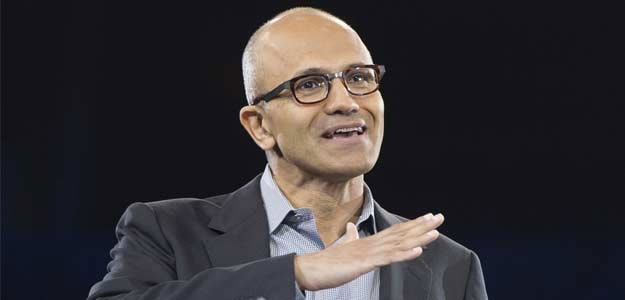
Orlando: Asserting that every piece of technology should help "embellish the capability of human beings", Microsoft CEO Satya Nadella underscored the need for technology to provide new levels of inclusiveness. "As we talk about technology, what we in particular as technologists and decision-makers will have to keep in mind are the timeless values that drive what we do. How are we going to use technology to empower people?", Microsoft's India-born chief said in his key note address at the Ignite conference in Orlando, Florida yesterday.
"Every piece of technology should help embellish the capability of human beings. We definitely want more productivity and efficiency, but we do not want to degrade humanity," he said.
"We want technology to provide new levels of inclusiveness. In fact, I'm most excited about accessibility," he said.
Satya's key note address was being simultaneously translated using AI (Artificial Intelligence) into 12 languages.
"How can we bring more people into as full participants in our society, in our economy, using technology? How can we make sure that there's no bias built into technology?" he said.
"Technology also needs to build the trust. Trust in how we secure data, how we ensure privacy, and the control and transparency that we build all around.
"These timeless values and this opportunity of digital transformation is what grounds us at Microsoft in our mission -- our mission to empower every person and every organisation on the planet to achieve more," he said.
This is something that Microsoft takes very seriously -- each word in this mission, he said.
"The ability to really make sure that we're not only thinking about the person, but the institutions people build," he added.
"We think about it at the global scale, but most importantly, for us, it's not about our technology, it is about what you can do with technology to create your own technology, to have real impact in moving our society and economy forward. That's what is central to our mission," Nadella said.
"In fact, technology trends and paradigms will come and go, but what will center us is this sense of purpose and mission?" he noted.
In his key note address, Nadella said that this is a time where the profound impact of technology in everything that people do is so much deeper, so much broader, whether one is talking about precision agriculture, or precision medicine, the future of connected products, smart cities or smarter factories.
"There isn't a single industry that isn't being transformed. We collectively have the opportunity to lead in this transformation," he said.
Nadella said "while Microsoft's our mission remains constant, technology paradigms come and go". "Where before we held a worldview of a mobile-first, cloud-first world, that worldview is evolving to the new technology paradigm of the intelligent cloud and the intelligent edge," he said.
Three characteristics define this shift: the move to multi-device, multi-sensory interactions; artificial intelligence driving predictive insights across devices; and a new fabric of serverless, or distributed, computing power, he added.
In this new era, Microsoft is building systems of intelligence, virtuous cycles and new feedback loops that help create data and refine how one reasons over this data to gain insights from information. Aiming to empower people within an organisation, he said Microsoft is taking it a step further, to ensure they are also transforming the processes and functions surrounding them.
Bing for Business combines data from the enterprise with public web results to produce a seamless experience that's intelligent, personal and contextual, he said.
(Except for the headline, this story has not been edited by NDTV staff and is published from a syndicated feed.)

-
Extracting Value From Battery Scrap Could Be Challenging For India | The Reason Why

A discarded lithium-ion battery still contains valuable materials such as lithium, nickel and cobalt. These can be recovered and reused. When such batteries are crushed and shredded, they produce a dark powder called black mass.
-
One El Nino, India Can Handle. Two Could Break The Granary
India's grain stocks can absorb one bad year, but a second El Nino could drain the buffer in two to three years, economists say.
-
India's Troika Of Good Luck | Joining The Dots
As Jensen Huang's exit drags Nvidia down, a cooling AI trade and resilient earnings have revived investor interest in India. A likely RBI rate hike looms.
-
Talking Points This Week: Leadership Shock At Nvidia, Earnings Strength, And The Fog Over Hormuz
The Anthropic IPO pricing and first trading day, Nvidia's upcoming earnings, and any fresh signals from Iran will set the tone for the following week.
-
Signature Play: The Classic Cocktail Is Dead. Or Is It?
Classic cocktails are disappearing from India's cocktail menus. But they're still being ordered, taught to bartenders and borrowed from. So, who's really having the last drink?
-
A New Samvat Wishlist: Inclusive Prosperity And Human Development
India has strengthened its economic foundations through infrastructure, digital access and enterprise. Its next growth chapter must deepen productivity, create better livelihoods and widen participation in prosperity.
-
Love, Sex Aur Dhokha: The Audacious Plot To Spy On Jensen Huang
A Taipei dinner, a Singapore chip buyer and a suspected Chinese asset: inside the alleged spy operation that got close to NVIDIA's Jensen Huang.
-
Ten Things I Learnt This Samvat
Patience can be a trap. Cheap stocks can stay cheap. Leverage can wipe you out. What did Samvat 2082 teach us? Niraj Shah writes on 10 lessons from the year gone by.
-
Talking Points This Week: Tech Nerves, FII Buying, And A Faraway Banking Shock
The global markets are not shining this Diwali. The exception in the large markets is, India.
-
Midterm Rally Lasted A Day. The Hard Reality Of A Divided US May Last Two Years | Opinion
Between a contested AI boom, a debt ceiling that arrives in 2027 and a president with every incentive to act alone, the next two years may prove more volatile than the first day's rally suggests.









